
On the shore of the Black Sea are two charming Bulgarian Old Towns. Both Nessebar and Sozopol have historic centres located on matching peninsulas that jut out into the Black Sea. Although they are known as summer hotspots for beach goers, our arrival in the autumn meant those vacationers were gone and temperatures were quite chilly.
Nessebar
A town has been on this peninsula for over 3,000 years beginning with the Thracians. As a result there are structures from a variety of civilizations contained within this small landmass.
Driving across the man-made isthmus to Nessebar we knew we were in for a treat. First we drove past an old windmill, and then at the end of the road, we saw the remains of a Thracian city wall. Between the two, fishing boats bobbed in the water telling us that it is still an active fishing village.


When we visited in mid October, it was cold with blustery winds. The location of the windmill made us think it must often be windy. Once inside the old gates, the pavement changes to cobblestone and the streets seem to run in every direction. The seaside location of Old Nessebar made this historic district feel much different than the others in Bulgaria. Old Town is very walkable, in fact that’s the best way to explore this charming area.

The majority of the buildings in Old Nessebar were built during the Bulgarian Revival. Beginning as a ground level movement in the late 1700s, Bulgarians wanted to reclaim their heritage that had been lost under 500 years of Ottoman rule. By the 19th century, local merchants built homes in what they considered a unique Bulgarian style. These wooden homes have an overhanging upper floor and a carved support beam between the upper and lower levels. We had already seen Bulgarian Revival Architecture in other parts of the country, but these seaside cities added their own flare.
Unlike other cities in Bulgaria, the revival homes in Nessebar were not brightly painted. The other difference is that the main floor was often used to house fishing supplies rather than act as stables. As we walked along the streets we saw that sometimes the lanes were so narrow that the roofs of two homes across from each other almost touched.


In addition to the narrow streets and revival houses there are a lot Byzantine churches in this small area. Most were just shells of the original buildings but even so, many still showed their elaborate designs. The stones and bricks were often laid in decorative patterns. A few even have colourful tiles for decoration.


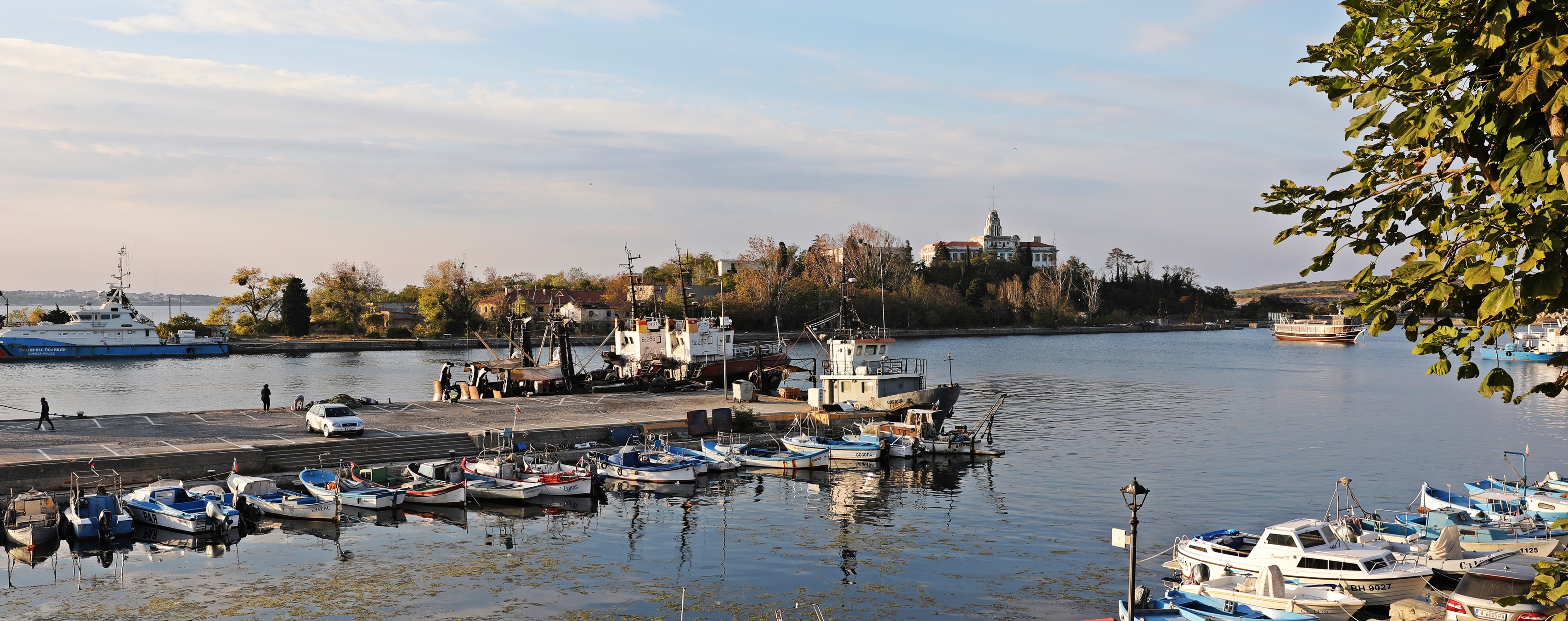
Marinas filled with colourful fishing boats wrap around the peninsula. They add a unique element to this historic area.

Sozopol
A little further south on the Black Sea coast is an Old Town on a similar peninsula to Nesebar. A city was originally established here by the Greeks in the 7th century BCE and named Anthea. They soon renamed it Apollonia in honor of the god Apollo. Today it’s called Sozopol. What makes Old Sozopol interesting is the intermixing of Bronze Age relics with Byzantine ruins and Bulgarian Revival houses.


Except for the churches, the Ottomans destroyed most of the Byzantine fortified city. Therefore, Revival Architecture homes are the primary buildings that are left. As with Nessebar, the homes are mostly made of stone and wood but the steep, seaside cliffs gives them a unique character.


At the end of Old Town is a small peninsula called St. Cyricus Island. An artificial isthmus that connects it to the mainland provides shelter for the fishing boats in the marina. A school for fishermen was built on the island, but today the entire island is closed to visitors.
A little further away we could see the Islands of St. John & St. Peter. Thracian ruins were found on these islands but they have been declared protected areas and are also closed to visitors.


From Old Town we looked across a large cove and could see the beach, hotels and resorts that are popular in the summer. The sharp cliffs make it a very picturesque part of the city. At least it was in the autumn, maybe we’d have other thoughts during the busy summer months when the beach is filled with sunbeds.


How to get to Nessebar and Sozpol
The nearest airport is in the city of Bourgas which is about half way between these two cities. There are also buses that travel to both cities from Sofia. If you have a car there is a good freeway connecting Sofia with the Black Sea that makes it an easy drive.
If you rent a car, visitors from almost any country outside of the EU need to show a physical copy of their international driver’s permit. A digital copy is not enough. Car rental agencies are very strict with this rule.
Where to stay
There is no shortage of hotels in this area. We stayed in a resort-style hotel in Sozopol and in the off-season it was very peaceful. There are quite a few restaurants in both city’s Old Towns.
Tip – There is not a lot of English spoken in Bulgaria and they use the Cyrillic Alphabet. It would be wise to have your destinations written in Cyrillic before leaving your hotel. Google Lens is very helpful to translate written material such as menus.

Click on the link for Travel Tips For Bulgaria.
To read more of our adventures in Bulgaria, click here.
Coming Next – Best Sites To Visit In Bulgaria
For pictures from other blogs go to Gallery at monkeystale.ca
To read about more of our adventures go to Destinations.
If you like what you read, please comment or share (with credit) using the links below.




We'd love to hear from you, please leave a comment.