
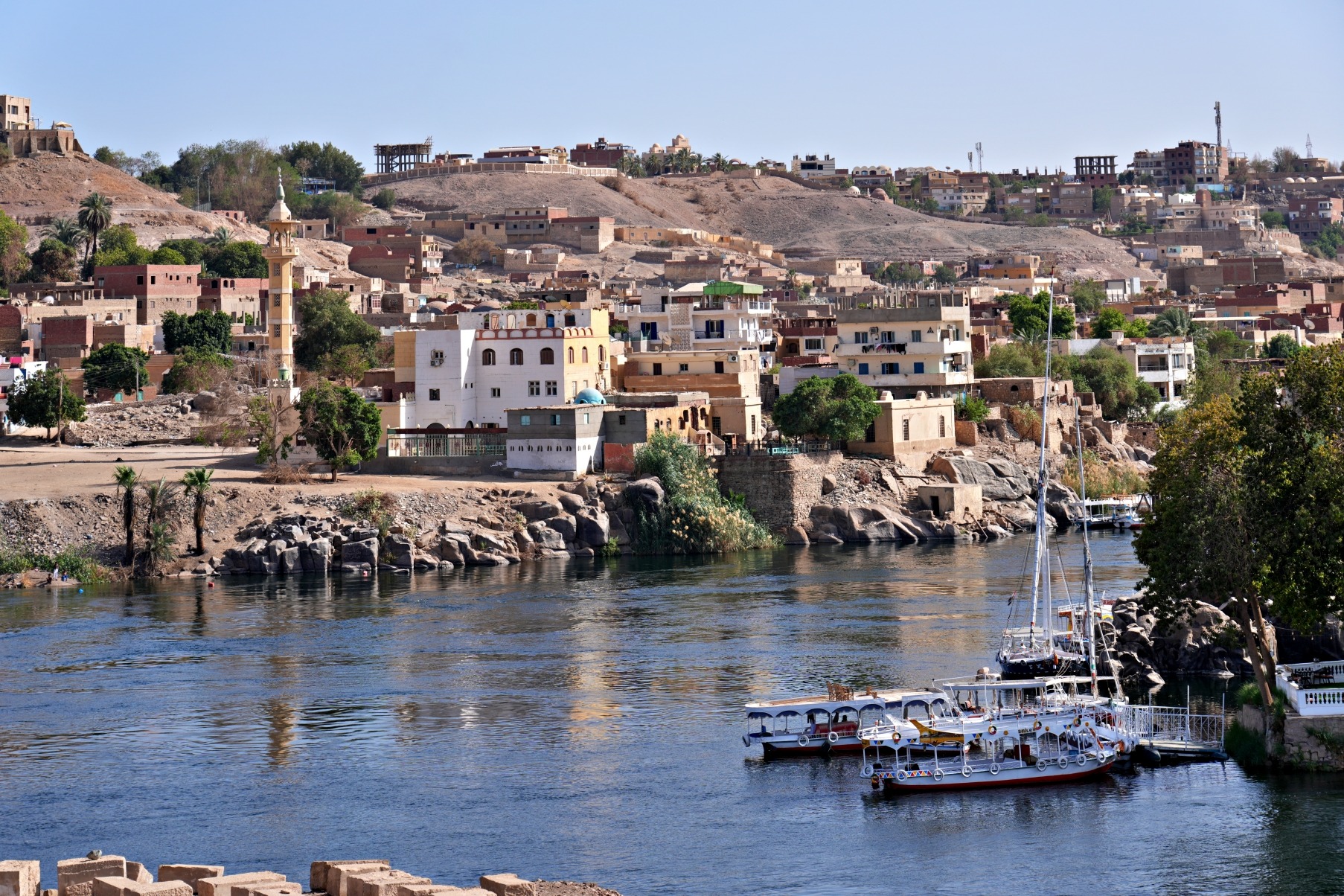
Most come to Aswan to see Abu Simbel before or after their Nile River Cruise. We think you should give the city an extra day or two, because there are several hidden gems. Many are found on Elephantine Island, including its archaeological site and colourful Nubian houses. While you’re there, go for a sail around the island on a rustic felucca to see the picturesque Nile.
Located in Upper Egypt, Aswan had the perfect position to protect ancient Egypt from the south, especially from Nubia (present-day Sudan). The city was purposely built at the first cataracts, or rapids, on the Nile. In addition to offering protection, this spot on the river was a natural place for merchants to stop. Huge granite boulders in the river create the eddies and currents which make up the Cataracts. For us, these boulders make it one of the most picturesque parts of the Nile.
The Nile originally had five cataracts, but at least two were submerged when Aswan High Dam was built.

Elephantine Island
The busy city of Aswan is very unappealing, but come over to Elephantine Island, and your perception of the area changes immediately.
Nubian Houses
Elephantine Island, called Jazirat by locals, was originally home to two Nubian villages. Today, locally run guesthouses and restaurants fill the space between those first settlements. Thankfully, these new additions have kept the traditional style, with brightly painted accents on their whitewashed homes that create a welcoming Nubian atmosphere. Not only do these colourful homes make it feel very different from other places in Egypt, but their lush gardens and mango trees make you forget you’re surrounded by desert.


As you wander around the island, don’t forget to go to its edge to take in the beautiful views of the historic Nile River and its rocky shores.


Elephantine Archaeological Site
Anchored in the Nile, Elephantine Island was part of this area’s rich history, and an archaeological site at its southern end attests to this. Here you can visit remnants of the ancient Fortress of Yeb (also called Abu) built by Egypt’s First Dynasty. Located on Egypt’s southern frontier, the fortress gained prominence, both in protecting Egypt’s border with Nubia and as a trading post.
Over time, however, the fortress lost importance, and although it is mostly in ruins, there are still a few fascinating things to see.
Temple of Khnum
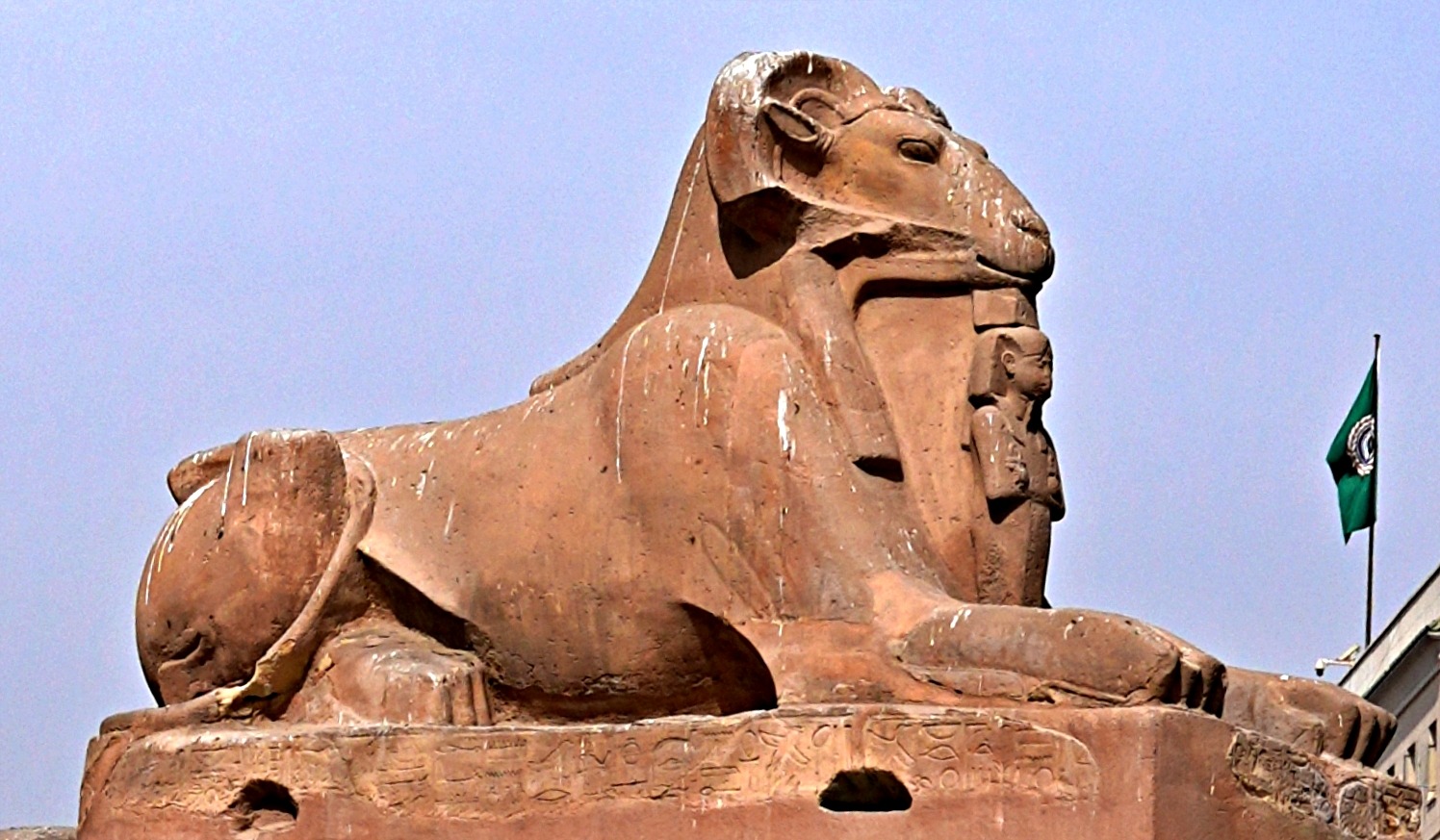
At the top of the small hill lie the remains of the Temple of Khnum. The ram-headed god Khnum has been worshipped since Egypt’s Old Kingdom. He was the creator god who also controlled the world’s water, including the Nile River. The myth of Khnum is a wonderful story. Ancient folklore claimed Khnum lived on the island, and as the creator, he used his pottery wheel to mould every person on earth. The legend says that eventually, he tired of this task and therefore altered women’s bodies so that they could give birth.
Most of what we see today are the tall granite pillars that were once a temple gate. The rest of the temple’s ruins lie scattered on the ground.


In addition to seeing these pillars, from this elevated point, we had a wonderful panorama of the Nile, its cataracts, and Aswan.


Temple of Satet
Below the Temple of Khnum you can see a few rebuilt walls from three temples dedicated to the Goddess Satet. She controlled the annual flooding of the Nile. Along with Anuket, goddess of the cataracts and creator god Khnum, the three deities were very important in Upper Egypt, and especially Aswan.
The three Satet Temples on this site were built thousands of years apart, with the oldest dating to 3,100 BCE. Unfortunately, all were damaged, and cement walls are used to support several pieces from the temples. Instead of showing how elaborate the temples may have been, though, to us they display how much damage was done.


Nilometers
The final two artifacts from the old fortress are the Nilometers. Having already seen a Nilometer in Cairo, we were excited to see these. These ingenious structures measured the height of the Nile to understand the fluctuations in the river throughout the seasons. Nilometer of Khnum is an open pool dated to the 600s BCE. Stairs lead down to a scale etched into the pool’s walls.

The second we saw was the Nilometer of Satet. Here, a narrow staircase leads to a small pool filled by water through an open door on to the Nile. The wall has a series of measuring sticks beginning at the base and continuing all the way up to the top of the stairs. Dating to the 300s BCE, it was a little more advanced and was even in use into the 19th century. You can see indications of its modifications over time in the the old and measuring sticks side by side on the wall.
Not only were they used to determine the Nile’s flow and flooding. The water level was also related to taxation. The higher the flood, the better for the crops, so the higher the taxes.


Although not much is left, this archaeological site has been declared a UNESCO World Heritage Site along with Abu Simbel, the Temple of Isis at Philae and the Unfinished Obelisk. (Coming Soon)
Entry – 250 EGP ($5 USD); Opening Hours – 8 am – 4 pm.
Felucca Ride
If you plan to take a boat ride on the Nile, we think a felucca ride in Aswan is the best option. Believed to have been used since ancient times, feluccas are iconic symbols of Upper Egypt. Sailing on these crude-looking, traditional boats offers you a glimpse of the river that you can’t get anywhere else. We took a felucca ride around Elephantine Island with Captain Felucca, as he referred to himself. Not only is he an excellent sailor, but his smiles and laughter made it an even better experience.
We began on the Aswan side, where the busy river is full of life with motorboats zooming by and kids playing on surfboards.


In contrast to the busy waters in front of Aswan, the other side of Elephantine Island, is quiet. The calmer water lets you see the contrast between the desert mountain and lush islands. Several mausoleums dot the sandy hills above the river, including the Aga Khan Mausoleum. Looking the other way, we were able to see the colourful Nubian houses from a different angle.
A popular tourist stop is the small tropical-looking Kitchener’s Island, where several cafes provide a relaxing break. We preferred to stay on the boat to and continue our ride around the island.


At the far end of Elephantine Island, Captain Feluca expertly navigated between the granite boulders that create the cataracts. It is very picturesque in this area, and sailing between these rocky islands and outcrops was our favourite part of the boat ride.


As we rounded the island, we were below the archaeological site and even saw the door to the Nilometer of Satet from the boat.


On the other side of the Nile, we saw the Old Cataract Hotel where Agatha Christie spent a year writing Death on the Nile.

The felucca ride was one of our favourite activities in Aswan, and the river is so much more interesting and picturesque in Aswan than Luxor or Cairo; we really think you should wait to do it here, and not those other cities.
Other things to do in Aswan:
Temple of Isis at Philae – In the next post, we’ll take you to this ancient temple found on an island upriver from Elephantine Island.
Unfinished Obelisk – After Philae, we’ll show you another ancient site, the unfinished obelisk.
Aswan Dam – Located a short distance from Aswan, you can drive across the top of the dam, or see it from a few spots in the south end of the city.

Getting to Aswan
Many will arrive in Aswan on a river cruise, but if cruises aren’t of interest to you, there are many other ways to get to Aswan.
From Cairo – To reach Aswan from Cairo, you can fly into Aswan International Airport. SuperJet buses also make the trip from Cairo (13-14 hours). Their office is near the Aswan Train Station and in Cairo at the GoBus Station, not far from Tahrir Square, called Abd El-Moneim Riad, and another is in Giza.
From Luxor – There are no direct flights from Luxor to Aswan. Instead, you can take an air-conditioned SuperJet Bus, but they only leave at 6 am. (4 hours). Minibuses travel between Luxor and Aswan (3 hours, 950EGP/$18USD). You can buy tickets online, or at their office behind the train station. We didn’t know ahead of time, but only certified agencies are allowed to transport tourists in Egypt. Our minibus driver made us keep the curtains closed until we got far enough away from Luxor, when he knew he wouldn’t be checked by the police.
Getting Around Aswan
To get between Aswan and Elephantine Island, you have your choice of two ferries, depending on which end of the island your accommodation is located. One is near KFC in Aswan (called Ferry Pier on Google Maps), and it travels to Ferry Pier Elephantine Island, near King Jamaica Restaurant. The other is near the Botanical Gardens (Elephantine Island Ferry (South) and travels to Ferry Boat Harbour, not far from the Nilometers. (15EGP). It’s important to know that women sit at the front of the ferry, and men sit at the back. Payment is made on the Aswan side. It leaves every15 min or so.
There are no cars on Elephantine Island, but it is so small, you won’t mind walking everywhere. On the mainland, there are several tuktuks, taxis and private drivers. Most taxis are dilapidated 50-year-old cars, but they seem to still be working.

Where to stay and Eat in Aswan
Unless you want to stay in a luxury hotel or a cruise ship, most tourists stay in an Elephantine Island guesthouse. It is a quiet island with no cars, and the businesses are mostly run by the friendly Nubian people. There are several excellent, locally run restaurants on the island too. Our favourite was King Jamaica.


Click on the link to read our travel tips for Egypt. (Coming Soon)
To read more of our adventures in Egypt, click here.
Coming Next – Philae Temple and Unfinished Obelisk
For pictures from other blogs go to Gallery at monkeystale.ca.
To read about more of our adventures go to Destinations.
If you like what you read, please comment or share (with credit) using the links below.



We'd love to hear from you, please leave a comment.