
Set in the vast desert, far away from Egypt’s more famous attractions, you’ll find a unique mix of ancient temples and tombs surrounded by natural, palm tree-fringed oases and salt lakes. Since they’re close to the desert town of Siwa, you can combine many of them into a great day trip. In this post, we’ll show you the many places you can visit, all within a short drive of Siwa.
To read about things to do in the town of Siwa, click here.
Mineral Springs
Located on top of the Nubian Sandstone Aquifer System, one of the world’s largest natural underground water reservoirs, Siwa is home to an astounding 200 to 300 natural springs. Pressure forces water up from these aquifers through cracks in the earth, resulting in the many spring oases we see today.
Ranging from hot water to cool, fresh streams to mineral ponds and lakes, these natural springs come in a wide variety and have been enjoyed by locals, travelling merchants, and even royalty for thousands of years. They came for both the health benefits provided by the mineral-rich water as well as their relaxing atmosphere. Today, they are still used to help with skin conditions and stress reduction. An interesting custom we learned is that local women, particularly those getting ready for weddings, bathe in the springs to enhance their beauty and seek blessings for their future.
Cleopatra Springs
One of the most popular springs for both tourists and locals is Cleopatra Springs, locally called Ain Juba. Legend says that Cleopatra herself soaked in the waters of this spring, although there is, of course, no evidence of that.
The water is medium on the hot-cold scale at 30–32°C (86–90°F), but it didn’t look exceptionally inviting to us. Matter from deep underground bubbles up with the water and floats on the surface. Although it is said to be safe, its presence didn’t tempt us to hop in for a soak.

The many tourist cafes on its edge were mostly empty when we visited, but make for a nice shady stop for coffee or lunch. The pool is free, but you are expected to purchase food or drinks.


Tip – Women are strongly advised to cover up at public baths such as Cleopatra. Although we did see a few European women in bikinis, it is very inappropriate in this conservative Muslim nation.
Lofty Camp Hot Spring
In addition to the public springs, there are several private ones; Lofty Camp is one of those. It is usually only open to larger tour groups, but our driver is a friend of the owner, so he let us stop by and compare it to Cleopatra Springs. It has a much more private setting, but otherwise, the pool itself is very similar to the one at Cleopatra.
Lofty has cabins around the edge, and some tours include an overnight stay.

Public Springs
There are even a few mineral springs located in town, but they are not as well maintained. We stopped by one to find two local boys playing in it on a hot spring day.
You can find a few on Goole Maps, listed as ‘spring’.

Fatnas Island
Also called Fantasy Island, this popular sunset spot is connected to the mainland by a causeway. Promoted as an island paradise, we didn’t find it that way. Instead, the small island has rustic cafes around its perimeter, offering views of the sunset. No one swims in the lake, but there is a small cement spring in the centre of the complex.
There’s not much to do but drink freshly squeezed juice and wait for the sunset. It’s a nice spot, but we wouldn’t put it at the top of the list of things to see.


You can reach Fatna Island from Siwa by tuk-tuk, taxi or bike. There is no entry fee, but you are expected to purchase something at a cafe.
Salt Lake
We had already seen Salt Lake from a distance when we were on the top of Shali Mountain. Now, we were driving across a long causeway that separates the lake into two parts. Its colourful water makes it popular with tourists, and there’s even a cafe on an island in the middle of the lake.

At the far end of the lake, we reached the salt mines. Here we watched loaders scoop salt from the water and dump it on the side, creating large piles of salt.


In the middle of the mines, you’ll find pools in all shades of blue, from deep to turquoise. Because the shore is a mixture of salt and sand, it provides a strong contrast, making the mine very picturesque. You can soak in these mineral pools, but with the diggers in the background, it is not the nicest setting. Don’t be fooled by the ‘influencers’ who present it as a peaceful retreat.
Entry is free.

Temple of the Oracle
Not only did the mineral springs draw visitors, but so did its ancient temples. The Temple of the Oracle is deeply rooted in the region’s history. Dating to the 7th century BCE, it was built to honour the Oracle of Amun.
The legend of its origin tells the story of two priestesses who were banished from Thebes (present-day Luxor). One founded the Temple of Dodona in Greece; the other founded this temple in Siwa. The Oracle of Amun in Siwa is said to have successfully predicted many events and therefore had significant respect and power. Because of this, the Oracle’s prophecies were sought by many rulers in ancient Egypt.
You can read more about the deity Amun in our posts from Luxor.

One of the most famous people who requested the Oracle’s counsel was Alexander the Great in 331 BCE. He wanted to prove to Egypt that he was a son of Amun (Zeus-Ammon in Greece). After the meeting, the Oracle agreed that Alexander was, in fact, of divine birth and was the son of Amun. Since pharaohs were believed to be gods on earth, this was a very important step in ruling Egypt.
The Temple of the Oracle is a huge complex, but since most of it was built of kershef, salt-mud bricks, it is mostly in ruins.


The sanctuary in its centre, however, was built from locally sourced limestone, so its walls are in better condition. You can even see faint scalloped patterns on the columns, but most decoration has worn off.


Inside the temple walls is a new addition: a mosque. It is new compared to the temple, but it is still almost 1,000 years old.

Here’s our view of the temple in front of Salt Lake the day before from Shali Mountain in Siwa.

Entry fee – 120 EGP ($ USD); Opening Hours – 9 am to 5 pm.
Temple of Umm Ubayd
Not far away are the ruins of the Temple of Umm Ubayd, also known as the Temple of Amun. It was built during the same era as the Oracle, but only one wall of this temple still stands. In the late 1800s, a Muslim Sultan from Siwa blew up the pagan temple. Even though this lone wall has been exposed to the elements for thousands of years, you can still see some of the original decoration. Near the top of the wall are 7th century BCE raised hieroglyphics and reliefs on a blue background.

Entry is free.
Gebel al-Mawta
Since the Mountain of Death (Gebel al-Mawta) is located a couple of kilometres outside of town, many will include a visit to the necropolis on a day tour. It is an interesting cemetery with rock-cut tombs dating as far back as the 7th century BCE.
You can read more details of Gebel al-Mawta in our post What to See in Siwa Oasis.


Jabal Dakrour
One of the limestone mountains we saw from Siwa is Jabal Dakrour (Dakrour Mountain). Below it are several recently built clay buildings used during an annual 3-day harvest celebration in the autumn. Most of Siwa comes to celebrate at that time. Outside of the festival, though, the buildings are deserted.
It is located near the Temple of the Oracle, so you can visit on a quick stop after seeing the temple.


Sahara Sand Dunes
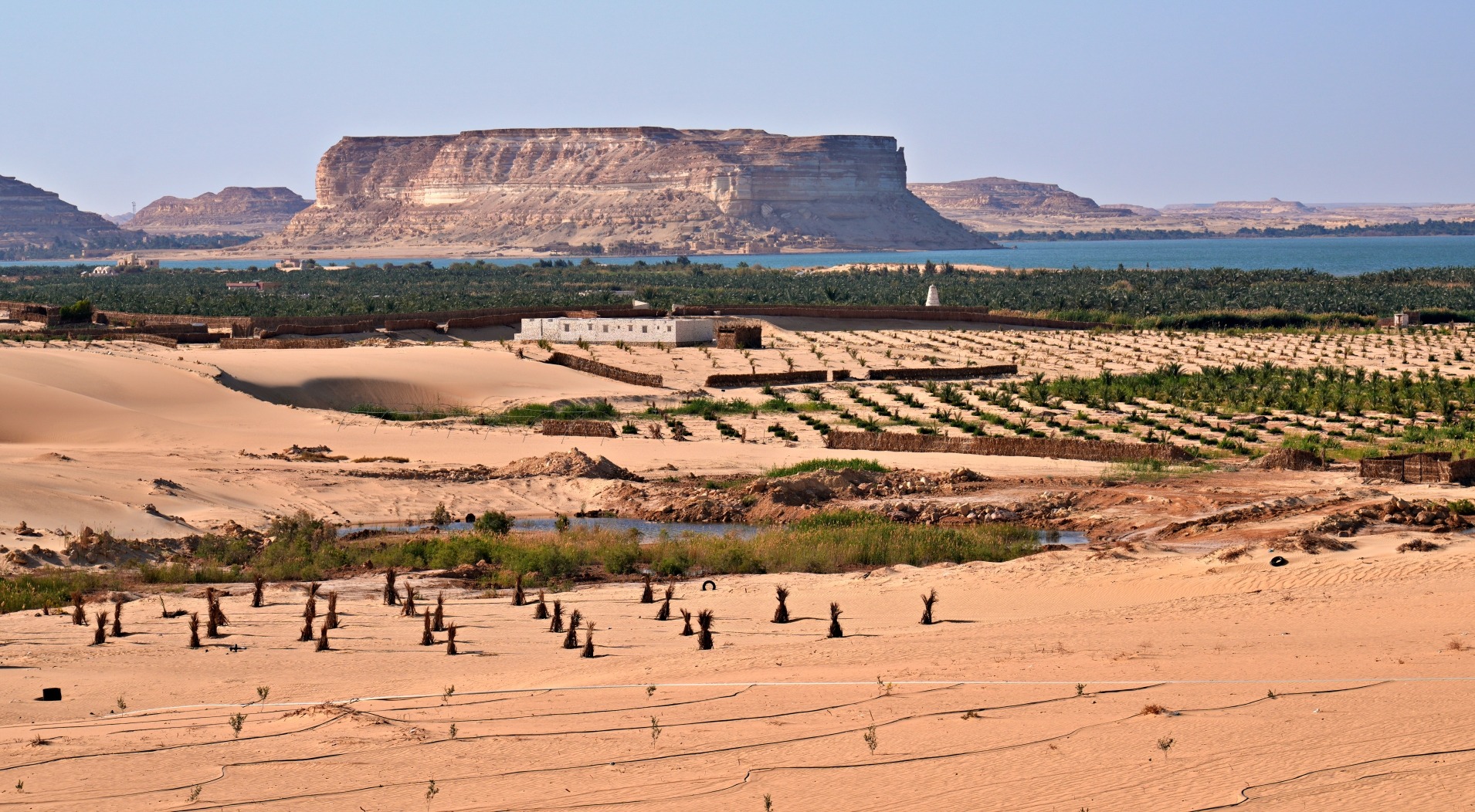
Just outside Siwa, you’ll find golden dunes of the Sahara Desert. As we drove toward them, we saw palm frond fences along the side of the road. They reminded us of snow fences at home, except these are for blowing sand.


These dunes seem to be endless when you look in one direction, but turn your head and landscape changes. This desert scene becomes a lush oasis before dropping straight into Siwa Lake, with limestone mountains on its edge.

Many tours offer camel or jeep safaris and an overnight stay in a desert camp.
Local farm
For our final stop, our driver took us to visit his brother’s farm. From a distance, we saw their tall, minaret-like pigeon coops. We had seen many in the area and assumed they were for collecting fertilizer. We learned, however, that they were actually raising the pigeons for food.
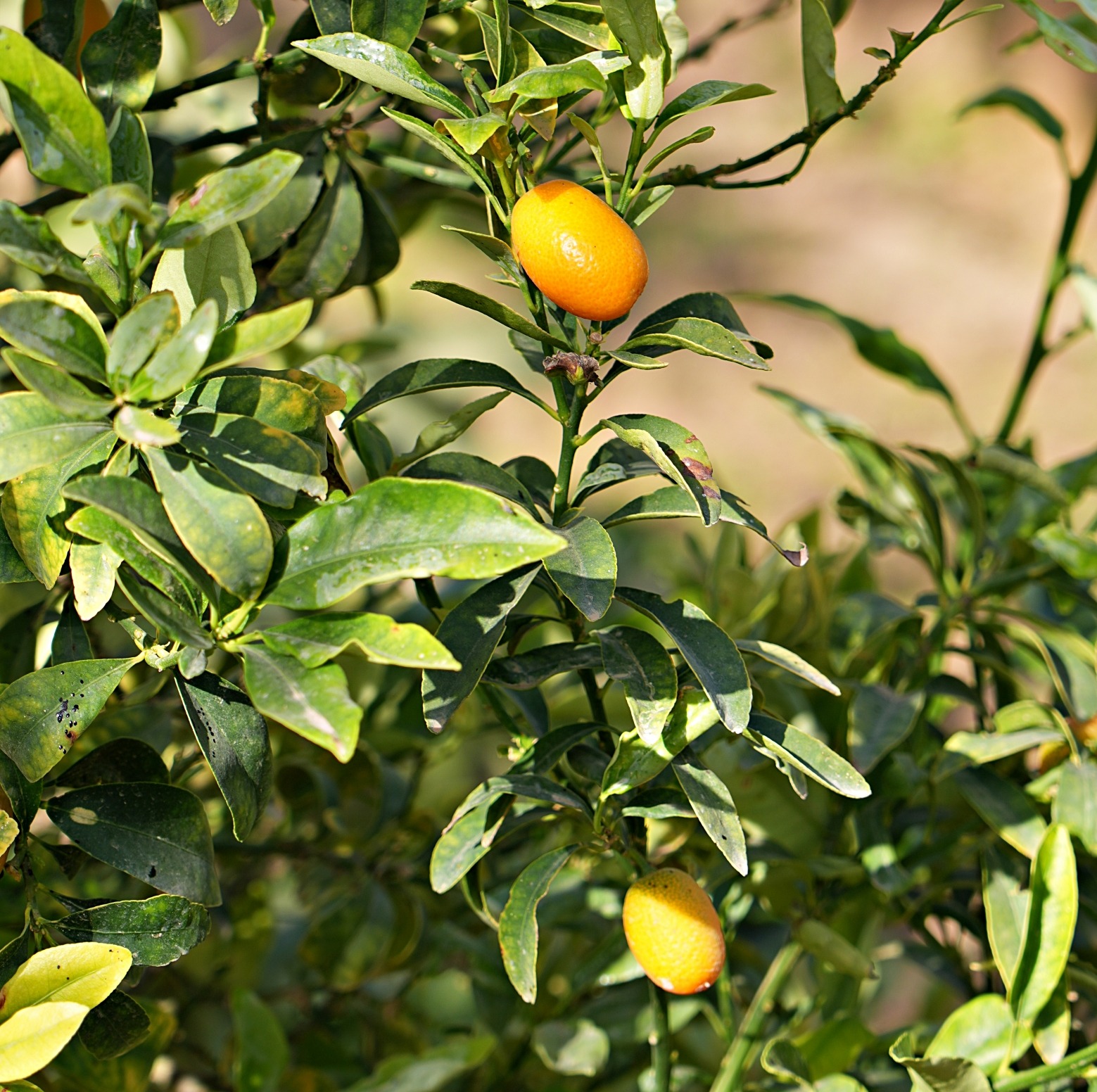
In addition to the pigeons, the farm has a variety of plants in their garden, including kumquats, sea buckthorn, and hundreds of date palm trees. The variety of fruits grown on the edge of the desert is really surprising. It was a great end to a wonderful day exploring the wide variety of things to see on a day trip from Siwa.


For information on getting to Siwa, where to stay and eat, please visit our post, What to See in Siwa.

Click on the link to read our Travel Tips For Egypt.
To read more of our adventures in Egypt, click here.
Coming Next – Sharm el-Sheikh – Diving in the Red Sea
For pictures from other blogs go to Gallery at monkeystale.ca.
To read about more of our adventures go to Destinations.
If you like what you read, please comment or share (with credit) using the links below.



We'd love to hear from you, please leave a comment.