
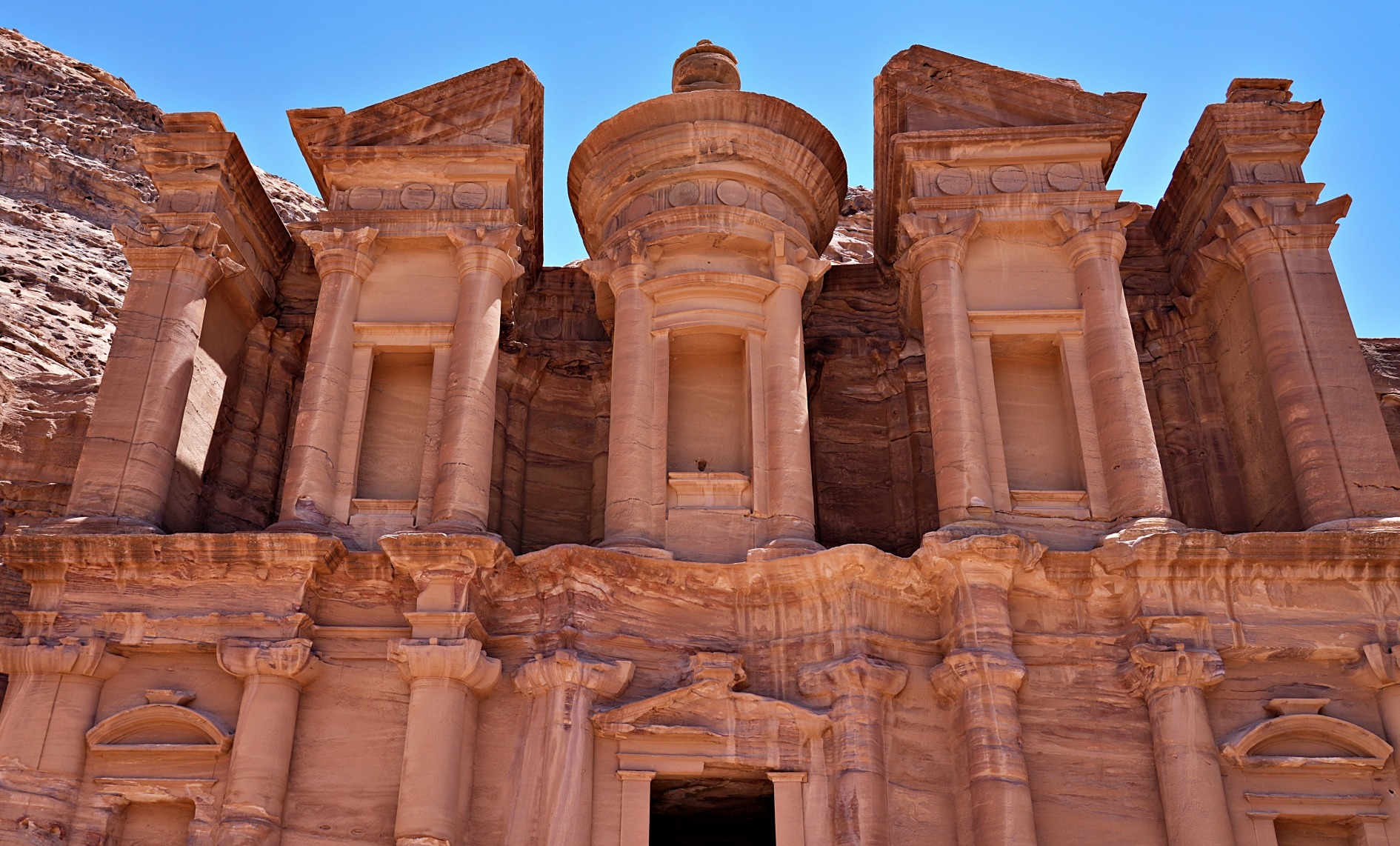
Famous for the rock-cut caves of Petra, we also discovered a wide range of other places you’ll love in Jordan. From Byzantine mosaics and Roman Decapolis ruins to Ottoman cities and Crusader castles, you have a wealth of attractions to choose from. To help you plan the perfect trip, we’re presenting our favourite places to visit in Jordan.
While your top picks may not match ours exactly, and you may place them in a different order, we’re confident you will be able to use this list to plan an amazing trip to Jordan.
Click on the link to go directly to our Travel Tips for Jordan.
.
You can find our recommended sites, as well as others, in the map below. It is an interactive map so you can zoom-in or click on a marker for a link to our post from that region.
1. Petra
There’s a reason Petra is famous and aroud the world. The rock-cut tombs and homes that fill the rugged canyons are unlike anwhere else. While the Treasury is its best known feature, there is so much more to see in Petra, including Little Petra, so plan to spend two or three days exploring this ancient wonder.
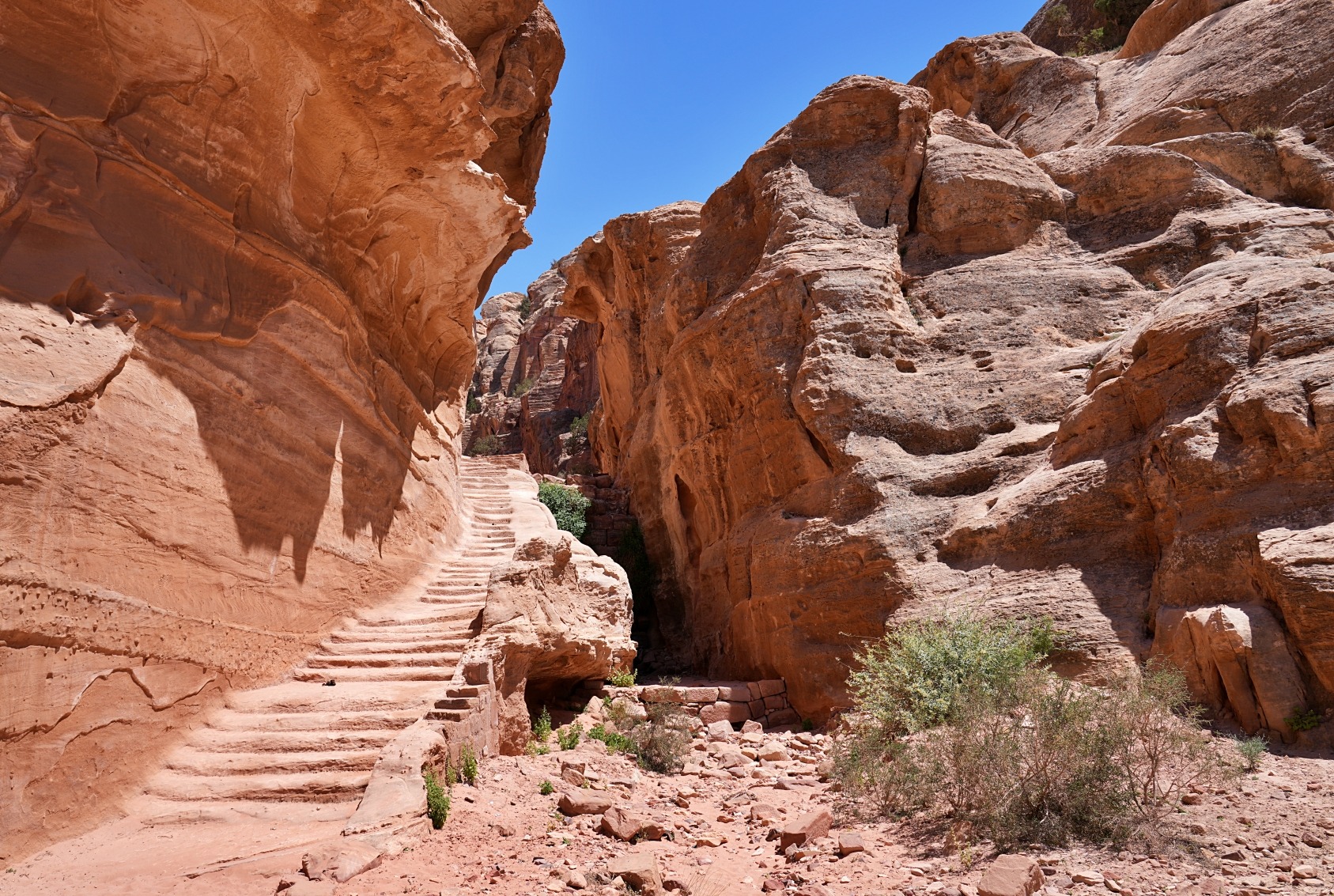
For more information on what to see in Petra, visit our post Petra: An Ancient Wonder. In addition to the main city, there are a few other places that require hiking to reach. You can find out more about those in our post Hiking Petra’s Ancient Trails.

2. Madaba
If you love ancient mosaic floors, then you need to visit Madaba. Although they’ve been hidden under rubble for hundreds of years, the city’s Byzantine floors are as gorgeous as ever. While these mosaics may have brought us to the city, its storied history meant we found much more. What makes it even more interesting is that you can see how ruins from its previous civilizations lie piled on top of one another in layers.
In our post The Wonderful Mosaics of Madaba, you can see images and descriptions of what to expect when you visit Madaba.

3. Jerash
Spread across a large, open field, the former Roman Decapolis city of Jerash is a must-see in Jordan. Strolling along its colonnaded streets, between the ancient temples, theatres and gates, will feel as though you’ve stepped back to the days of the Roman Empire.
Find out more about visiting Jerash in our post, Jerash: Explore The Roman Decapolis City.

4. Amman
From the moment we saw the limestone homes blanketing Amman’s many hills, we were captivated by the city’s distinct beauty. That initial feeling only grew as we explored Jordan’s capital and discovered a city rich in history. From its Roman Theatre and hilltop citadel to its vibrant neighbourhoods, there is much to see in Amman.
Find out what you can see on a trip to Amman in our post, Discover Amman’s Rich History. A great day trip to keep in mind when you’re in Amman is the nearby city of As-Salt as describe in Day Trips From Amman – As-Salt and Quseir Amra.

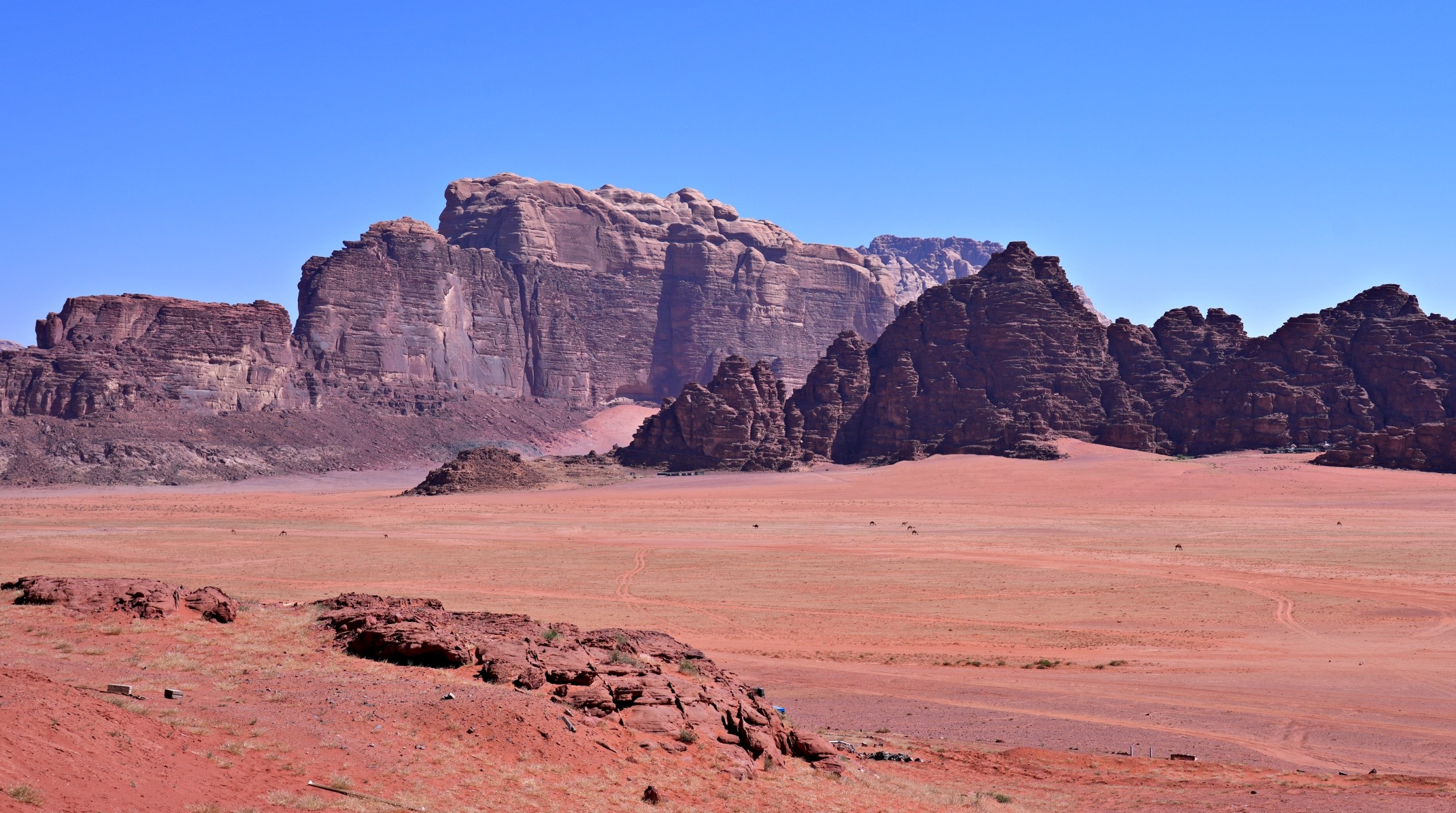
5. Wadi Rum
With sheer mountain walls towering above the red desert floor, Wadi Rum differs from the traditional desert scene where golden sand dunes stretch into the distance. But touring between these giants showed us that traditional isn’t necessarily more beautiful. Taking us through these mountains was a local Bedouin, and as we learned, visiting Wadi Rum is about more than seeing the landscape; it is also about learning from the Zalabieh Bedouins and their way of life.
To find out how to visit Wadi Rum, please visit our post, Wadi Rum: A Visitor’s Guide.

6. Dana Biosphere Reserve
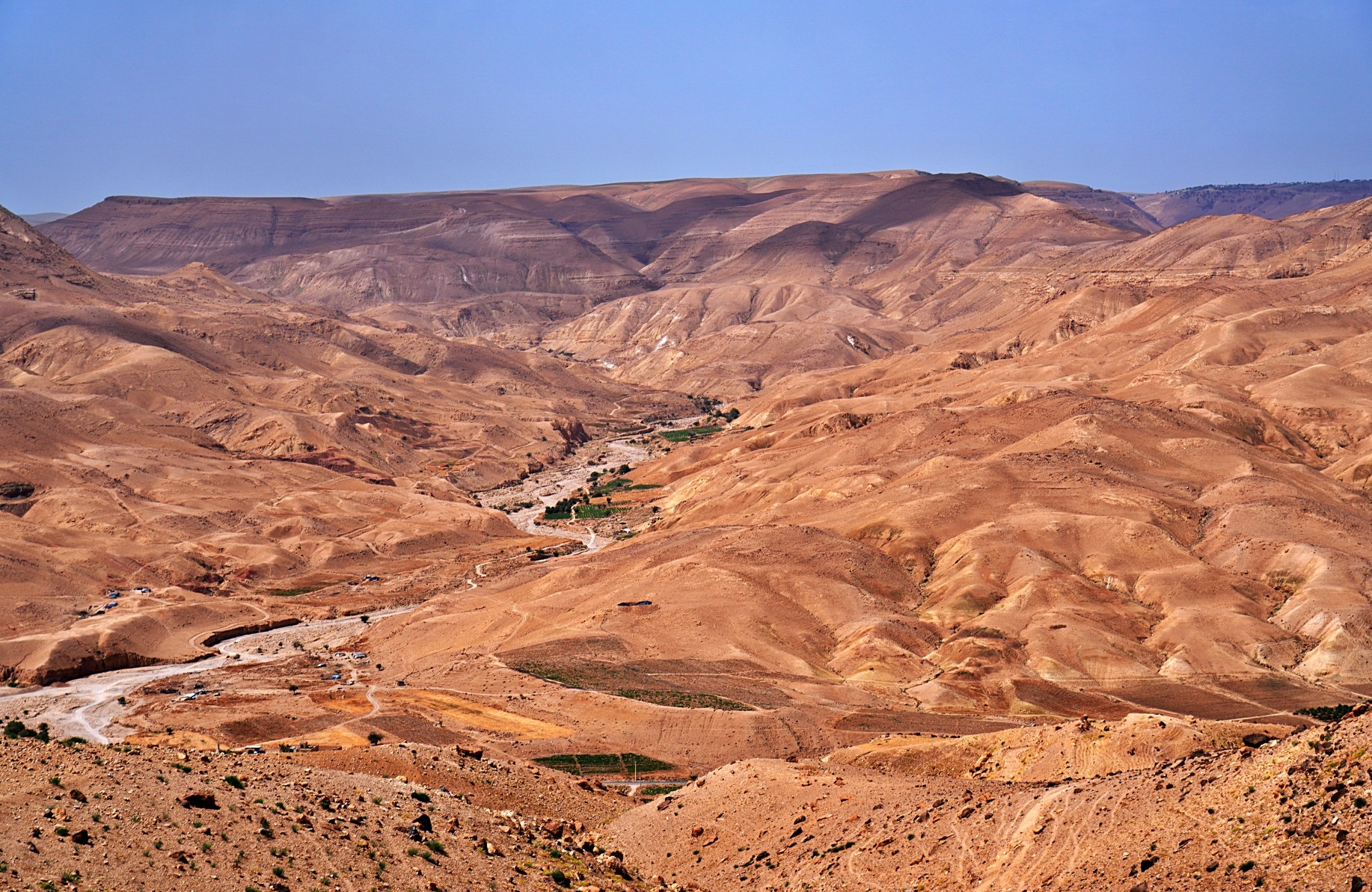
Once you see Jordan’s rugged wadis from the King’s Highway, you’ll undoubtedly want to spend time exploring one or two on foot. Dana Biosphere Reserve has a variety of trails that climb up and down its valleys, making it the perfect destination to hike inside these natural wonders. Then, after hiking in the deep wadis, plan to spend time exploring the Bedouin village of Dana on the rim above.
Our post, Hiking in Dana Biosphere Reserve describes some of the hikes you can do when you visit the area yourself.

7. Dead Sea
It is a strange feeling to be able to float in the water without really trying. In fact, the high salinity of the Dead Sea even makes it difficult to put your feet down and stand up after floating. Combine this experience with the mud baths, and we think you’ll love your overnight stay at the Dead Sea.
You can find out more about visiting the Dead Sea in Jordan in our post, Floating in the Dead Sea: A Unique Experience.

8. Bethany Beyond the Jordan and Mount Nebo
Amman’s location on the hills above the historic Jordan River puts it in close proximity to important Biblical sites. In fact, it is easy to visit the Baptismal Site of Jesus (Bethany Beyond the Jordan) and the historical Mount Nebo in one trip from Amman.
Read more about visiting these historical sites bey reading your post, Bethany Beyond the Jordan and Mount Nebo – Day Trips From Amman.

9. King’s Highway
In ancient times, the King’s Highway ran through Jordan, connecting Egypt in the south to Syria in the north. From it, other routes allowed merchants to travel to neighbouring regions such as Arabia and the Mediterranean. Today, we can recreate part of the historic caravan route and visit the many historic landmarks along its side.
Our post Driving the King’s Highway, gives you details on the drive and some of the historic sites. We went into more details on the Karak and Shobak – Jordan’s Crusaders Castles.

10. Gadara (Umm Qais)
As one of the Roman Empire’s 10 Decapolis cities in the Levant, Gadara held a prestigious position. Today, it is mostly in ruins, but walking along its ancient streets brings Gadara’s history to life. Not far away are the vestiges of Pella, another Decapolis city. Their location near the city of Irbid allows you to spend a day visiting the historical attractions in all three.
You can read more about these landmarks in our post Roman Ruins of Gadara and Pella – Day Trips From Iribid.

12. Quseir Amra
On the edge of Jordan’s border with Saudi Arabia are the remains of a 1,300 year old garrison and hunting lodge. What makes it special are the early Islamic frescoes that cover its walls.
Find out more about this remote but fascinating lodge in our post Day Trips From Amman – As-Salt and Quseir Amra.

Travel Tips for Jordan
With a fascinating history and a variety of sites to match, travel to Jordan differs from your typical vacation destination. Because of that, proper planning before travelling to Jordan will make your trip much more enjoyable. Here are some of the tips that we learned during our four week visit to the country.
SIM – We purchased a SIM from Zain. The cost for 40GB for 28 days was 16 JD ($22.50 USD). We had good reception and good service throughout the country.
GPS – In areas close to the Palestine-Israel border, your GPS may not work. Ours often said we were at the Amman Airport when we were actually over 100 km away from it.
Money – Credit cards are widely accepted in Amman, but smaller centres prefer cash. We found the Jordan Kuwait Bank’s ATM to be the most reliable and offers the best rates.
Office Hours – Weekends are Friday and Saturday. Expect most banks, government offices, and many shops to be closed. Most tourist sites are open, but not all.
Taxi/Rideshare – Uber works great in Amman and Irbid, but not in any other city. When taking a taxi, it is good to know the fair price before approaching them because you will need to haggle. We learned the prices in Amman from Uber, and they were consistent throughout the country.
Getting around Jordan – Because there isn’t a good public bus system in Jordan, many tourists rent a car. Driving on the highways is generally easy because most of the roads are in good condition. Be prepared to stop at police checkpoints and toll stations. North American drivers need to be aware that the yellow line is not between lanes of oncoming traffic, that line is white. Yellow lines mark the outside edge of a lane. This is most confusing when you pull onto a highway from a side street and are not sure if you’re in a lane or on the shoulder.
If you don’t want to drive, taxis are a great option to get from major centres to the nearby sites. We used a combination of public buses, long-distance buses and taxis. Because we travelled for 26 days in Jordan, the cost of doing this was much lower than renting a car.
Language – The primary language spoken is Arabic. In major tourist centres and cities, there is a lot of English, but it is a good idea to learn a few Arabic words. As-salamu Alaykum means Hello. If someone says it to you, the reply is the same words, said in reverse: Alaykum As-salam. Shukran means Thank You, and La Sukran means No Thank You.
Sharing – In their culture, sharing is commonplace, so if your driver stops to buy a drink, etc., they will always buy you a small snacks or share what they’ve bought. You may also be invited to tea by strangers. We had to say no at times, which is a faux pas, but we couldn’t always accept.
Tipping – Tipping is not expected, but many tourist restaurants include a service fee on the bill.
Touts – Unlike Egypt, there are very few touts in Jordan. We only had problems in Petra, and they easily accepted a ‘no thank you’. If you are at a site and the staff or someone begins explaining things and wants to show you details, they do expect to be paid. Most don’t offer any more information than you can read on the sign boards anyway, so keep this in mind when approached by a stranger.
Safety – Jordan is the safest country in the Middle East. We visited during the Iran War, and you wouldn’t know it was taking place on the other side of the Arabian Peninsula. As well, the people are very kind. Theft isn’t in their culture, and we felt very safe everywhere we travelled in the country. People may stare when outside of tourist zones, but it was out of curiosity, and is not ususally nefarious.
What to wear – Jordan is a deeply religious, conservative country. Women should dress modestly by covering arms, legs and avoid wearing low-cut tops. In Petra, we saw a few tourists wearing shorts and sleeveless tops, but this is very inconsiderate. It makes the locals uncomfortable, and adds to the belief Arabic countries that Western women are promiscuous, so expect unwanted glares and attention if you dress this way. In Amman and Aqaba, some younger local women wear short-sleeve tops, so I felt comfortable doing the same, but nowhere else in the country. Local men wear long pants and short-sleeve tops, but shorts are acceptable. It is also very hot with a strong sun and very few clouds, so wear light, breathable fabrics, a hat, sunglasses and sunscreen. You will most likely be walking a lot, so good footwear is important.
When entering a mosque, women must cover their arms, legs and hair. Men must wear long pants.
When to visit Jordan – Spring (March to May) and autumn (September to November) are considered the best seasons to visit because the weather is typically moderate. These are also the most popular times to visit, so tourist sites may be busier and prices higher. Summer is typically very hot, and winter can get cold, especially at higher elevations. It is also the rainy season, so you may not be able to visit all wadis.
How long do I need? – Jordan is not a large country, therefore travelling between cities does not take long. That means you don’t need as long to visit all of these places as in many countrys and 2 to 3 weeks will be enough. We had 26 days in the country and found that we didn’t need that long.
Here’s a link where you can read more of our adventures in Jordan.

Coming Next – What to See in Prague’s Old Town
For pictures from other blogs go to Gallery at monkeystale.ca.
To read about more of our adventures go to Destinations.
If you like what you read, please comment or share (with credit) using the links below.





We’d love to hear from you, please leave a comment.