
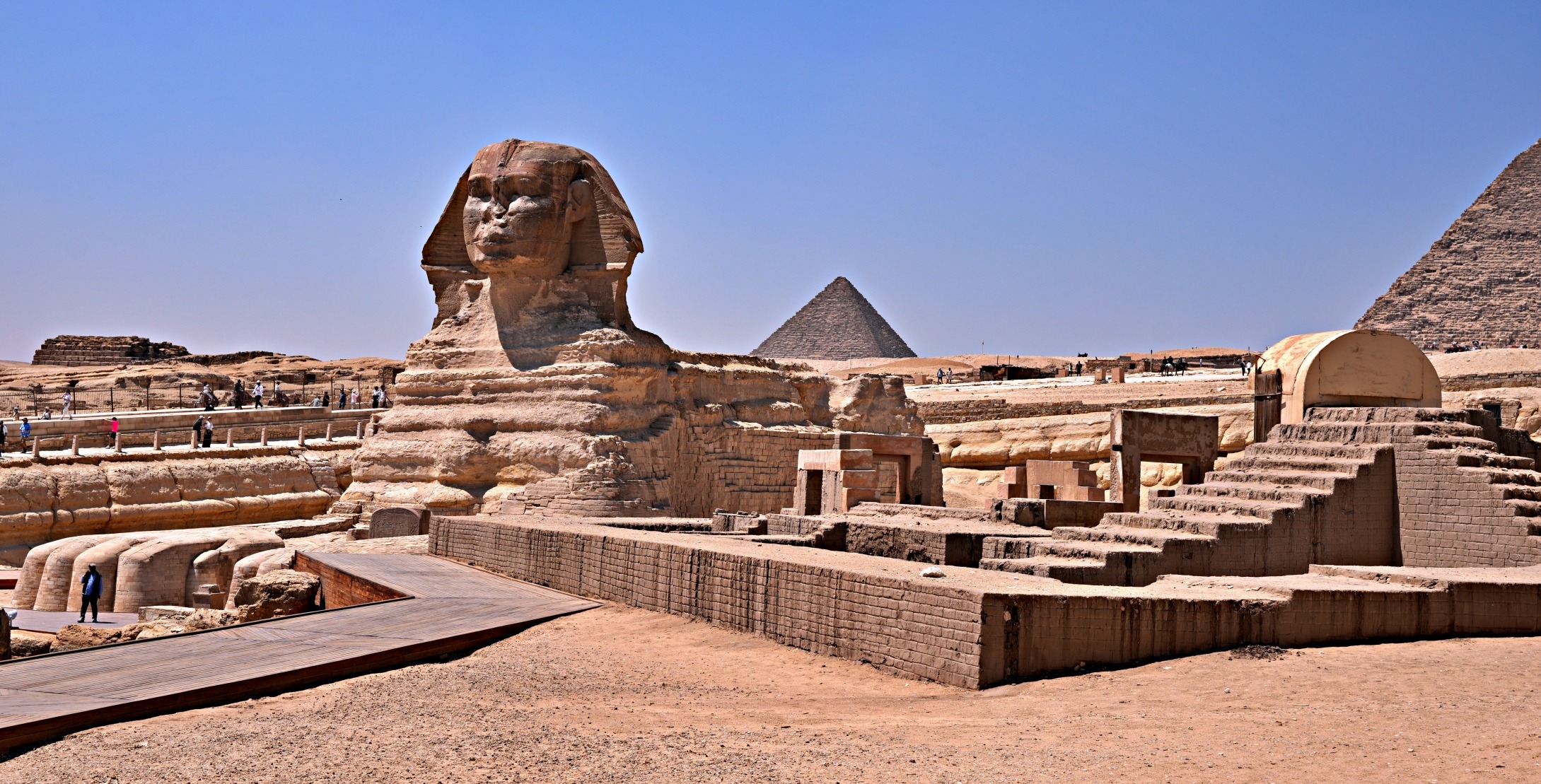
Famous for its pyramids and ancient tombs, there’s a lot more to see in Egypt than just those. In fact, with such a large number of attractions to choose from, trip planning can be daunting, but don’t worry, we’re here to help. After spending a month exploring its many historical landmarks, we’ve created a list of what we think are the top places you should visit in Egypt.
Click on the link to go directly to our Travel Tips for Egypt.
Typically, we suggest the top cities and towns to visit in our country guides. But since so many are in Luxor and Cairo, we’re listing what we think are the best attractions in those two cities, as well as the other towns to keep in mind while you visit the country. Because our preferences may not match yours, the order you choose may be different, but we’re sure whichever you pick will make a trip to remember.
You can find our recommended sites, as well as others, in the map below. It is an interactive map so you can zoom-in or click on a marker for a link to our post from that region.
1. Valley of the Kings
Hidden inside this desolate valley on Luxor’s west bank are some of ancient Egypt’s most magnificent treasures. Cut into the cliff walls, you’ll find elaborate tombs, decorated with messages meant to guide pharaohs into the afterlife. From one jaw-dropping moment to the next, expect to be awe-struck when you see the ancient tombs in the Valley of the Kings.
As our number one recommended site to visit in Egypt, we’re confident that the Valley of the Kings will not disappoint. You can read more about these tombs and tips for your visit to Luxor in our post, The Valley of the Kings – Ancient Egyptian Tombs.

2. Pyramids of Giza and the Great Sphinx
Undeniably, Egypt’s most famous attractions are the Pyramids of Giza and the Great Sphinx. Sometimes such highly anticipated attractions are disappointing, but we’re happy to report that the pyramids not only lived up to expectations, but they exceeded them. Their perfect symmetry, immense scale, and close placement to one another and to the Great Sphinx combine to make it one of the most unforgettable destinations in Egypt.
Since Giza is a short distance from downtown Cairo, be sure to add the pyramids to your Cairo itinerary. To find out more information about visiting, please read our post, Visiting the Pyramids of Giza and the Great Sphinx.

3. Luxor and Karnak Temples
With colossal statues guarding the doors and tall walls decorated with reliefs and hieroglyphics, the temples of Karnak and Luxor are sure to impress. Although these two temples are not the same site, they are located only a few blocks away from each other and, in fact, have been connected by the Avenue of Sphinxes for millennia.
Located on Luxor’s east bank of the Nile, a visit to these two temples will make for a perfect day of sightseeing. If you prefer to split them up so as not to get templed-out, it’s easy to hop on a ferry and spend the rest of the day at one of the many sites on the west bank of the Nile. You can read more about these two temples in our posts Ancient Wonders – Karnak Temple and Mummy Museum and Luxor Temple: A Journey Through Ancient Egypt.

4. Abu Simbel Temple Complex
Built into the cliffs above the Nile, the rock-cut temples of Abu Simbel are an awe-inspiring sight. The colossal statues of Ramses II at the entrance were meant to intimidate Egypt’s enemies and foreign merchants, and 3000 years later, they still do just that. Located in Upper Egypt, 200 km from Aswan, it is more than worth the extra effort to visit this phenomenal complex.
To find out more about visiting, please visit our post, The Stunning Rock-Cut Temples of Abu Simbel.

5. Diving in Sharm el-Sheikh
You may not think so by looking at its surface, but beneath the Red Sea’s deep blue waters, you’ll find some of the world’s best diving. Famous for its exceptional visibility, expansive reef system, and rich marine life, diving off the shores of Egypt’s Sharm el-Sheikh is an unforgettable experience.
Find out more about the unique experience of diving in the Red Sea, as well as some of the things we saw by visiting our post, Sharm el-Sheikh: Diving in the Red Sea.

6. Cairo
While most make a quick stop in Cairo on their way to see the Pyramids of Giza, we think you should give the city some time too. Not only will you love exploring its medieval Islamic centre, including a hilltop citadel, but also its earlier Christian settlements. With so many choices, there is enough to keep you busy for several days in Cairo.
There’s so much to do in the city itself that we presented it in four posts. You can read more about the city in our posts on Al-Mu’izz Street and the Citadel in Islamic Cairo, its Christian roots in Coptic Cairo, and its more recent history as well as places to stay and eat in Cairo’s Top Historic Landmarks.

7. Pyramids and Tombs of Saqqara
From the world’s first pyramid to the painted reliefs inside ancient tombs, the Saqqara Complex is home to many treasures both above and below ground. Its importance in Egyptian history makes a visit to the Step Pyramid rewarding; however, it is the painted tombs that will leave you in awe. With so much to see, the Saqqara Necropolis should be on your itinerary when you visit Cairo.
The Saqqara Necropolis is not far from the Pyramids of Giza, so you can easily visit both on the same day. To read more about Saqqara, visit our post, Saqqara – Explore The Step Pyramid and Tomb Art.

8. Dendera Temple
Overflowing with colourful art, Dendera Temple is said to be ancient Egypt’s most beautiful temple. After seeing it in person, we have to agree. From the beautiful Hathor-headed columns to the elaborate murals on the ceilings, Dendera Temple should not be missed. Its location just outside Luxor makes it easy to visit.
You can read more about this ancient temple and how to visit it in our post, Dendera Temple, A Day Trip from Luxor.

9. Aswan
The city of Aswan was a wonderful surprise with a wide range of places to explore. From the colourful Nubian houses and archaeological site on Elephantine Island to the uniquely located Philae Temple on the Nile, try to keep a few days in Aswan in your itinerary. We’re sure you’ll be happy that you did.
To find out more about what to see and do in Aswan, please read our posts, Explore Aswan: The Hidden Gems of Elephantine Island and Philae Temple and the Unfinished Obelisk in Aswan.

10. Alexandria
The city of Alexandria has a very different feel from Cairo, due both to its location on the Mediterranean and to its illustrious past. When you combine visits to see its European buildings and Corniche walkway with its historic Roman ruins and medieval fortress, you’ll see a completely different side of Egypt in this Mediterranean city.
Alexandria may not boast the famous attractions of Cairo or Luxor, but what it does have makes a visit worthwhile. In fact, there is so much to see that we presented Alexandria in two posts. To read more about this city, please visit A Guide to Alexandria’s Historic Sites and Discover Alexandria – Egypt’s Mediterranean City.

12. Siwa Oasis
The oasis town of Siwa is unlike anywhere else in Egypt. Surrounded by vast desert landscapes, this remote town is home to a wide variety of attractions, ranging from medieval clay buildings and ancient rock-cut tombs in town to the natural oases in the surrounding land.
Since there is so much to see in and around Siwa, we wrote two posts. You can read about the many attractions in Siwa itself in our post, What To See in Siwa Oasis. Then, we venture beyond town to bring you its temples and wonderful oasis landscapes a short drive away in Day Trips from Siwa – Mineral Springs and Ancient Temples.

Other Attractions
If you have a little extra time while in Luxor, we think you should include Deir el-Medina and Medinat Habu on your list. They may not be the highlights of the city, but the artwork in the tombs and mortuary temple makes these two sites memorable. Both are located on Luxor’s west bank, and a visit to them can be combined with your trip to the Valley of the Kings. You can read about these in our posts, Ancient Egypt’s Deir el-Medina, Tombs of the Nobles and Valley of the Queens and Mortuary Temples – Ramesseum, Medinet Habu and Hatshepsut.

Travel Tips for Egypt
With a fascinating history and a variety of sites to match, travel to Egypt differs from your typical vacation destination. Because of that, proper planning before travelling to Egypt will make your trip much more enjoyable. Here are some of the tips that we learned during our month-long visit to the country.
Tourist Visa – Most travellers require a tourist visa that allows 30 days in the country. Below is the link to apply online, but it may take up to a week, so do it in advance. Everything on the form must be accurate; if information is missing or typed incorrectly, you will have to reapply. Make sure you have enough time because it may take a week for you to be told there is an error. Also, if you are travelling as a couple (or family), you must apply for a Family Visa. It is easy to miss the question about travelling as a family, so keep an eye out for it near the beginning of the form. It is also very difficult to go back and make changes, so take your time when completing each page.
For e-visas, use this link.
• Yellow Fever – Officially, you need to have a Yellow Fever Vaccination to be admitted to Egypt, but we were never asked to show ours.
Money – Other than government-run museums, it is a cash-based economy, and most businesses use Egyptian pounds. Private guides may ask to be paid in US dollars, though. We also found that most hotels prefer US dollars if you extend your stay or book in person. Remember, though, most will only make change in Egyptian pounds.
- Tips – You will be asked for tips everywhere, including by museum staff at government-run sites. Therefore, be sure to have Egyptian pounds in small bills.
- ATMs – We found HSBC offers the best rates and was the bank most likely to have cash. Unfortunately, they are not available everywhere. We found Bank Credit Agricole to be a good alternative. Warning: our bank card was not returned after using an ABK Bank ATM. The main concern is that the bank’s policy is to not return bank cards. Luckily, we travel with two bank cards and Visas.
- Credit Cards – Most government-run archaeological sites only accept credit cards.
Scams and Touts – Although Egyptians are friendly and welcoming, and thievery isn’t in their nature, the art of the scam seems to be woven into the genes of many. While pickpocketing and bag snatching may occur in some areas, most problems come from aggressive touts. This is the behaviour that makes visiting Egypt so tiring and has given the country a bad reputation. The most common scam is to act as a helpful stranger but have an ulterior motive. Try to remember that nothing is free. When someone on the street, or in a musuem offers you something, they usually expect to be paid. You can either ignore them or say La Shukran (No Thank-you). We found the most success by telling them ‘we went yesterday’. Other scams include overcharging, so make sure you are willing to haggle or expect to overpay for almost anything.
Also be aware of fake guides at archaeological sites. It is safer to hire a guide from your hotel or travel agency. Surprisingly, many scams come from museum staff who offer to show you a secret area or take a picture for you. Of course, they expect cash in return.
Transportation
• Buses – GoBus and West Bus are great choices. They are affordable, safe options, and their buses typically run on time. GoBus travels between Cairo and Alexandria (3 hours), Luxor (10 hours), and Sharm el Sheikh (7 hours). To reach Siwa, WestBus is the best option and connects it to Alexandria (8 hours) and Cairo (10 hours).
• Trains – This is a difficult option for foreign tourists because they are much more expensive than buses and are notoriously late.
• Air – Domestic flights are inexpensive and easy to get between many cities. Many, though, are routed through Cairo, so may not save as much time as you expect.
• Taxis/Ride Share – In the larger cities, taxis are everywhere and they will likely find you before you find them. There are also drivers with private cars, which we found were much more difficult to negotiate with than taxis. The Uber and Careem ride-share apps don’t work the same as they do in other countries. After receiving a quote from these apps, the driver often sent us a message to say he would only come for a higher fee. Instead, we used these apps initially to understand the pricing, allowing us to be informed hagglers with taxis and tuk-tuks.
Before hiring any driver, whether it is a taxi or private, be very clear on the important details agreed to with your driver. Confirm the following: the price quoted is for your entire group, and not per person; where they will drop you off; whether the price is for one way or return; and how long you want them to wait. If you are not clear, they will look for a way to charge you more at the end of the trip. There are many scams where they will say the agreed-upon price was only for one person. For either, you should know the approximate prices before asking.
A common taxi scam is to tell you that you have arrived at your destination when you are actually 2 km away. Therefore, it’s best to follow your route on Google Maps. Another common one is to tell you that a restaurant, hotel or site is closed, so they can take you somewhere else.
Language – Arabic is the main language, and the Arabic alphabet makes it very difficult to read local signage. In most tourist areas, English is widely spoken and written on signs and menus, but you won’t find it as often outside these popular centres. We always find Google Lens helpful in translating menus. If you need to send a written message, Google Translate has a feature to put Egyptian text into the Roman alphabet. We found this helpful when communicating with drivers by text/WhatsApp. At the popular tourist museums, professional guides are available in English, French, German, Spanish, and others.
You will find it helpful to learn the following few Arabic words: As-salamu Alaykum, which means Hello. If someone says it to you, the reply is the same words said in reverse: Alaykum As-salam. Shukran means Thank You, and La Sukran means No Thank You.
Food – Egyptians eat a lot of grilled meat, mostly chicken and beef, kebabs, shawarma, and kofta (meatballs). In some areas, they eat goat and pigeon. Surprisingly, there are quite a few vegetarian dishes. Koshary is their national dish. It is a stew of lentils, rice and pasta in a tomato base. We found it quite bland, but it was filling. Another similar dish is fatta, which can be meat or vegetarian, and we found it more flavourful. Other vegetarian choices are moussaka, hummus, tahini, falafel, and lentil soup. Egyptian breakfast is usually ovo-lacto vegetarian with eggs, beans, yogurt and bread. Coffee is typically Turkish coffee. If you order tea, it will be mint, so be sure to ask for black tea when ordering.
Egyptian rice is very common and is delicious. Made with broken vermicelli and short-grain rice, it is toasted before adding water and is very tasty. It came with almost every meal, yet we never tired of it.

To read more of our adventures in Egypt, click here.
Coming Next – Discover Amman’s Rich History
For pictures from other blogs go to Gallery at monkeystale.ca.
To read about more of our adventures go to Destinations.
If you like what you read, please comment or share (with credit) using the links below.



We'd love to hear from you, please leave a comment.