
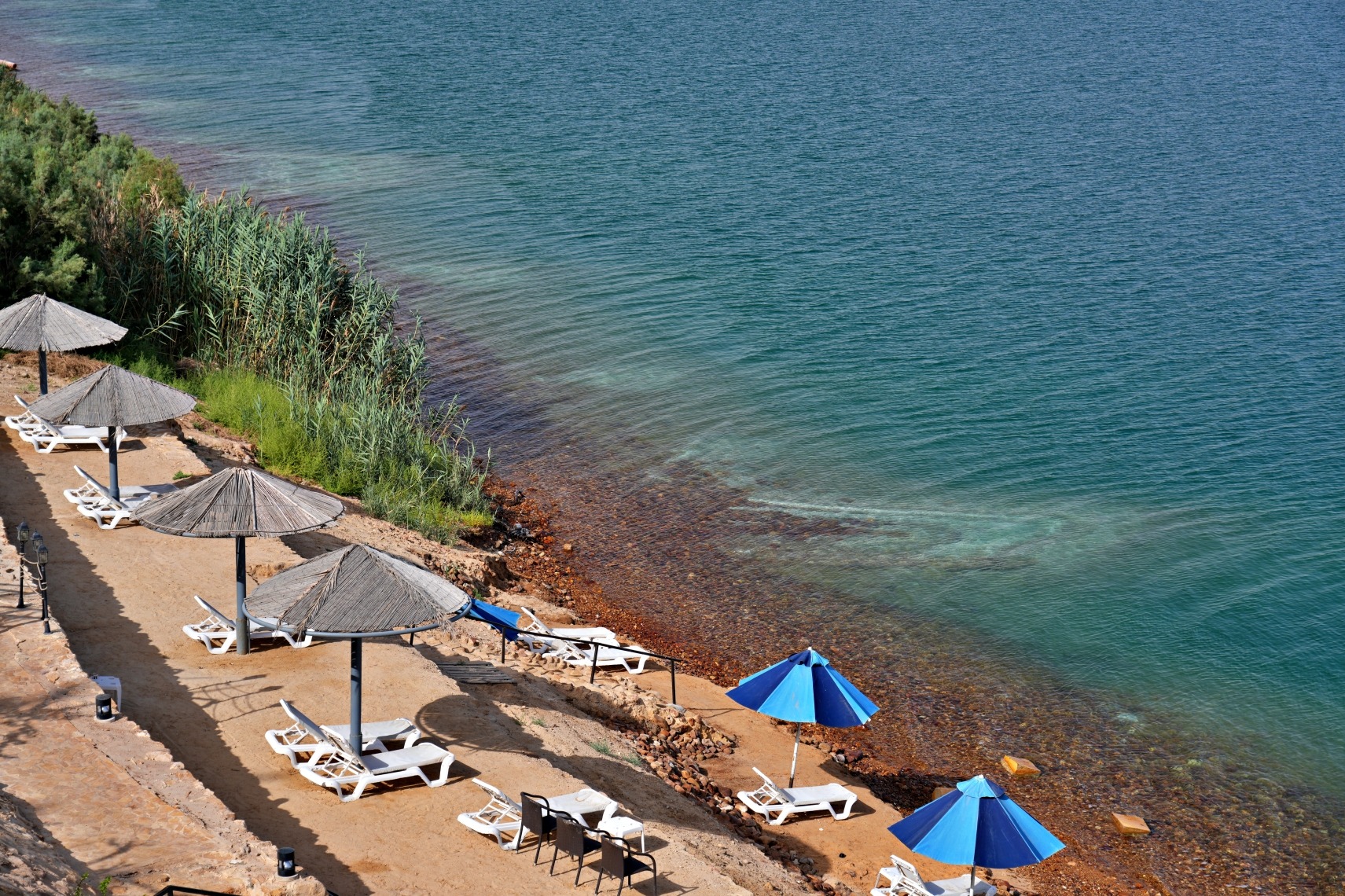
It is a strange feeling to be able to float in the water without really trying. In fact, the high salinity of the Dead Sea even makes it difficult to put your feet down and stand up after floating. Combine this experience with the mud baths, and we think you’ll love your overnight stay at the Dead Sea.
To see where the Dead Sea is located, please click on the link to view our interactive map of Jordan.
How was the Dead Sea formed?
Millions of years ago, the Mediterranean Sea stretched across parts of the Middle East, including northern Jordan. Several theories try to explain the formation of the Dead Sea, but the prevailing one is that the Jordan Rift Valley is part of the Great Rift Valley that extends from Mozambique all the way to the Sea of Galilee (Lake Tiberias). Eons of frequent tectonic activity slowly transformed the region’s geography, creating this large rift. In Jordan, it is called the Jordan Rift Valley, or Jordan Valley for short.
One of the most interesting details of this landscape is that most of the Jordan Valley lies below sea level, and its deepest point is the Dead Sea. In fact, its shore is almost 430 m (1,410 ft) below sea level, and although the lake is not that deep, its basin is at a remarkable 740 m (2,430 ft) below sea level.

This body of water has so many fascinating details that being below sea level isn’t even the most unusual. With a salinity level of 29-34%, it is one of the most saline bodies of water on the planet. For perspective, most ocean salinity is 3.5%, and the Red Sea, where we went diving, is 4.1% salt. The only other water we’ve visited that is similar was Baltinache Lagoon in Atacama, Chile, which is 28-30% saline.
You can read about our dives in our posts Sharm el-Sheikh: Diving in the Red Sea, Diving in Aqaba (Coming Soon) and our time in the Atacama in our post Atacama’s El Tatio Geysers, Rainbow Valley and Baltinache Lagoon.


In addition to sodium and chloride ions, the Dead Sea also has high concentrations of calcium, magnesium, potassium, and bromide. In some areas, bitumen has been floating on the surface for thousands of years. Interestingly, Egyptians are known to have used this bitumen in the mummification process.
Do you wonder why the Dead Sea has such a high mineral content? First of all, the Dead Sea is not a sea at all, but is a lake. Since it began as part of the sea, it makes sense that it has a higher saline content than a typical lake. The reasons for its extremely high mineral content, though, are due to its unique geography and surrounding environment. Since the soil and rocks have higher than normal concentrations of these minerals, seasonal streams and rainwater runoff pick them up and deposit them into the lake. Another factor is that the Dead Sea is actually an endorheic lake, meaning it has no outflow. This increases the salinity because the small amount of water that enters the lake is trapped and, due to the desert environment, evaporates quickly. All of these result in a very salty body of water.

Not only is the Dead Sea unusual for these details, but we also found it to be quite picturesque. Bordered by Jordan to the east and the West Bank of Palestine and Israel on the west, this deep blue body of water provides a stark contrast to its desert shore.


Floating in the Dead Sea
This historic lake is a popular tourist attraction, and we were curious to experience floating in its highly saline waters for ourselves. While you can visit the public beach on a day trip from Amman or Madaba, why not instead stay in one of the many resorts along its shore to fully experience what this famous body of water has to offer.
The first thing you’ll want to do when you arrive is go to the beach. Even from above, we saw salt formations in the water. When we got closer, we noticed salt balls that looked to us like snowballs, lying on the beach.


When we got to the beach, we checked our GPS watches and saw something we’d never seen on them before. Our elevation was -409 m (-1,342 ft)! Notice the minus sign on the watch face.

Once there, we were excited to get in the water. Floating on the Dead Sea is unlike anything else. As soon as we started to lie back in the water and lift our feet, our legs sprang to the surface. In fact, it was difficult to get up to a standing position when we were done soaking. We actually had to force our legs down to the lake bottom. Because the salty crystals make the ground very sharp, we wore sandals, which only added to this feeling.
Due to the high mineral content, you should never submerge your head. As well, the minerals may cause skin irritation, so it is advised to soak for only 15-20 minutes at a time. Since we had two days, we floated several times for short periods each time.


Another strange thing is that after getting out of the water, your skin feels a little slimy. Because of this and the irritation to your skin, you’ll want to use one of the beachside showers right away.
After having fun in the water, slather yourself in Dead Sea Mud. It is supposed to be very good for your skin. After a few applications over two days, our skin felt silky smooth, more than from other mud baths we’ve used, so maybe there is something to it. The mud is also said to be good for muscle and joint pain, as well as your skin.

Amman Beach
If you don’t want to stay overnight, you could also visit Amman Beach. This is where most day tours will stop. The prices for the public beach, though, don’t make it much more economical than staying in a resort with free ammenities. As you can see in the picture below, it was very quiet when we drove by because of the Iran War.
Fee – 20 JD ($28 USD), plus fees for sunbeds and mud.

Unfortunately, the Dead Sea is receding more than one metre a year. The reason is due to a few factors. One is that Jordan River is its main inflow, but we already showed you how small that is nowadays when we visited Bethany Beyond the Jordan. Its size is the result of a dam on the river. Another on the Yarmouk River adds to this problem. The end result of these dams is less water flowing into the Dead Sea. Another reason is the salt and potash mining occurring along the lake. A third is due to evaporation in its desert location.
As a result, on the other side of the lake, in Israel, many resorts no longer have direct access to the sea, so instead, have built artificial hotel-side pools. In Jordan, there is still direct access to the sea, but for how much longer? In the picture below you can see the water level marks on the shore. It also shows how many of the hotels’ water access changes every year.
Tips for Visiting the Dead Sea
With such high salinity and its low elevation, you need to take several precautions when visiting the Dead Sea:
- Avoid getting the water in your eyes or mouth.
- Only soak for 15 to 20 minutes at a time to prevent skin irritation and dehydration.
- Don’t shave before entering the water because it will sting, and don’t enter if you have an open wound.
- Use the freshwater showers provided so you can wash off the salt and mud immediately.
- Avoid getting mud on your bathing suit because it may stain. As well, rinse your bathing suit after each float.
- Bring sandals or water shoes because the salt crystals are very sharp.
- Stay hydrated and wear sunscreen.
- When we visited Jordan, our GPS was often not accurate. The cause was jamming due to the Iran and Palestine wars.
Where to stay on Jordan’s Dead Sea
To fully appreciate the Dead Sea, we recommend staying at least one night. You have your choice of high-end international hotels and Jordanian apartment-style resorts. Most have direct access to the water and usually have their own supply of Dead Sea mud. Some have day access fees, but most are only open to guests. Not all have beach access, so make sure to check before booking.


Other nearby attractions
Not far from the Dead Sea you’ll find many other places to visit. Taxis are often wating outside hotels or the Samarah Mall so you could easily spend a day visiting:
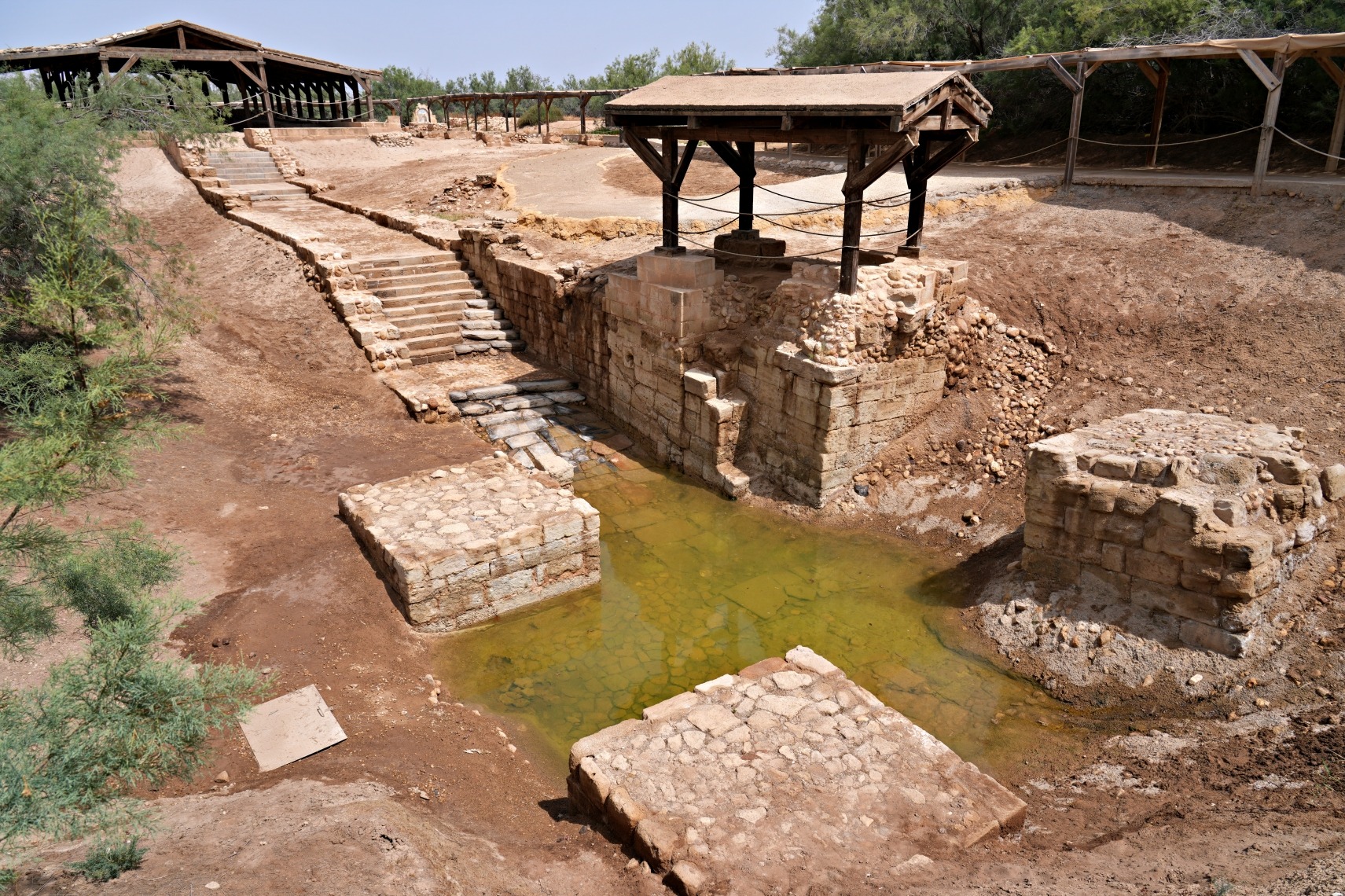
- Bethany Beyond the Jordan – The Baptismal site of Jesus is located on the Jordan River, only a few kilometres from the Dead Sea.
- Madaba – Its main draw is its Byzantine mosaic floors, but we found so much more to see.
- Amman – The capital city is filled with historical attractions.
- Mt. Nebo – Visit the museum on its summit.
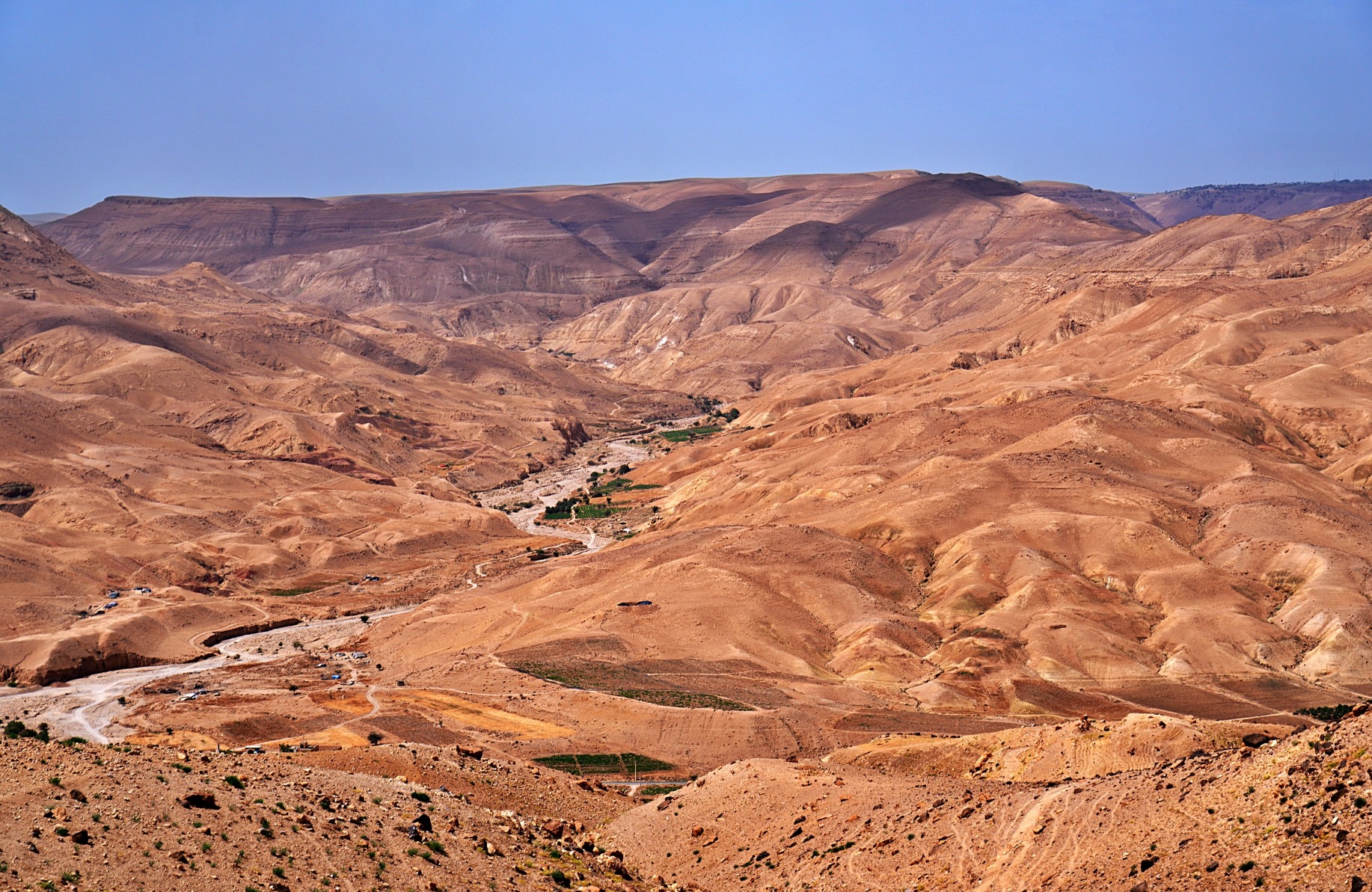
- King’s Highway – Drive this historic highway from Madaba to Petra to enjoy the scenery and stop at some of the many landmarks. On the way you’ll have wonderful views of the Dead Sea.


Please note, we visited Jordan in the spring of 2026. At that time, there was a ceasefire in the Iran War due to the signing of the Memorandum of Understanding. Since conditions are changing frequently, please read current news on the area before planning your trip.

Here’s a link where you can read more of our adventures in Jordan, and a link to our interactive map of Jordan.
Coming Next – Drive the King’s Highway
For pictures from other blogs go to Gallery at monkeystale.ca.
To read about more of our adventures go to Destinations.
If you like what you read, please comment or share (with credit) using the links below.



We’d love to hear from you, please leave a comment.