
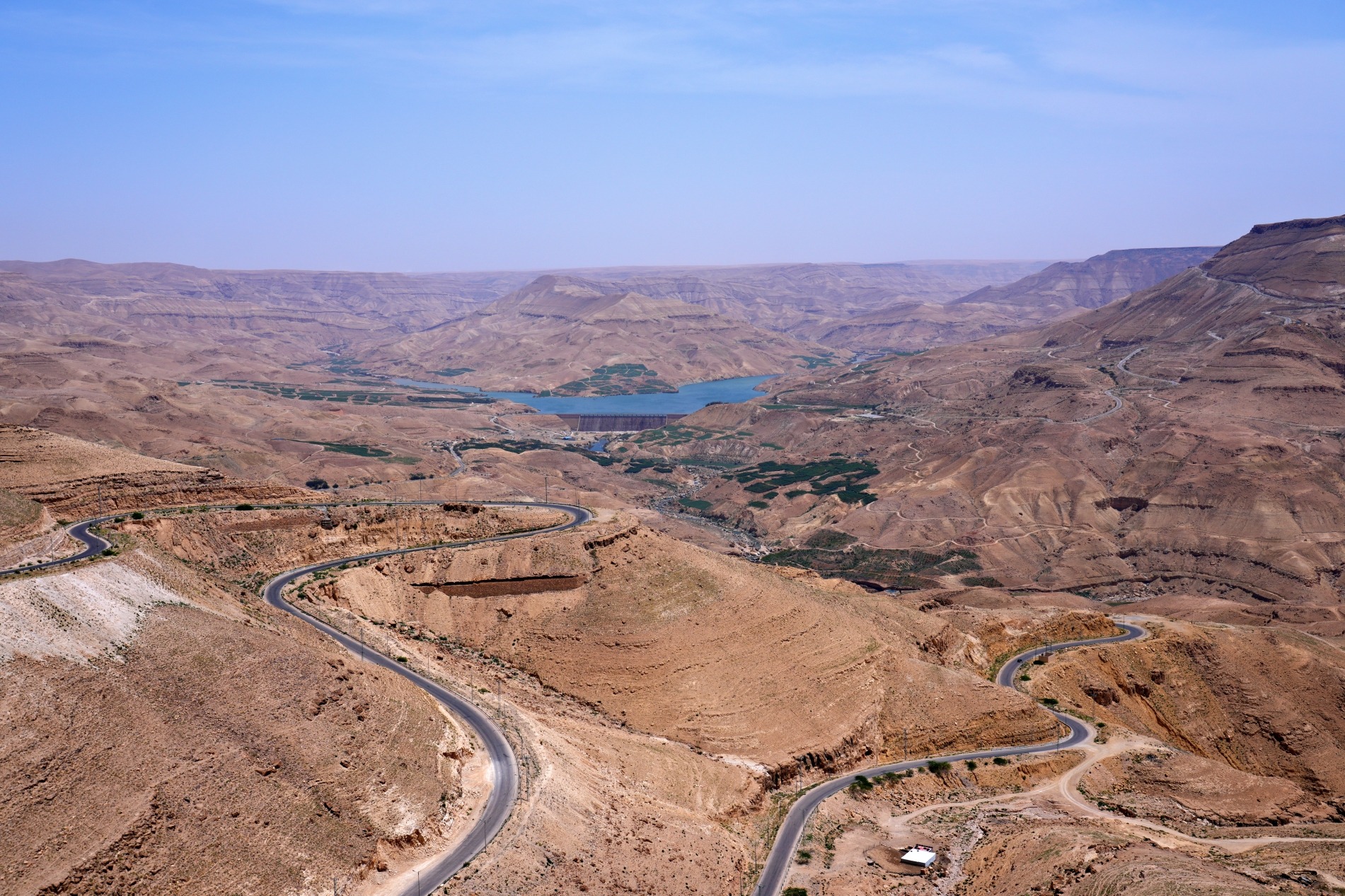
It’s not by accident that many of Jordan’s historic sites line up along Highway 35. Today, it is a paved road, but its roots go back much further. Travelling between deep desert wadis and high plateaus, the ancient caravan route, called the King’s Highway, brought many to this part of Jordan. As each civilization came and went, they left something behind for us to discover which is why driving the King’s Highway is something you don’t want to miss.
In ancient times, the King’s Highway ran through Jordan, connecting Egypt in the south to Syria in the north. From it, other routes allowed merchants to travel to neighbouring regions such as Arabia and the Mediterranean. Today, we can recreate part of the historic caravan route on Jordan’s Highway 35. This tourist route travels from Madaba to Wadi Musa and allows you to visit the many historic landmarks while enjoying the scenery.
Here’s a map of the King’s Highway with markers of the various historic attractions:
How to Drive the King’s Highway
Public transportation is not as straightforward in Jordan as it is in most countries. There aren’t as many buses, nor are there direct routes between cities; therefore, you may have several transfers to reach your destination. Because of that, most foreign visitors rent their own car. Doing that on the King’s Highway allows you to take your time on this drive and stop at the many attractions along the way.
Another option, and the one we used, is to hire taxis and private drivers. For two or more people, this is actually quite an affordable option. Make sure you’re clear from the start that you want to make stops along the way, so there are no misunderstandings about the fee. We met our driver in Madaba, and after he drove us to our first destination on the Dead Sea, he was more than happy to return two days later to take us on our King’s Highway tour.
Madaba
The starting point for your King’s Highway roadtrip is the city of Madaba. After spending a day or two exploring its mosaic floors, you’re ready to begin your journey on the famous trade route.
You can read more about this historic city in our post The Wonderful Mosaics of Madaba.


1. Dead Sea
The first stop we’re suggesting is a little off the official King’s Highway, but you won’t mind the detour to the Dead Sea. You can either stop to see it from the Dead Sea Highway, or stay a few days to experience everything this unique body of water has to offer.
You can read more about visiting the Dead Sea in our post Floating on the Dead Sea.


2. Ma’in Springs
The land around the Dead Sea is filled with deep, dramatic wadis (valleys), so as you make your way from the Dead Sea back to the King’s Highway, you’ll travel through several. Wadis are dry river valleys that usually only fill with water after heavy rains. In this part of Jordan, most are very rugged. Some may only have a trickle of water, and yet are able to support flowering plants.

One of the larger ones is Wadi Zarqa Ma’in, a valley with dozens of waterfalls as well as hot and cold springs. Even though you’ve driven uphill to reach it, this valley is still below sea level. Most visitors to Ma’in bathe in its hot springs, but at 35°C we just stopped for a look. If you want to visit, you can book a room at the private spa hotel or purchase a visitor’s pass to the springs.
It is not directly on the King’s Highway, and if you’re not visiting the Dead Sea, this detour to Ma’in may not be worth it, but we did like the views we had of Wadi Zarqa Ma’in.


3. Machaerus Fortress
Taking over a small hillock above Wadi Zarqa Ma’in is Machaerus Fortress. Built by King Herod, this small spot carries a hefty amount of history. It is the location where Herod imprisoned and beheaded John the Baptist.

Built in the 1st century BCE, Machaerus Fortress continued to be used for a while, but then, around 70 AD, the Romans destroyed it. As a result, instead of a hilltop fortress, you’ll only find the outlines of stone walls and a few columns. In its glory, it included a palace, banquet hall, and bathhouse with a sophisticated water supply system. Today, there are more goats and birds at the historic site than ancient structures.


One of the best things about visiting Machaerus Fortress was the view of the Dead Sea from this hilltop location. At 700 m (2,300 ft) elevation, it is roughly 1,100 m (3,600 ft) above the Dead Sea!

Entry is free; Opening Hours – 8 am – 6 pm, closes at 4 pm in the winter. To reach the fortress, you must first climb down and then up about 80 – 100 m, so it is difficult for those with problems walking stairs.
4. Umm ar-Rasas
After visiting Machaerus Fortress, you’ll soon be back on the King’s Highway, where we recommend stopping at Umm ar-Rasas. In the 3rd century, the Romans built a military fortress at this location, and its name was Kastrom Mefa’a. As early as the 5th century, the Byzantines transformed it into a rest area for pilgrims travelling to the Holy Lands. Of the 16 churches built, only the 8th century St. Stephen’s Church has been fully excavated. Thankfully it was, because this church boasts the largest mosaic floor in Jordan.

St. Stephen’s Church was built during Islamic rule, when depictions of icons were banned; therefore, the images on the floors are not of saints. Instead, the mosaics depict cities in the Levant, including Madaba, Gaza, Philadelphia (Amman), al-Karak and Kastrom Mefa’a (Umm ar-Rasas). Because of this, it is sometimes called the ‘Other Mosaic Map’.
It is easy to see why it is a UNESCO World Heritage Site.


The Nile River is also a feature and is used as a border between the cities and the plants and animals in the centre.


Most of the rest of the grounds are the ruins of the other churches. St. Paul’s is most photographed because its arched entryway is quite picturesque.

Entry – it is included in the Jordan Pass; otherwise it is 3 JD ($4.25); Opening Hours – 8 – 6:30 pm, winter closes at 4 pm.
Stylite
A kilometre from the churches of Umm ar-Rasas is another important historical artifact, a stylite. Built in the 6th century, the tower was used by ascetic monks who spent days or months on its top, meditating and praying, attempting to achieve salvation for their souls. These stylites, also called pillar saints, were common during this era when physical hardships were a symbol of spiritual devotion. At 14m tall, it is believed to be the only remaining stylite tower in the world.
At its base are the remains of a monastery.
Entry is free.


5. Wadi Mujib
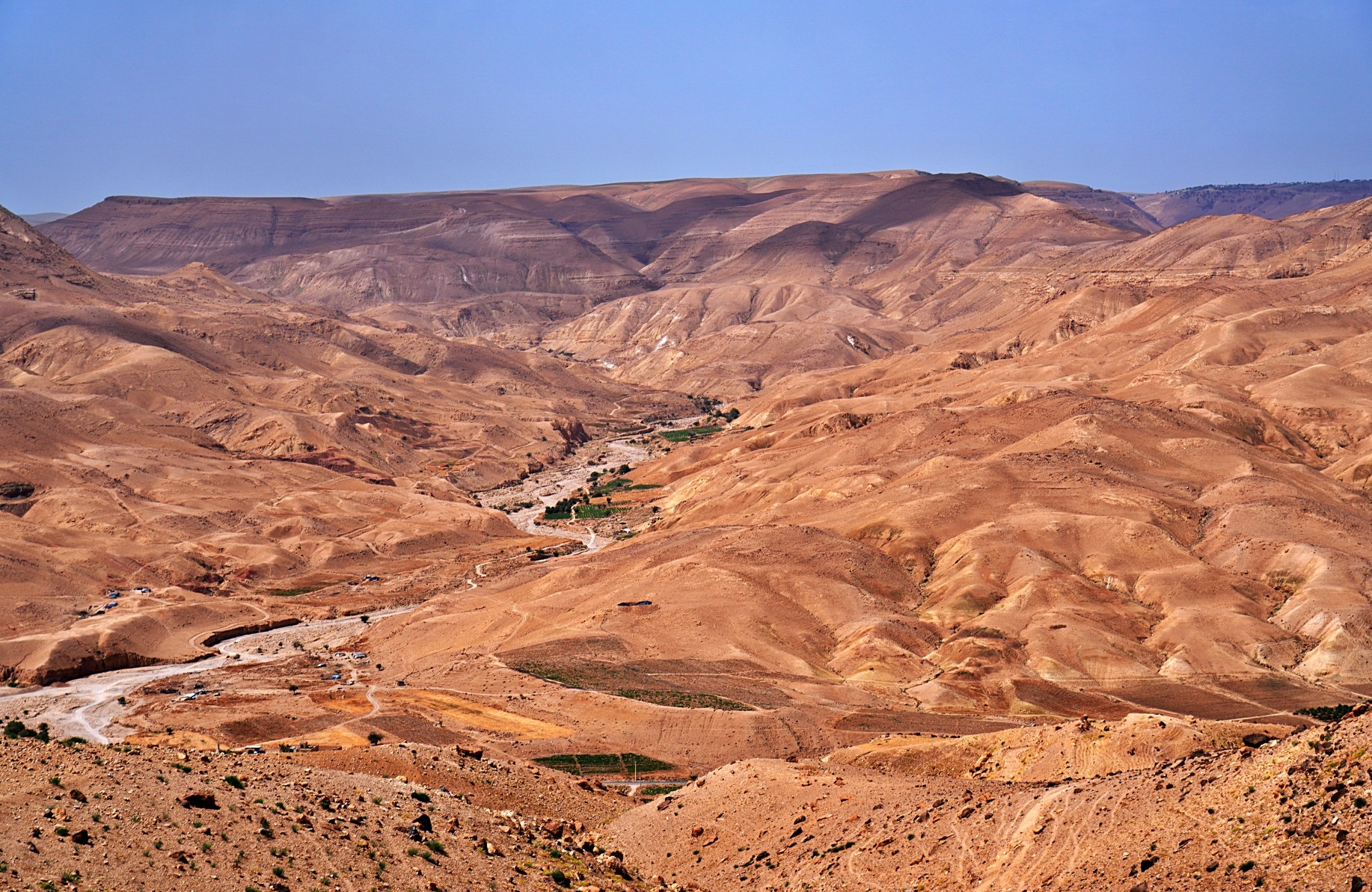
From Umm ar-Rasas, you’ll soon reach one of the route’s most impressive landscapes: the rugged and deep Wadi Mujib. If you have time, you may want to hike in the Wadi Mujib Biosphere Reserve. The trails come in a variety of levels, from easy walks to more adventurous canyoning. Independent hiking is not allowed, but you can find several guiding companies offering services. Even if you don’t go hiking, though, you can still see its beauty while driving on the King’s Highway.


At its base, Mujib Reservoir contrasts nicely with the desert terrain.


6. Karak Castle
Set on a ridge above the King’s Highway is another reminder of Jordan’s varied history. In the Middle Ages, the Crusaders controlled this route to the Holy Lands and built castles to protect Christian pilgrims. Karak Castle was the largest of Jordan’s Crusader Castles and makes a great stop on the King’s Highway.
You can read more about it in our post Karak and Shobak – Crusader Castles in Jordan.


7. Wadi al-Hasa
Another picturesque, but rarely mentioned canyon is Wadi al-Hasa. It sits between two popular stops, Karak Castle and Dana Biosphere Reserve, so you’re bound to drive through it when travelling on the King’s Highway. The Tannur Dam was built on the Wadi al-Hasa River and can be seen from the highway. From the dam, the river flows into the Dead Sea.


8. Dana Biosphere Reserve
One of Jordan’s most popular hiking areas is the Dana Biosphere Reserve. What draws visitors is its surprisingly large amount of diversity, both in plants and birds. Completing the trip is a visit to the charming Bedouin village of Dana, balanced on the rim of Wadi Dana.
You can find out more about this area in our post Hiking in Dana Biosphere Reserve.


9. Shobak
Perched atop a small hillock, Shobak Castle looks like the perfect medieval fortress. Built in 1115 by Crusader King Baldwin I of Jerusalem, Shobak was originally named Mont Real. It is older than Karak by a few decades and, was also built to protect pilgrimage routes to Jerusalem. You can make a quick stop at Shobak on your King’s Highway trip.
Read more about it in our post, Karak and Shobak – Crusader Castles in Jordan.

Wadi Musa/Petra
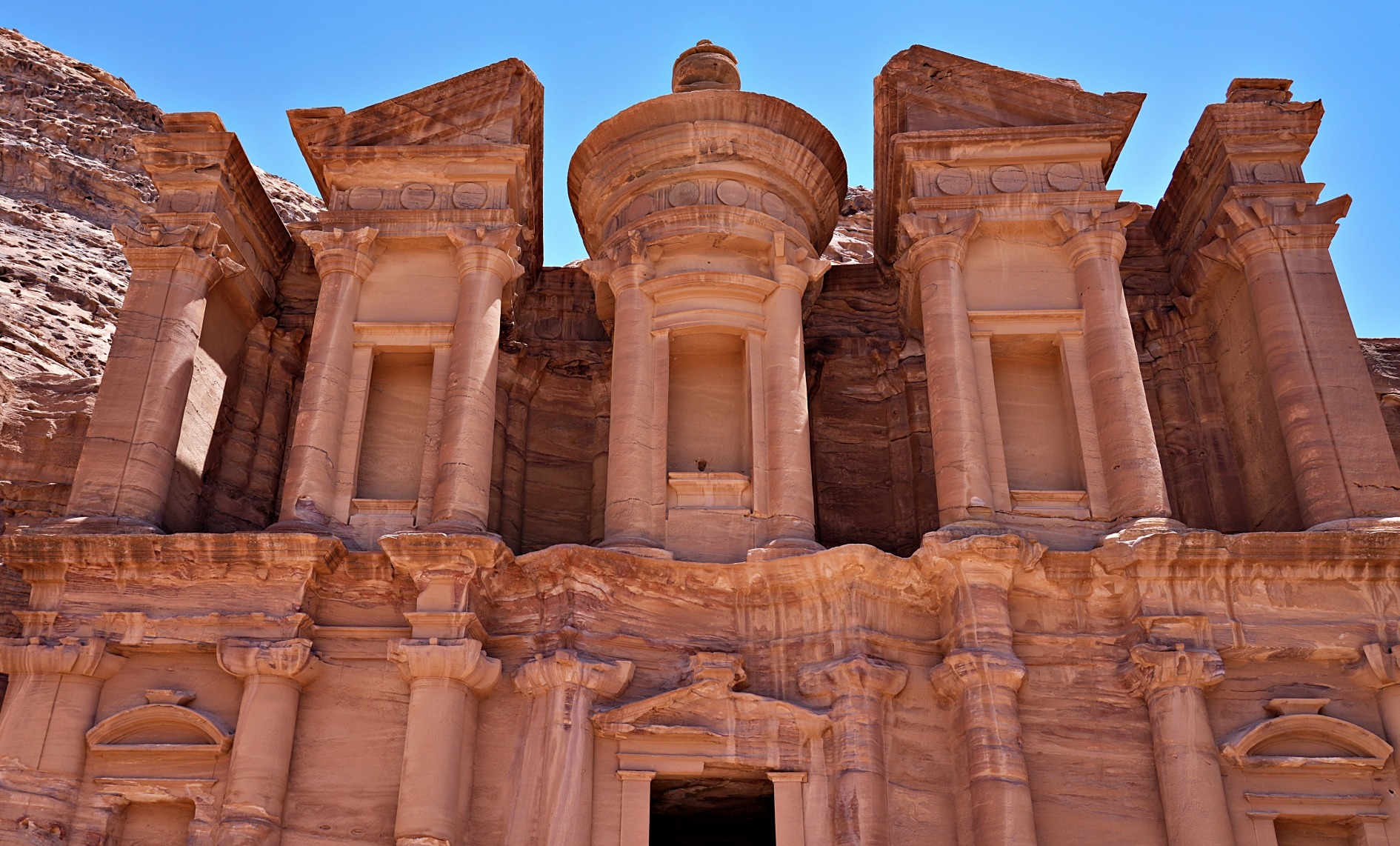
The King’s Higway ends in Wadi Musa, gateway to the famous ancient city of Petra. Although the Treasury is what gets the attention, there is so much more to see in Petra. Plan to spend a few days in the city to ensure you have enough time to fully appreciate this architectural marvel.
You can read more about what to expect in Petra in our post Petra: An Ancient Wonder.


Please note, we visited Jordan in the spring of 2026. At that time, there was a ceasefire in the Iran War due to the signing of the Memorandum of Understanding. Since conditions are changing frequently, please read current news about the area before planning your trip.
Here’s a link where you can read more of our adventures in Jordan, and a link to our interactive map of Jordan.

Coming Next – Karak and Shobak – Crusader Castles in Jordan.
For pictures from other blogs go to Gallery at monkeystale.ca.
To read about more of our adventures go to Destinations.
If you like what you read, please comment or share (with credit) using the links below.





We’d love to hear from you, please leave a comment.