

Imagine being an incense trader in the 1st century and hearing whispers of a city carved into the rocks. It must have sounded like someone’s wild imagination, a fable told to entertain. And then, you see it. After walking to the far end of a narrow slit in the cliff walls, you are spellbound by your first view of the architectural wonder. Even thousands of years later, Petra will leave you in awe.
To see where Wadi Musa (Petra) is located, please click on the link to view our interactive map of Jordan.
Since we had just seen the Egyptian temples of Abu Simbel, carved over a millennium earlier, we were a little worried our impression of Petra would be lessened. But rest assured, Petra wowed us, and it will wow you too. The wonder begins even before you reach the famous Treasury and continues until you see your very last cave.
You can read about Abu Simbel in our post, The Stunning Rock-Cut Temples of Abu Simbel.
A little history
The Nabataean people were nomads in Jordan’s deserts. They were experienced merchants trading spices and incense in the land between Arabia and Egypt. By the 4th century BCE, they started to settle down and establish settlements. Once they discovered this hidden canyon near a popular trade route, it was as if their dreams had come true. This easy-to-defend location was perfect for their new market city.
At the other end of the narrow slot canyon, the nomads set up a village of tents, and later they built mud and stone homes on the flats. By the 2nd century BCE, they began carving their famous tombs into the cliff walls. They called their new city Raqmu, and it became a bustling trade centre, bringing people from regions around the Red Sea, the Mediterranean, Syria, Egypt, and Arabia.

As trade grew, so did Petra. Between the 1st century BCE and the 1st century AD, Petra was at its height with a population of 20,000. Although Petra is known for its rock-cut tombs, it was also a functioning city with homes, inns, meeting halls and temples. They established themselves as an important stop for merchants, trading silver, frankincense, myrrh, and spices. In addition, they also gained wealth by selling water to travelling caravans, something that would have been in great demand in the desert. In exchange, international merchants brought new ideas that influenced Petra’s architecture and beliefs. They absorbed these and melded them with their own so that much of this influence can still be seen today.
As the Nabataean Kingdom prospered, its empire expanded beyond Petra. It grew to encompass much of present-day Jordan, stretching all the way from Syria to the Red Sea and Saudi Arabia. As happens with many empires, though, as their kingdom enlarged, it became difficult to manage. In 105 AD, the Romans took advantage of this opportunity, and Petra came under the control of Trajan’s Roman Empire. Within two centuries, the city sustained catastrophic damage from the Galilee Earthquake of 363 AD. The Byzantines partially rebuilt the city, but another earthquake in the 6th century resulted in even more damage, and the city was soon abandoned and forgotten.

Hundreds of years later, nomadic Bedouins moved in. Unlike their predecessors, they kept their settlement a secret for centuries. It wasn’t until 1812 that an outsider entered their hidden city. This was when a Swiss explorer convinced locals to take him to Petra. Legends say he pretended to be a Bedouin, but we can’t imagine they were so easily fooled.
Even after this visit, Petra still wasn’t very well known internationally. It was the film Indiana Jones and the Last Crusade that brought it to the world’s attention. At that time, Bedouins remained living in Petra’s caves. Once it was declared a UNESCO World Heritage Site, however, most were forced to move out. As we found, though, a few still live and graze their sheep and goats in the archaeological site.
Although the earthquakes caused extensive damage, today, Petra Archaeological Park still showcases close to 800 structures, 500 of which are tombs. Come with us as we take you to the incomparable city of Petra.
Djinn Blocks
Petra’s artifacts begin even before you reach the ancient city. Between the Visitor’s Centre and the Siq, you’ll see a few, including the Djinn Blocks. These large square monuments, believed to be Petra’s first tombs, date to the 2nd century BCE. Two have tombs inside, and the third has a grave on top.
In addition to the blocks, you’ll see other rock-cut tombs in this area.


Obelisk Tomb
Another is the temple-like Obelisk Tomb, which offers a great introduction to what you’ll see ahead. What would have been spectacular anywhere else is almost completely ignored by most who rush by this 1st century AD tomb.
Its name comes from the obelisks on its top. In the Nabataean language, obelisks were called nefesh, and represented the deceased’s soul. Nabataean and Greek engravings on the wall opposite state who is buried in the tomb.

The Siq
With walls up to 200 m (650 ft) tall and, at times, only 3 m (10 ft) wide, the Siq is one of the best entrances to a historic city we’ve ever seen. The canyon is a natural fault that split apart during a tectonic event. Rushing water smoothed its edges and created interesting contours, adding even more interesting features to the Siq.


As you walk through the narrow 1.2 km long canyon, you can sense the historic stories these walls hold. Carved into the sandstone are remnants from the ancient Nabataeans. Many are baetyls, or sacred stones. The Nabataeans didn’t represent their deities in human form, but rather as large decorated stelae or smaller stones kept inside votive niches. Several are etched into the walls throughout the length of the Siq, and a large collection is found in Sabinos Alexandros Station. Here the canyon opens up, and benches allow you to rest and soak in the atmosphere.


Remarkably, in some areas, 2,000-year-old paving stones still cover the pathway. It is wonderful to think that our feet were following the steps of ancient merchants and traders from a millennium ago.

It is not difficult to realize that such a narrow tunnel would be dangerous during flash floods. The Nabataeans were clever and built a dam to direct water away from the Siq, making it safer. But living at the end of a dry waterbed came with other problems. Since the Nabataeans were experts at surviving in the desert, they had a solution. To supply the city with water, they built long channels in the tunnel walls to support clay water pipes. In addition to the pipes, the Nabataeans collected water in deep cisterns, waterproofed them with plaster and protected them from evaporation.

We noticed climbing bolts in the canyon walls and wondered if rock climbing was allowed. We learned, though, that they’re not for recreation. Climbers work with archaeologists to stabilize the wall and proactively knock down boulders and rocks that may otherwise be a hazard to visitors.
Tip – The Siq is in the shade for most of the day, which was comfortable in May, but would be very chilly in the winter months. This is also a concern for photographers. It isn’t until 2:30 pm that the Siq’s walls are in the sun.

The Treasury
The most famous artifact, the Treasury, is perfectly placed at the end of the Siq for a slow reveal. Seeing parts of it through the end of the slot canyon builds your excitement.

Skillfully carved into the rose-coloured sandstone, the Treasury is the most magnificent Nabataean structure. Built for a Nabataean king in the 1st century BCE, this ornately decorated tomb was meant to be memorable, and it certainly is.
The Bedouins named the tomb Al Khazneh, meaning the Treasury. This comes from an old legend that claims an Egyptian pharaoh deposited a treasure in the funerary urn on top. It’s a good story, but since Nabataean tombs were discovered buried beneath the Treasury, it is confirmed to be a mausoleum.
Even today, not everyone believes it is a tomb, though. A local man attempted to convince us it was a calendar because of the way the sun slowly illuminates its facade. Part of his story is true. In the picture below, you can see that the Treasury is still partially in the shade. The calendar idea, though, seems unlikely, but we didn’t argue with him. It is not fully in the sun until around 10 am.

After getting over your initial sense of wonderment, you can begin to pay attention to some of the details that make the Treasury even more special. At 39.5m (39 ft) high, not only is it impressive for its size, but you can also see skillfully sculpted fine details in the rose-coloured sandstone. Many show Hellenistic influences, such as the Corinthian columns, lintel, frieze of winged griffins and vases. It’s difficult to see them today, but there are also statues of Greek goddesses Isis and Nike.


Another Greek design that the Nabataeans modified is the pediment. These are the triangular features near the roof of many Greek buildings. In Petra, though, they are broken pediments, where the two halves of the triangle are separated by an open space. You’ll see these broken pediments on a few structures in Petra.

You are not able to enter the Treasury, but there are several viewpoints to see it from above. Two are located right above the Treasury. The fee is 10 JD each, or 15 JD for both. We hiked to a better one on Al-Khubtha Trail, and it’s free. You can read about the trail in our next post, Hiking Petra’s Historic Trails, but here’s the view you’ll have.

Street of Façades
Another narrow canyon separates the Treasury from the city. Like the Siq, it provides a second ‘wow’ moment as you emerge onto the Street of Façades. Named for the many decorative tombs etched into the cliffs, the first ones you reach on the street are outstanding examples. From the outside, they look like buildings with faux columns, lintels and doors. Their Assyrian half-crow steps and Egyptian cavettos are other examples that show the influence various cultures had on the Nabataeans. The final tomb in this row, Tomb 70, is a tower, decorated on three sides, making it even more stunning.
Nothing is known of the deceased, but it is believed they were senior officials between the 1st BCE and 1st AD. Most of these tombs are closed, but the few that are open are bare inside and smell a bit like a urinal, so we don’t recommend entering.


Looking back at this section, it is easy to see why Petra received the nickname the Rose City. Although the colour is pretty today, imagine how they looked in ancient times, when the tombs were covered in plaster and painted in bright colours.

As researchers studied the tombs, they learned interesting details. Some were shaft tombs, where one body was buried at the bottom of a deep shaft. A slab was placed over the body, and when needed, another deceased person was placed on top of that platform. Some could hold as many as 12 bodies, which seems like a good use of the space. In other areas, they found tricliniums in front of tombs. These were areas for dining during funerals, festivals and rituals. We saw similar spaces in Luxor, Egypt.
Above the street, a rocky plateau holds another collection of tombs. The wonderful thing about the red sandstone is that it contains many colourful stripes that decorate the buildings even more. One of our favourite buildings was in this area, and the stripes are even more exaggerated inside.


Theatre
Where the canyon begins to widen, you’ll find the 1st century BCE theatre. It is a remarkable structure, especially when you consider it was hand-cut into the sandstone. The theatre has 45 rows of seating that can accommodate at least 4,000 spectators. It was first built by the Nabataeans, but was expanded by the Romans, who added a stage and additional seating. The Nabataeans likely used it for community meetings, but the Romans used it for plays and performances.


Many more rock-cut tombs surround the theatre and are collectively referred to as the Theatre Necropolis. They hold some of the oldest tombs in Petra, dating to the 1st century BCE.
By now, you must realize, as we did, that Petra has much more to see than its famous Treasury.

Royal Tombs
A side street off the Street of Façades takes you to one of Petra’s most spectacular scenes. High on the cliff, these highly decorated townhouse-like tombs make a breathtaking scene. When you look at this street from a distance, you can better understand the prominent placement the Nabataeans gave to their tombs.
You can also notice in the two pictures below how the time of day affects the sandstone’s colour.

The Royal Tombs are so special, they deserve a little more attention.
Urn Tomb – This wonderfully decorated tomb has faux columns and an urn ornament above a broken pediment. In the 400s, the Byzantines converted it into a church and added the brick arches below the tomb. Today, they add to its grandeur.


Inside, the large open space has four burial loculi (nooks) in the walls. The best part of going inside is to see the bizarre natural patterns on the ceiling. Unfortunately, you can also see soot, the result of fires when Bedouins lived in the tomb.

Silk Tomb – The next tomb to look out for is the Silk Tomb. Its richly coloured striations reminded archaeologists of silk. It’s not as detailed in design, but that allows the patterns in the stone to come through.
You can see more of these beautiful, natural patterns on the wall in front of the tombs.


Corinthian Tomb – The well-named tomb has several tall Corinthian columns. Its pergola-style decoration on top makes it look similar to the Treasury.

Palace Tomb – At the end of the Royal Tombs is the massive Palace Tomb. Each of its four doorways has a decorated lintel, and from these, the tomb stretches up for 4 more stories, so it does look like a palace. The 2nd century AD building may not have been a tomb at all, but instead was likely used for banquets and funerary rites.

Colonnaded Street
After returning from the Palace Tombs, continue on the main street until the canyon widens. This open space was the location of the Nabataeans’ main city. It held their bustling market, as well as residential homes and a nymphaeum. Most lived in stone and mud houses, but none of those remain.
The Romans lined the main street with columns and a covered arcade. Most columns were toppled in the 363 AD earthquake, though, so it’s not as impressive as it once was.

Great Temple Complex
Located on the side of the Colonnaded Street, the Nabataean Great Temple Complex is the largest structure in Petra. With several tiers of courtyards and an Odeon at the top, it reminded us of Roman ruins we have seen before.
Unfortunately, like the street, its many columns have also fallen over time, but those that remain are unlike other columns we’ve seen. These were made with small discs or drums, and piles of those discs lie on the ground at the edge of the palace.


Originally, many had unique capitals, including elephant heads, an exotic symbol of power. We did see one at the temple, but unfortunately it is in very poor condition. More are on display in the museum. In addition to the elephants, another Greek feature that the Nabataeans altered is that their capitals are only half the height of typical Greek ones.


Even though it is called a temple, it was most likely used for government business rather than religious ceremonies. The small Odeon at the top was probably their meeting hall. In the same complex are ruins of Roman Baths.
Qasr al-Bint Temple
Near the end of the street is Qasr al-Bint Temple. It was dedicated to their main god, Dushara, and was therefore the most important Nabataean temple in Petra. It was so holy that only priests were allowed inside; worshippers remained outside. Even today, visitors are not allowed inside, but that is more related to safety than religion.


Behind the temple is an area with restaurants called the Basin. From there, we followed a long walkway that runs between two cave-filled cliffs. These were more likely to be homes than tombs. We could see the painted walls of one cave from below, but it isn’t open to visitors. No other tourists came back this way, but by walking here, between the oleander trees, we started to appreciate how much larger Petra is than we realized. It’s not just the main street, but an entire city with multiple streets and hundreds of man-made caves.


Ad Deir Monastery
From the other side of the Basin, a long series of stone steps takes you up to the top of Jabal Ad Deir (Monastery Hill) to see yet another amazing structure. You can reach the monastery from just behind Qasr al-Bint, or as we did on the hike from Little Petra. Find out more about the monastery and the hike in our post, Little Petra to Ad Deir Monastery. (Coming Soon)

The Church Complex of Petra
As early as 375 AD, Byzantines built three churches on top of Nabataean ruins. Little remains of them today, but what we can see is gorgeous. A large section of Petra Church’s mosaic floor has been restored. Its many circular frames surround images of animals, plants and mythical characters.


Also found in the rubble of the church were papyrus documents from the 6th century. Written in Greek, they discussed a real estate transaction. You can see the Petra Papyri in the Byzantine section of the Jordan Museum in Amman.
Tips For Visiting Petra
- Entry fee – It is included in the Jordan Pass; otherwise, a one-day ticket is 50 JD ($70 USD). You can buy it loaded with 1, 2 or 3 consecutive days in Petra. We recommend at least a 2-day pass. Check in at the Petra ticket office to get your ticket. It will be valid for as many days as you purchased with your Jordan Pass. You can find more information on the Jordan Pass, including site hours, entry fees, etc., on their website.
- Guides – You don’t really need a guide at Petra because there are many information signs at the site and maps available at the Visitors Centre. We actually only saw a few guides. They were usually with large groups and only hit the highlights. Tours start arriving around 10 am and seem to leave by 1 or 2 pm.
- Getting around Petra – Petra is very large, so plan to do a lot of walking on your visit. If walking is difficult for you, there are a few alternatives. Horses can take you from near the Visitor’s Centre to the start of the Siq (800m). Golf carts are available to take you through the Siq (1.2km), and donkeys can be hired from the Basin to the monastery ( Coming soon). Camels are also available for rides, but they are more typically only hired for a short distance for the experience and photo op.
- What to wear – Since most of the walking is on uneven ground, good walking shoes are a must. There is not much protection from the sun, so bring a hat, sunscreen and sunglasses. There are a few shops and restaurants, but it is a good idea to bring water and lunch or snacks. Also dress modestly since you are visiting a conservative, Muslim country.
- Get off the main street – Most of the main buildings are located along the 1.8 km long Main Street, but there are also many side trails with hillside tombs to visit. We recommend getting a map before entering and deciding your route for the day.
- Best light – Petra is usually very busy. It opens at 6 am, and many arrive at that time to take pictures of the Treasury and the Siq without people. The light, however, isn’t usually on the Treasury until 9:30 am, and it is not in full sun until 10 am. The Siq is in shade for most of the day. Around 2:30 pm, the sun will hit most of the walls, but that only lasts about half an hour to an hour.
- Hikes – Consider doing a few of the hikes to see other, less visited parts of Petra, such as Al-Khubtha Trail, High Places of Sacrifice and Little Petra to Ad-Deir Monastery Trail.
Getting to Wadi Musa (Petra)
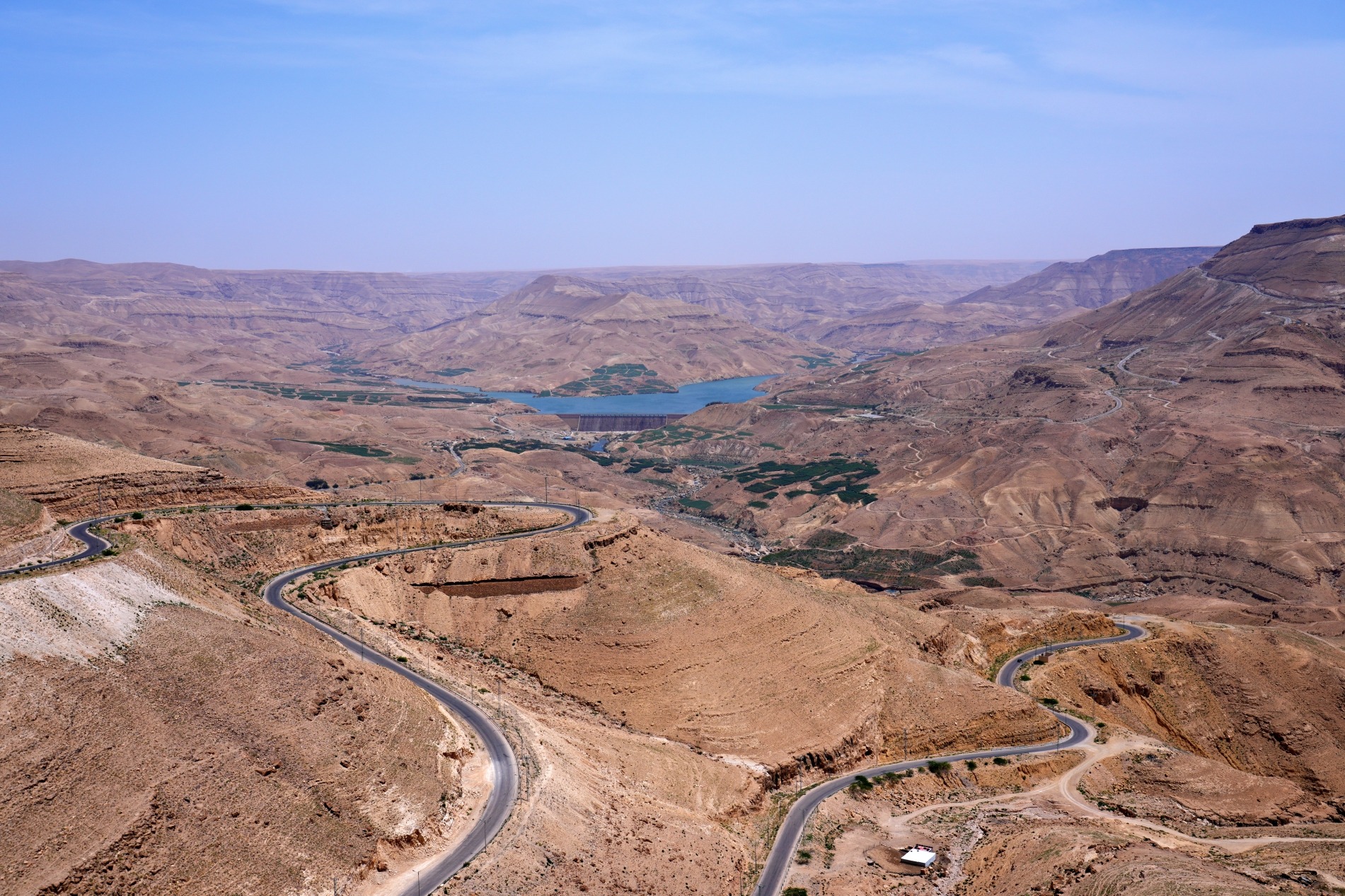
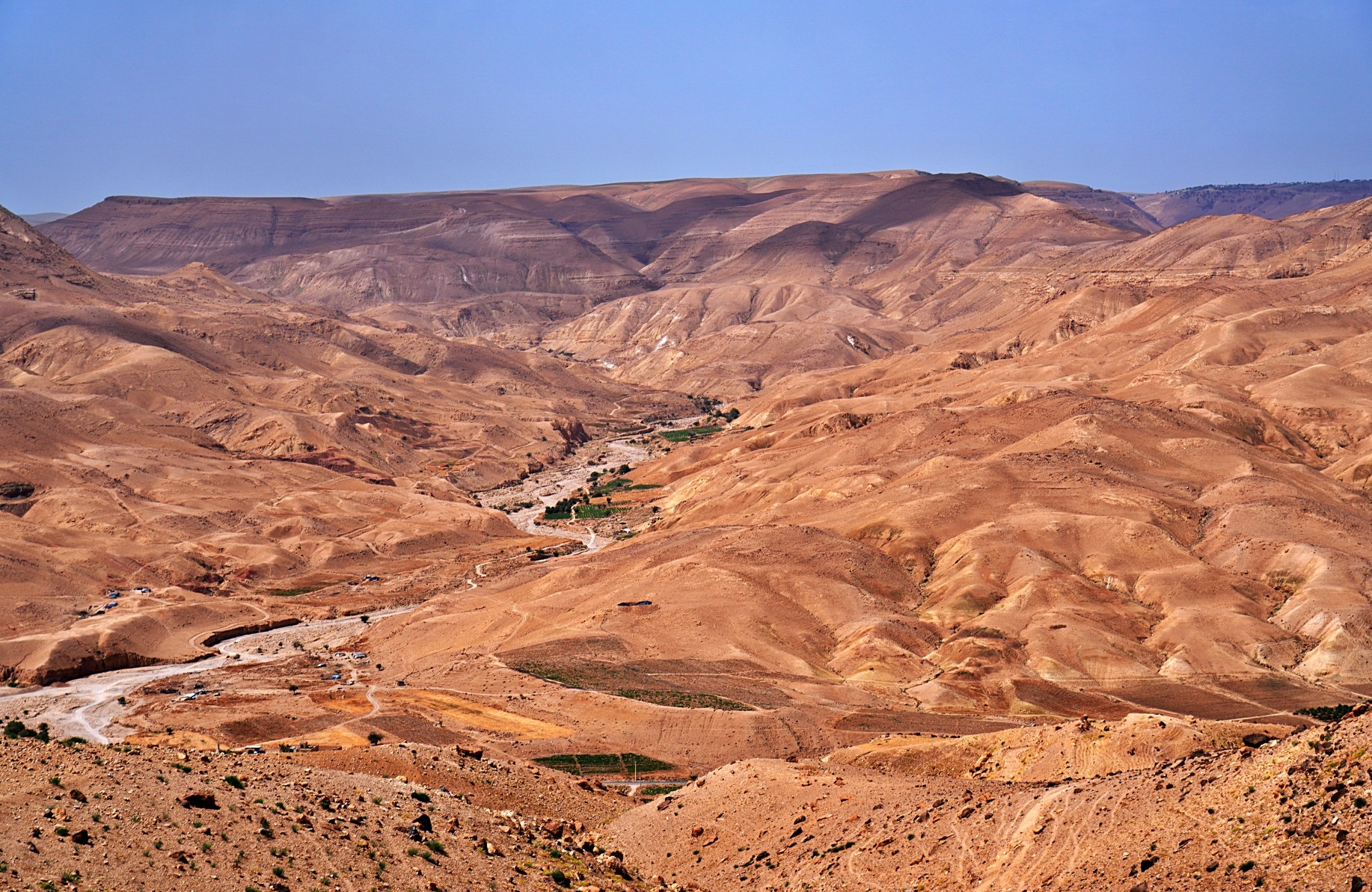
From the north – Wadi Musa is 235 km from Amman, and we recommend you travel the King’s Highway. The drive has wonderful views of the rugged red mountains above Wadi Araba. As well, there are several historical stops you can make on the way. You could also take the faster but less scenic Desert Highway. To reach it by bus, you can take Jett Bus from Amman’s 7th Circle Station, or from Madaba; they leave from the main bus station.
From the south – If you are driving, take the Desert Highway to reach Wadi Rum or Aqaba. To travel by bus from Aqaba, you can take a Jettbus from its main bus terminal. Between Wadi Musa and Wadi Rum, there is a tourist shuttle leaving Petra between 6 and 6:30 am. You can get the contact number from the Petra Visitor Centre and from your Wadi Camp.
Where to stay and eat in Wadi Musa
Wadi Musa is the town located just outside Petra’s entrance, and it is very hilly. You’ll find several international chain hotels on the flats near the museum entrance. Most locally run hotels, though, are located up and down the town’s many hills. Several restaurants are located in the city centre, which is 1.5 km from the Visitor’s Centre. Walking between the two, though, involves a lot of climbing up and down the hills. So, you need to decide between staying near the museum and taking a taxi to dinner, or staying near the restaurants and taking a taxi to the museum. There are also a few restaurants in front of the Visitor’s Centre. We ate at ones near the Visitor’s Centre and in the city centre and found both to have quality food at similar prices to those found throughout Jordan.


For more information on the Petra Archaeological Museum, visit our post Hikes in Petra. (Coming Soon)
Please note, we visited Jordan in the spring of 2026. At that time, there was a ceasefire in the Iran War due to the signing of the Memorandum of Understanding. Since conditions are changing frequently, please read current news about the area before planning your trip.

Here’s a link where you can read more of our adventures in Jordan, and a link to our interactive map of Jordan.
Coming Next – Little Petra to Ad-Deir Monastery Hike
For pictures from other blogs go to Gallery at monkeystale.ca.
To read about more of our adventures go to Destinations.
If you like what you read, please comment or share (with credit) using the links below.




We’d love to hear from you, please leave a comment.