
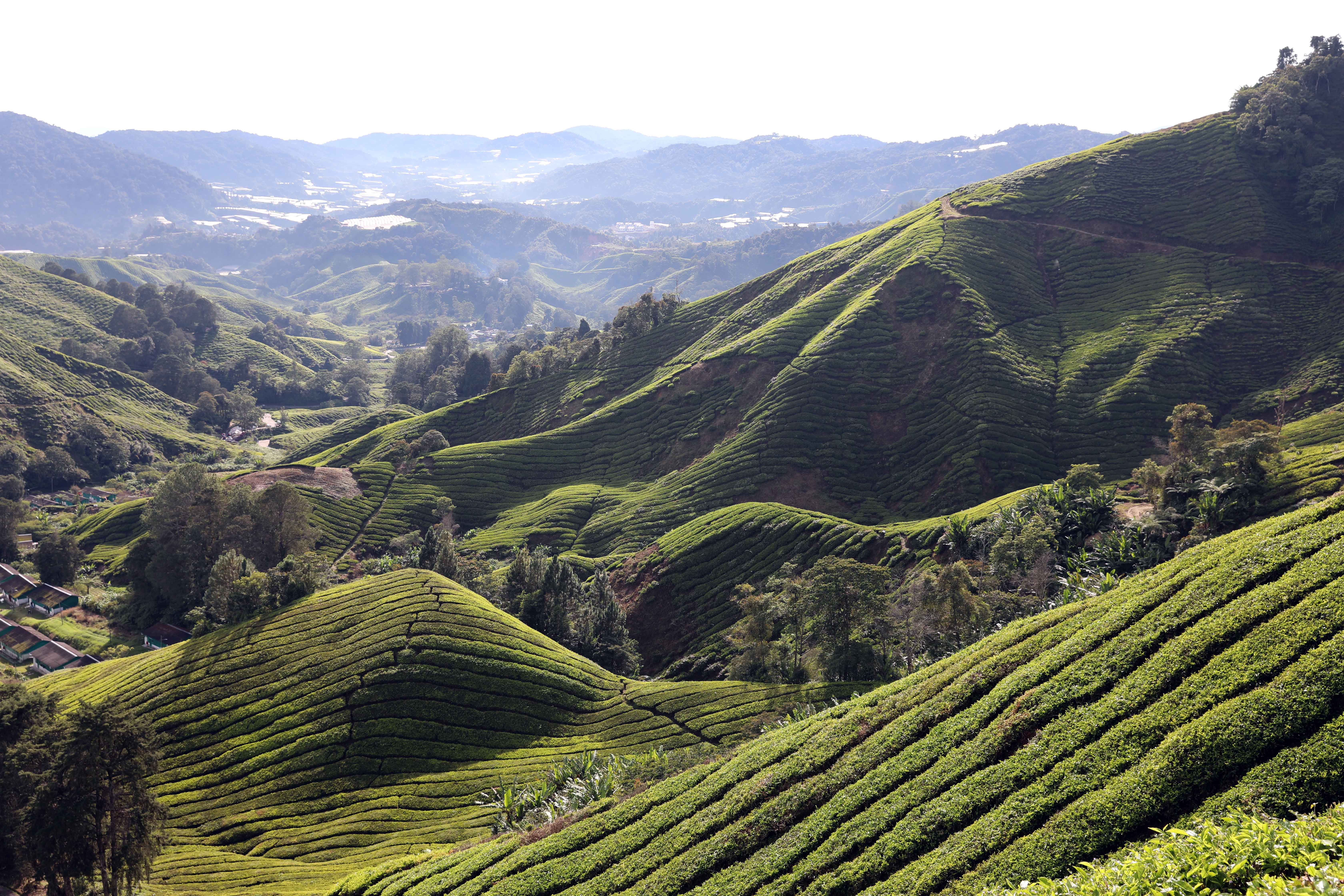
Cameron Highlands
At 1500 m elevation, the Cameron Highlands are a nice escape from the heat. This area is famous for its tea plantations, though they also have many strawberry and vegetable farms and honey producers.
The British began developing tea plantations here in the 1930s. Today, the area has massive valleys with tea trees growing on every side of every mountain. The scenery is very beautiful.


We learnt a few things about tea that we didn’t know before. Black, green and white teas are all made from the same type of leaf. The amount of fermentation and processing of a leaf, gives it a different flavour and therefore a different type of tea. Orange Pekoe is actually a very immature leaf and is considered to have the highest quality. I think this name has been misused by marketers on tea that we buy at home.


As well, growing tea at higher elevations, such as these highlands, is supposed to produce a tea with less tannin, and therefore be less bitter. We had a cup of tea and, as advised, we didn’t use milk or sugar. The tea was very good and in fact, didn’t need sugar so they may be correct.

Hiking is very popular in the highlands as it is a lot cooler. We did one small trek, but since it rains every day, the trails are very wet and muddy. As well, the trekking is in fern filled rainforests with no views, so we weren’t motivated to do another wet trek. You can tell how much rain they receive here with the size of the fern trees.

Georgetown, Penang
Old town in Georgetown on Penang Island is a UNESCO World Heritage site. The city was an important port for trading as early as the 1780s and was part of the Straits of Melaka (Malacca) ports with Singapore and Melaka. Today, there is a large area covering many city blocks that still has the original homes and shops of that time, many of which have been restored. It’s a great place to just walk and explore the historic area, imaging life at the time.


Something quite different about Georgetown is the Chinese Clanhouses. They were built so that new Chinese Strait immigrants could have a sense of community. The different clans started to compete with each other, building more elaborate buildings, so today they are some of the grandest buildings in the city.


The Peranaknen influence on food here is similar to what we found in Melaka. It combines the influences of Chinese, Malay and Indian to create tangy, spicy sauces and marinades using tamarind, ginger, chili and kaffir lime. We had amazing meals in Georgetown that will rank at the top of best meals ever list.
Langkawi
The Island of Langkawi is just an hour ferry ride from Thailand. It’s known for its beautiful beaches and relaxing pace. With warm turquoise waters and squeaky, white sand beaches, we were enticed to just relax.


Langkawi has Malaysian tax-exempt status so beer, chocolate and other vices are significantly cheaper. Unlike much of Malaysia, there is a bit more of a party atmosphere here, although tame by most other beach towns in the world. Still, we enjoyed a couple of cold beers on the beach watching the sun set on the horizon.


For extra pictures from other blogs go to Gallery at monkeystale.ca
To read about more of our adventures go to Destinations.
If you like what you read, please comment or share it using the links below.



We’d love to hear from you, please leave a comment.