
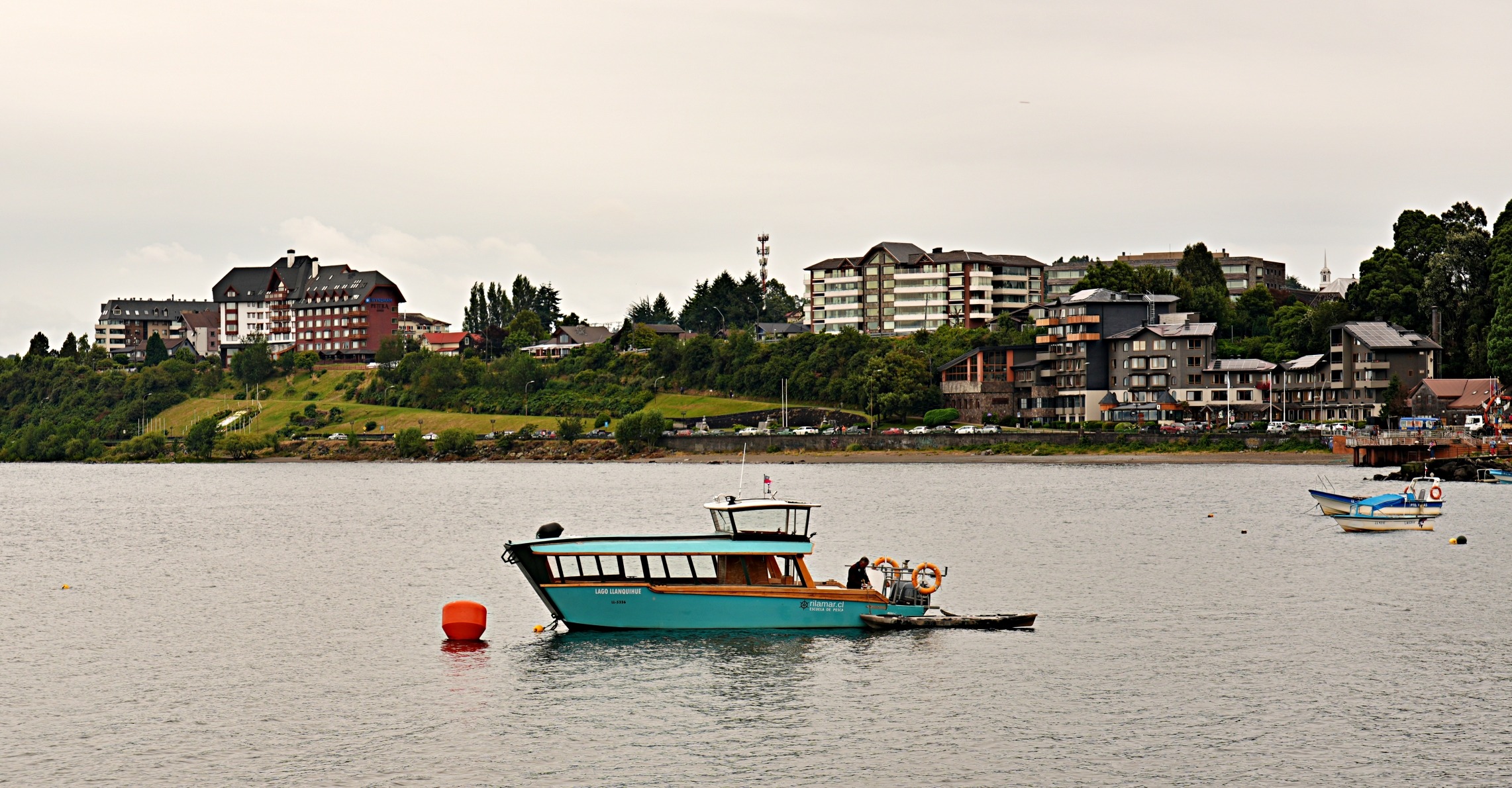
Located on the shore of Lake Llanquihue and surrounded by volcanoes, it is easy to see why Puerto Varas is popular with tourists. In addition to these magical landscapes, its German heritage makes the city even more appealing. Placed at the southern end of Chile’s Lake District, Puerto Varas is a wonderful destination to add to your Chile itinerary.
Puerto Varas
In the late 1800s, the Chilean government initiated an immigration program to bring Europeans with agricultural and artisan skills to underpopulated parts of the country. Many Germans settled in the Chile’s Lake District, making Puerto Varas and nearby Puerto Montt their new home.
German Buildings
As you explore Puerto Varas’ town centre, you’ll undoubtedly notice a difference in the buildings from most others in Chile. Many of the wooden buildings have a definite German look. The original ones were built from local alerce wood using tools brought over with the German immigrants. Since then, the trend continued so that much of the downtown has a European alpine feel.
Today, Puerto Varas is a tourist hot spot, so most of these wooden buildings are open as restaurants and tourist shops.


City of Roses
In addition to the alpine buildings, the city’s second claim to fame is its many roses that decorate the streets, boulevards and gardens. For this reason, it is often called the City of Roses. Unfortunately, most were past their prime during our visit at the end of January.
As well as the roses, there are several green spaces, including Plaza de Armas, which is more of a small garden than a public square.


Sacred Heart Church
From the rose bush-lined streets of downtown, we could see a tall church on a hill and knew we wanted to get a closer look. Built in the 1900s by German immigrants, the design of the wooden Sacred Heart Church (Iglesia del Sagrado Corazón de Jesus) was inspired by Marienkirche in Germany’s Black Forest region.
From the outside, it looked like the building could use a fresh coat of paint, but inside, the simple white walls and blue ceiling are in better condition. The underdecorated nave speaks to the German sensibilites of its builders. This is a nice change from the overly opulent Spanish colonial churches in the rest of the country.


Costanera de Puerto Varas
The town was built on the shore of Lake Llanquihue, Chile’s second largest lake. The town takes good advantage of this position with its waterfront promenade (Costanera) that lets you explore its shore. You have your choice between park benches and soft sand, to sit, relax and enjoy the views.


The lake is pretty on its own, but on a clear day, you can see Osorno and Calbuco Volcanoes in the distance. They are supposed to be very picturesque volcanoes, so we’d hoped to see them. Unfortunately, they only gave us a brief glimpse as they poked out from the clouds. Maybe you’ll be more lucky.


Muelle Piedraplan
On your walk, stop by the pedestrian dock, Muelle Piedraplan. It reaches out into the lake, allowing you to look back toward the cute town.


When you walk along the promenade, you’ll also see art installations. At one lookout is a wire sculpture of Huilliche Princess Licarayen. In a Huilliche legend, she was in love with a miltary leader, and they planned to marry. Peripillan, a spirit living inside Osorno Volcano, became jealous of their true love. The volcano began spewing smoke and hot flames, and the ground trembled. Peripillan said the eruptions would only stop when the princess’ heart was presented to him. The legend says that the princess was not afraid, and agreed to be sacrified, in order to save her village. Once Osorno had her heart, the smoke, fire and tremors stopped and the village was saved.


Getting to Puerto Varas
The most common way to reach Puerto Varas is by flying into Puerto Montt’s El Tepual International Airport. From there, you can take a bus to Puerto Varas (20 km). Buses leave every 15 minutes from the city’s main bus terminal. It is also possible to reach by car or bus from other centres such as Santiago, Villarrica/Pucón. More bus options are available from Puerto Montt’s bus terminal. Its location in Chile’s Lake District puts it fairly close to Bariloche in Argentina, and it would make a nice drive if you have a car.
Puerto Montt
Located on Reloncaví Sound, Puerto Montt provides the easiest access to both Puerto Varas and the UNESCO World Heritage churches on the Chiloe Archipelago. No matter which one you visit, you are likely to have a half-day to explore the city.
A year before Germans settled in Puerto Varas, other German immigrants established Puerto Montt. Not long after, it became the capital of the southern Lake District (Los Lagos Region). Unfortunately, the city was almost completely flattened by an earthquake in 1960, so not many of those original German buildings remain. Instead, they were replaced by boxy wooden designs that have not been maintained. In addition to the houses, the entire ragtag city feels a little forgotten.
By visiting both Puertos Montt and Varas, you will notice a stark difference between the two, even though they are only 20 km away.
You can read about Chiloe in our posts: Stilt Houses in Castro and Wooden Churches of Chiloe.


Costanera de Puerto Montt
We had low expectations for Puerto Montt after reading a hotel review. They gave the hotel a poor rating despite it being an otherwise highly rated hotel. Their negative comment was that the hotel was located in Puerto Montt. Despite those low expectations, we found it to have a lovely setting on the Reloncaví Sound.
Taking advantage of that long waterfront is the Costanera de Puerto Montt (Promenade). On a sunny day, you can see the surrounding mountains, but in our few days in the city, they didn’t show themselves to us.


Sentados Frente al Mar
In the middle of the Costanera is the city’s iconic image. Translated in English to ‘Sitting Facing the Sea’, the sculpture is based on characters from a song by the band Los Iracundos. The sculptor, Rodrigo Barría Montalva, was born and raised in Puerto Varas. Due to delays in approvals for the artwork, he had only a short deadline to complete it by Feb 14, 2002. Valentines Day was an important part of the piece. The sculptor said that due to the short timeline, the work is a little rougher than intended. In the end, though, he thinks its non-perfect look makes the couple more provocative. The strange statue soon became a beloved feature in the city.
Since its installation in 2002, it sustained damage from the sun and rain and has been repainted many times. These touch-ups, though, were not done by the artist, so its look has changed over time. Not knowing the song, we found it an odd statue to be the iconic image of Puerto Montt.

Pueblito Melìpulli
Our favourite place in the city is at the other end of the Costanera. When we first saw Pueblito Melìpulli from across the street, we thought it looked like a witches’ village. All we could see were worn wooden buildings and an odd assortment of roofs. Once we crossed the street, however, we saw that it is actually a cute market with snack bars, tour offices, crafts and knick-knack shops.


We especially loved the mural of a Magellanic Woodpecker, after seeing them in Llao Llao and Glacier National Park in Argentina.

Puerto Montt Cathedral
What is typically the main square in Chilean cities, Plaza de Armas doesn’t have much to offer except that it is home to the city’s cathedral (Catedral de Puerto Montt). First built in 1892, the church was extensively renovated after the 1960 earthquake.
The wooden church has an unusual look. Its dark wooden Doric columns, pediment and stained-glass wall make it look more like a bank than a church. Inside, the white and blue walls seem to have a nautical theme, which doesn’t match the brown exterior.


Getting to Puerto Montt
The most common way to reach Puerto Montt is by flying into El Tepual International Airport. Flights arrive from Santiago, Punta Arenas, Balmaceda, Puerto Natales and more. It is also possible to arrive by bus from Santiago (13hours), Pucon (4 hours) and Bariloche, Argentina (6 hours).
Another way to travel to/from Puerto Montt is by the 4 day/3 night ferry through Chile’s fjords from Puerto Natales. We had originally intended to do this, but in the end, we didn’t have enough time. As it turned out, the weather was cloudy and rainy, so it wouldn’t have been an enjoyable trip anyway.
You can also reach it by bus from many destinations including, Punta Arenas, Santiago, Valdivia, Bariloche. To reach the Chiloe Archipelago, Queilen Buses frequently travel from Puerto Montt’s bus station stopping in both Ancud and Castro. (3 1/2 hours). You can buy tickets at the bus stations in Puerto Montt, Castro and Ancud.
Puerto Varas and Puerto Montt are located in the lower half of the map below. It is an interactive map so you can zoom-in or click on a marker for a link to our post from that area.
Click on the link to read our Travel Tips For Chile.

To read more of our adventures in Chile, click here.
Coming Next – Stilt Houses in Castro, Chiloe
For pictures from other blogs go to Gallery at monkeystale.ca.
To read about more of our adventures go to Destinations.
If you like what you read, please comment or share (with credit) using the links below.




We’d love to hear from you, please leave a comment.