
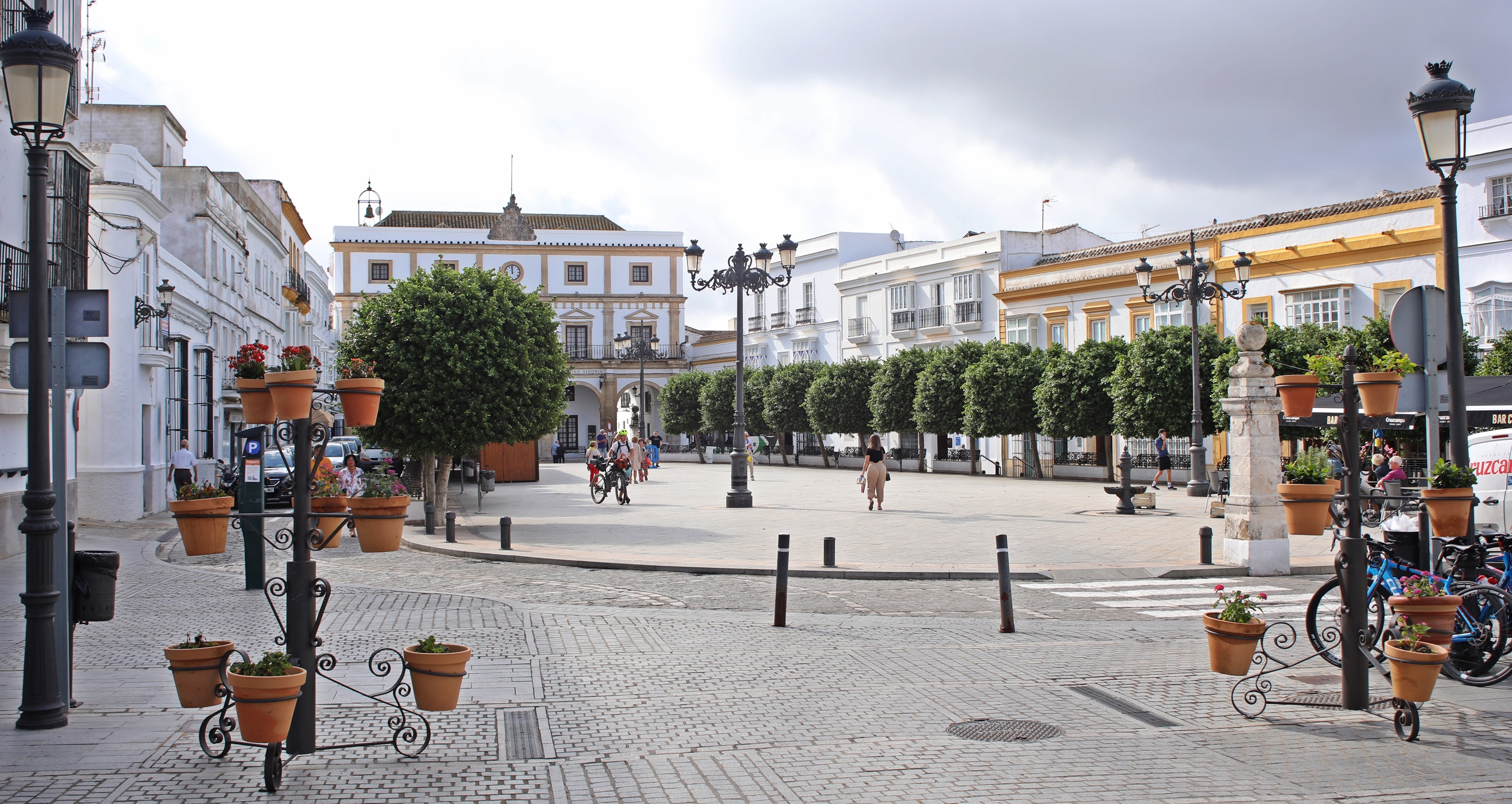
Behind the old stone gates is an enchanting scene. Picture perfect white-washed homes line the maze of cobblestone streets and allow you to step back in time. Medina Sidonia’s medieval dwellings are just one of the draws for visitors to this charming town. Here’s a guide on how best to explore the many sites when visiting Medina Sidonia.
Originally settled by Phoenicians, it also became an important spot for the Romans, Visigoths and Moors. Its unusual name is a mix of this past. The name Sidonia may have been taken from the Phoenicians, who came from the Lebanese city of Sidon. It was later combined with the Arabic word for city, Medina. In 1264, it was taken over by King Alfonso X’s troops and eventually became a part of Spain. This mosaic of civilizations can be seen in many parts of this historical town.
Medieval Town
The first part of the city to explore is its oldest neighbourhood. To reach it, you must pass through the horseshoe-shaped Shepardess Gate (Arco de la Pastora). This 10th century Moorish gate is part of one of the longest remaining sections of the old city wall. The horseshoe shape was originally used by the Visigoths. The Moors apparently liked it and used this shape so often that it has become synonymous with Moorish architecture.
The original fountain beside the gate doesn’t look like much at first glance, but it has a long history. Fuente Salada (Salt Fountain) is likely a left-over from Roman times. The fountain’s name comes from the high amount of salt in the water, making it unfit for consumption. Another connection to the Romans’ stay here can be seen in the bricks used to make Shepardess Gate. It is believed that they were taken from the Roman Temple of Hercules on the top of the hill.


After passing through Shepardess Gate, enjoy wandering along the old streets where you’ll pass many examples of their Moorish past. The white-washed homes seem to hold many stories of the lives that have lived here for hundreds of years. Many are decorated with flowerpots, wrought iron balconies and window coverings, making them even more picturesque.
It doesn’t take long to realize why Medina Sidonia is listed as one of Spain’s Pueblo Blancos. This is a term used to describe the many picture-perfect white towns (pueblo blancos) scattered on the hills and mountains in Andalucía. Medina Sidonia is a perfect example.


Another gate from the old wall is Belén Arch (Arco de Belén). It’s a nice Moorish stone gate that leads up the hill to Santa Maria Church and the remains of Doña Blanca de Borbón Tower.


Santa Maria Church
Santa Maria Church is an old, weathered church with white walls and a large stone façade. Its look has changed over the years due to various remodelling and rebuilding projects. Many of the changes attempted to cover Gothic features with more decorative elements. This was a popular trend for a while and is called Andalusian Gothic-Plateresque. You can see some of this in the church, especially the interesting lattice-style roof.


Beside the church is a tower that is linked to an interesting legend. In 1353, Lady Blanca of Borbon and Pedro I, King of Castille, were married. Her family didn’t pay the agreed-upon dowry, so within 2 days of their wedding, Pedro had her imprisoned. She was held prisoner in various towers around the region for 8 years. The legend says she took her own life when imprisoned in this tower in Medina Sidonia. Today, the tower is named Doña Blanca de Borbón Tower in her honour. This legend also makes it easy to understand why the king’s nickname was Pedro The Cruel.

When you visit the church, you will first enter the old cloisters. They are not in great condition and are in keeping with the church’s rather plain exterior. Further inside though, the church’s nave is unexpectedly grand. Its ornate, golden altar fills the front wall under tall Gothic arches. At the back, a large organ hangs above wooden choir seats. It seems very lavish in comparison to the small medieval town below.


You used to be able to climb the church’s bell tower, but it was under restoration when we visited and was closed. There was no information on when it may re-open.
Medina Sidonia Castle
Beside the church is a small path that leads to the castle above. As you climb up, don’t forget to look back to church. From here you can also see the ruins of a Moorish Alcázar (fortress).

The location of Medina Sidonia Castle was ideal because it is on one of the highest hills in the region. As a result, it had a good vantage point to keep an eye on the surrounding land. Artifacts found here date from as far back as the Bronze Age, but not much is known about that time.
Romans built a fortress on this hill, before the Moors and the Spanish occupied it. The castle is mostly in ruin, but you can still see interesting details in its walls. If you look closely, you can see the different construction methods used over the centuries. The early sections of the walls were built with mud bricks. Others were made with stone and then, the newest sections were made with masoned stone.
There’s a fee to enter the castle and unless you have time, it’s not really worth visiting. It is worth it though to climb up the hill for the views.


Historic Quarter
After spending time on the medieval streets, walk back through the gates to the newer part of the heritage centre. The buildings are still quite old, with some dating as far back as the 17th century. They are also in good condition and make the streets very picturesque.


We couldn’t resist looking inside the open doorways. Many of the homes have entry ways that are very cute with partially tiled walls, like a mud room.

For lunch or a coffee, head to Plaza de España. Patios spill out onto the courtyard and are filled with more locals than tourists. At one end is City Hall (Ayuntamiento de Medina Sidonia) but it’s forced to share the spotlight with the other lovely buildings.


Calle San Juan leads away from the square and is also lined by a number of historical buildings including several churches. Other than having newer homes, the streets are also wider and a little more organized on these flatter areas at the base of the hill.


While you’re walking on Calle San Juan, don’t forget to stop at one of the many bakeries. The city is famous for Alfajores de Medina, a pastry of Moorish origin. We bought a small package of mini ones. They taste a little like gingerbread and are quite good, but our small sampling was enough for us.

Bad weather was coming as we left the next day. We had intended on visiting Vejer de la Frontera. It’s a Pueblo Blanco, said to be very scenic in its precarious hilltop setting. On the drive there, a storm blew in bringing heavy rain. As we started to drive up the hill toward town, it rained harder and harder. Soon, rivers were streaming down the long road leading up the hill. In the end, we got to the base of the town, but the deluge prevented us from venturing too far from the car. This Pueblo Blanco may be something to keep in mind if you’re in the area on a sunny day.

You can find more Pueblo Blancos in our post A Guide to Spain’s Pueblo Blancos.
Where to stay in Medinia Sidonia
You will definitely want to stay overnight in Medina Sidonia’s historic centre, where there are many small guesthouses to choose from. Two beautifully restored apartments that you may want to consider are owned and managed by Cristina and Philipp, a Spanish-German couple. Located in a 150 year old heritage building in the centre of Medina Sidonia, the apartments are not only elegantly furnished, but also have the finishing touches to make your stay one to remember. Monkey’s Tale is pleased to offer our readers a 15% discount on your stay in one of these apartments. To receive the discount, simply use the phrase Monkey2025 when you book. You can find out more information and book your stay on their website.
How to get to Medina Sidonia
Located 40 km from Cádiz, Medina Sidonia is very easy to reach. It’s also 35 km from Jerez de la Frontera and 120 km from Seville. All of the highways are in good condition. You could also reach the city by bus from these destinations, but the routes are a little more cumbersome. These short distances may lead you to want to visit on a day trip, but Medina Sidonia is far too cute and deserves more of your time.
You can find Medina Sidonia in the lower left part of the map below. Click on the map for an expanded view.


This article is now featured on GPSmyCity. To download this article for offline reading or create a self-guided walking tour to visit the attractions highlighted in this article, go to Walking Tours and Articles in Medina-Sidonia.
To read more of our adventures in Spain, click here.
Coming Next – Things to Do in Tarifa: Beyond Wind Sports
For pictures from other blogs go to Gallery at monkeystale.ca
To read about more of our adventures go to Destinations.
If you like what you read, please comment or share (with credit) using the links below.




We’d love to hear from you, please leave a comment.