
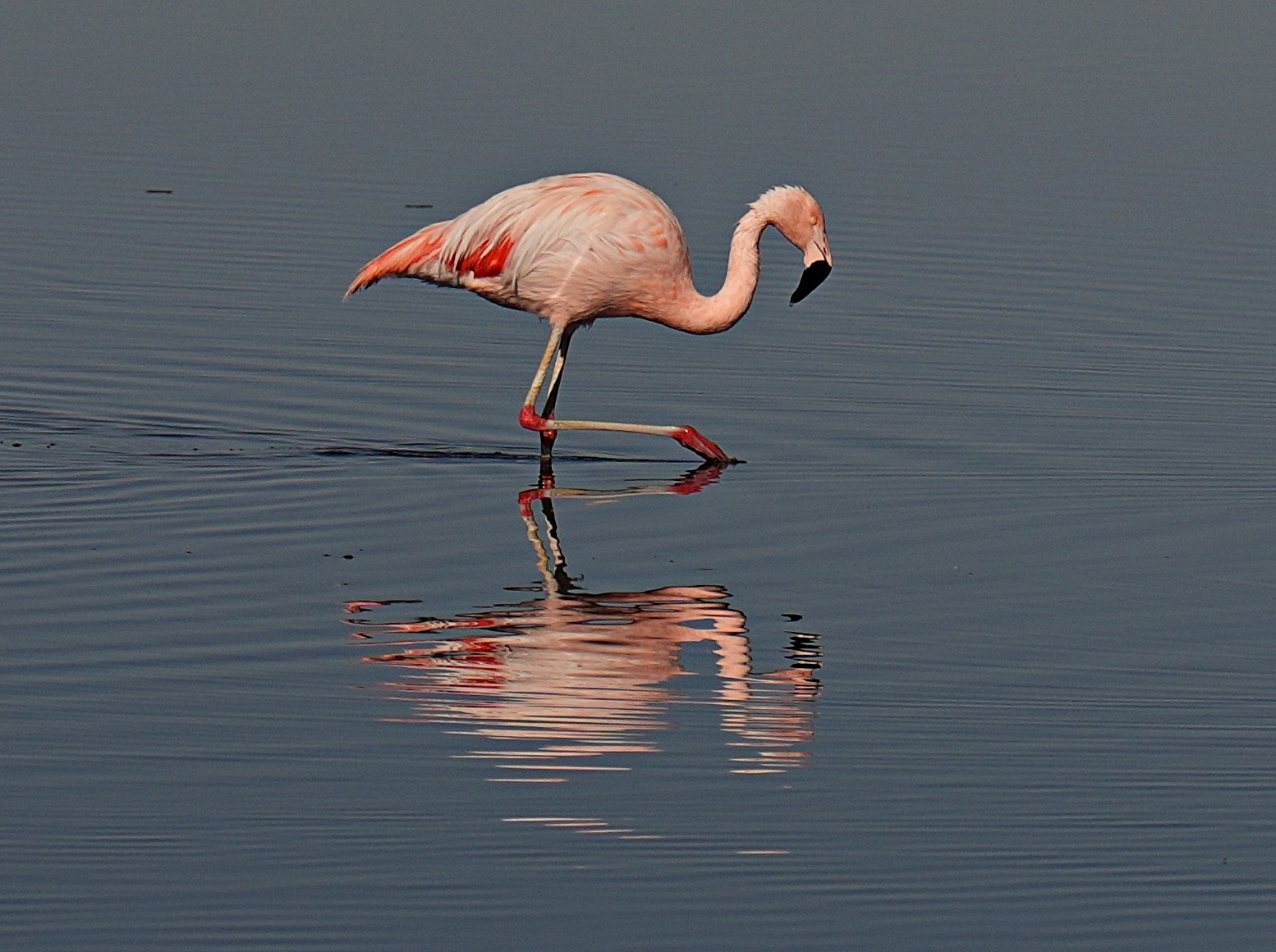
Imagine watching dozens of flamingos wade in colourful mineral lakes, while cone-shaped volcanoes hover above. If this sounds like the perfect scene to you, then you will love Atacama. In fact, you can see this and more by visiting Piedras Rojas Salt Flats, as well as the Chaxa and Altiplanic Lagoons. They are fairly close together, so visiting all three makes an unforgettable day in the otherworldly Atacama.
What to see in the Atacama Desert
With a wide variety of surreal landscapes spread across the vast Atacama Desert, deciding which to see can be difficult. There are dozens of tour agencies offering very similar day tours to the many sites in the area, but choosing which to see can be daunting. We’ll take you to these landscapes over the next three posts so you can see what each has to offer and hopefully make it easier for you to decide which ones you want to visit. We are presenting the sites based on proximity to each other because whether you drive, take a group or individual tour, it is the most efficient way to see as much as possible.
In this post, we’ll take you to an area called Piedras Rojas, home to some of the region’s lakes and salt flats. In the next few days, we’ll take you to Rainbow Valley, El Tatio Geysers, and mountain biking trails in Garganta del Diablo and Valley de la Luna. But first, let’s explore the Piedras Rojas area.
The sites in the Atacama are marked on the map below. It is an interactive map, so you can zoom in or click on a marker for a link to our post from that site.
Piedras Rojas Tour
As one of the most popular tours in the Atacama, Piedras Rojas, includes a lot more than just Red Rocks. The views include salt flats, flamingos and lagoons perfectly placed under volcanoes.
The full day tour begins early, so you can see the landscape just as it is waking up.

Chaxa Lagoon
When we visited, there was no wind to disturb the surface of the shallow lagoon, allowing it to perfectly reflect the surrounding peaks. As you get closer, you can see Andean and Chilean flamingos searching for food under the surface. At 2,300m (7,500 ft), Laguna Chaxa is the lowest point of the Atacama Basin. As a result, water collects here and creates this beautiful scene.


Flamingos are among the oldest groups of birds in the world, existing for over 130 million years. The ones in Atacama Altiplano are Andean, Chilean, and James Flammingos. The large supply of shrimp and phytoplankton, called Sea Monkeys, is what draws them the Chaxa Lagoon. Since these birds do not migrate, they can be seen in the Atacama year-round.
The Visitor’s Centre at the lake has a tank with micro shrimp, so you can see what they eat.


It’s best to get to Chaxa Lagoon early, before the flamingos fly away for the day. Most visitors try to arrive as soon as the gates open at 7 am, which is when we got there.
Chaxa Lagoon is inside Los Flamingos Nacional Reserva. There is an entry fee to the park that may not be included with the tour fees and will be collected in cash by your guide.
Piedras Rojas and Salar de Talar
Most will combine a visit to the flamingos with Piedras Rojas. They are located 130 km apart, but they are the main sites at this end of the Atacama.
Even before arriving at the salt flats, we were treated to stunning scenery. Looking one way is the colourful, multi-peaked Cerros de Incahuasi. In the other direction is Miscanti Volcano, which still had snow on its slopes in late spring (November). We would see it up close, later in the day.


Salar de Talar (Salt Flats) is set in a large open basin at 3,950m (12,950ft). Piedras Rocas (Red Rocks), the mountains behind, provide a stunning contrast to the colourful mineral lake.
Water arrives in underground streams that flow from surrounding volcanoes. As the water travels, it collects minerals and deposits them in the basin, creating the salt flats.


The water levels change throughout the year; therefore, so do the colours. Even on our visit, you could tell the varying depths of the water by the different colours that reflected off its surface. On the edge of the lake, the water had receded, leaving the salt behind.


The Salar is within Los Flamingos Nacional Reserva, and the park is very conscientious about keeping the area pristine. Because of this, you are not allowed to get close to the water. Don’t worry, though, the views from the rocks above are excellent.

Vicuñas were licking salt from the rocks on the edge, and more were eating the grass on the plains above the lake. They only live above 4,000m, so they are common in this part of the Atacama. The camelids are well camouflaged, though, so keep your eyes out for them.
Their fur is among the finest in the world, and in Inca society, it was reserved for the kings. The Spanish loved the fur so much that they almost brought the vicuñas to extinction. Fortunately, they are protected in Chile so their populations are recovering.


Piedras Rojas and Salar de Talar are located inside Los Flamingos Nacional Reserva. There is an entry fee to the park that may not be included with the tour fees and will be collected in cash by your guide.
Although Piedras Rojas is close to the border with Argentina, this is not the preferred border crossing for tourists.
Miscanti and Miniques and Lagoons
Not far away from the salt flats are two blue lagoons, perfectly positioned at the base of volcanoes of the same names. Miscanti and Miniques are located above 4,100 m (13,800 ft) on the Altiplano, and are referred to as the Altiplanic Lagoons.


The two lagoons used to be one large lake, but a volcanic eruption created a dam that separated them into two lakes. The volcanic rock in the dam is porous, so water flows between the two. Their dark blue colour is the result of their high altitude, mineral composition and lack of sediment.

The Altiplanic Lagoons are located inside Los Flamingos Nacional Reserva. There is an entry fee to the park that may not be included with the tour fees and will be collected in cash by your guide.
Tropic of Capricorn
This imaginary line indicates the latitude where the sun will be directly overhead during the Southern Hemisphere’s summer solstice (December 21). A sign on the side of the road marks the location of the Tropic of Capricorn. This made the third time we crossed the Tropic of Capricorn on this trip. The others were near Concepcion, Paraguay and Humahuaca, Argentina.

There are more things to see in the Atacama. You can find out about these sites in our posts, El Tatio Geysers, Rainbow Valley and Baltinache Lagoons, and Mountain Biking Trails in Garganta del Diablo and Valley de la Luna.
For tips on visiting the Atamcama including how to get to it and where to stay, please visit our post A Complete Guide to Atacama.

Click on the link to read our Travel Tips For Chile.
To read more of our adventures in Chile, click here.
Coming Next – Atacama’s El Tatio Geysers, Rainbow Valley and Baltinache Lagoons
For pictures from other blogs go to Gallery at monkeystale.ca.
To read about more of our adventures go to Destinations.
If you like what you read, please comment or share (with credit) using the links below.



We'd love to hear from you, please leave a comment.