
Far up in Chile’s north is a land unlike any other. Boasting an Aymara culture and a landscape ranging from desert to volcanic, life on the high Altiplano is something you should see at least once. The small town of Putre provides the perfect setting to explore this fascinating and remote northern high plateau.
Driving from Arica to Putre
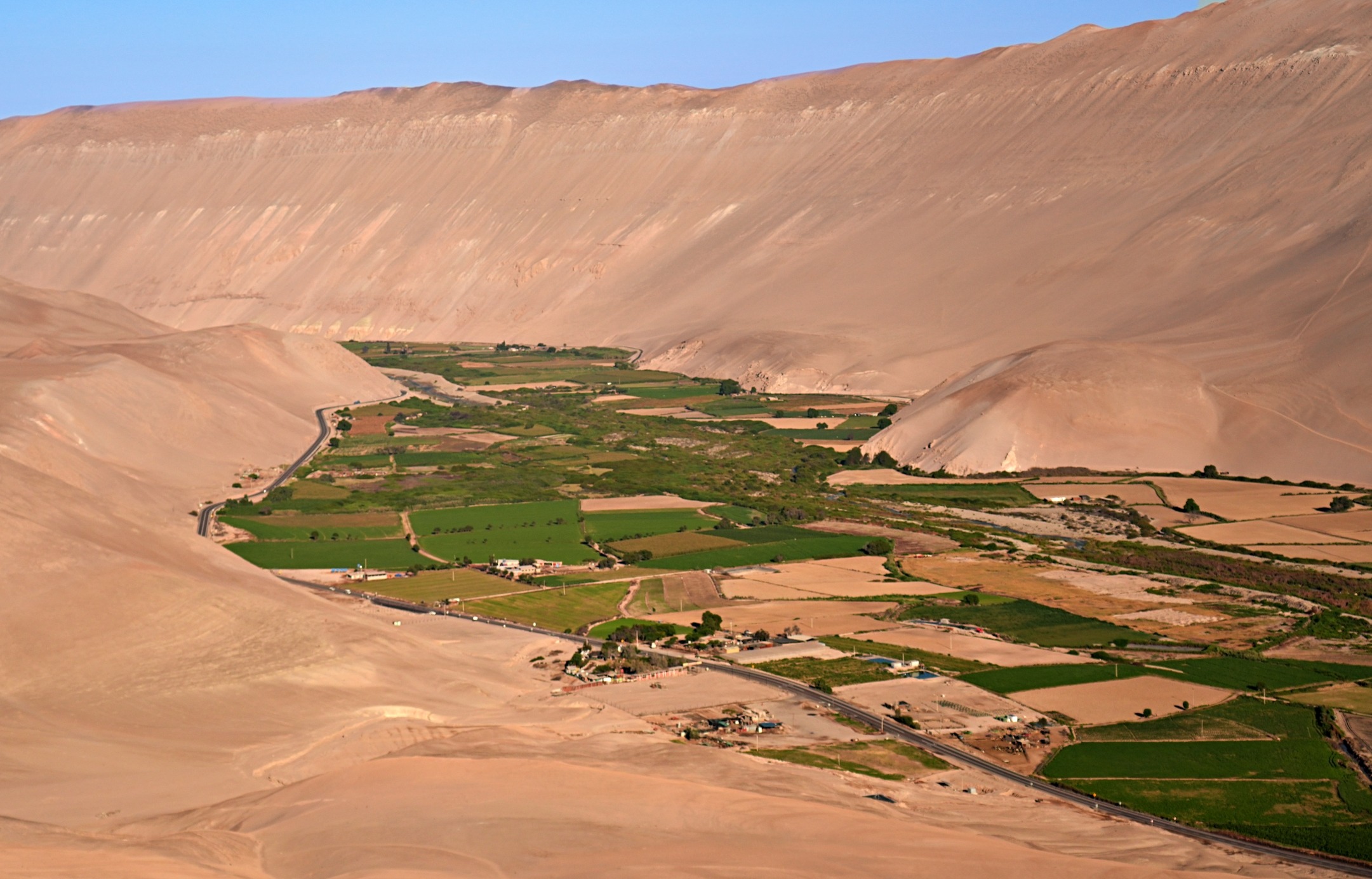
We thought the Atacama desert was dry, that is, until we drove between Arica and Putre in Chile’s far north. The drive climbed up through the barren hills, taking us from sea level up to 3,500 m (11,483 ft) in a very short time. In the first half of the climb, the mountains and hills looked like mounds of mud and sand, but were actually composed of volcanic material. Not a shrub or even a blade of grass can grow on them.

Eventually, we began to see funny shaped Candelabra Cacti sticking out of the ochre coloured hills. Then, the valleys soon became filled with oases where their greenery stood out against the arid hills. It reminded us of the landscape near Paracas, Peru, yet we were hundreds of kilometres south of there.


As we neared Putre, we passed Pukara de Copaquillapre, a 12th century pre-Hispanic fortress. There isn’t a lot to see, but it’s worth a quick stop if you’re in the area.


History of the Region
Before the Spanish arrived, this land was inhabited by Quechua from Peru and Aymara from Bolivia. When the Spanish turned up, they discovered a mineral-rich land and established mines which generated a lot of wealth for them. After these countries achieved independence, borders were created, and a treaty allowed the countries to share in these mineral rights. Of course, this didn’t end well, and Chile went to war with Peru and Bolivia over this land. Called the Pacific War, it resulted in Chile annexing this part of the Altiplano, and the Aymaras found themselves living in Chile. Initially, Chile gave Bolivians access to the ocean through a narrow strip of land, but that passage was eventually removed. Instead, Bolivian trucks are allowed to transit their goods through Chile tax-free, from the border near Putre to Arica’s harbour.
Another interesting historical detail is that while Chile was occupied with the Pacific War, Argentina moved in on Patagonia, leaving Chile with the small sliver that it retains today. You can read more about that in our post from Bariloche.
Putre
The primary reason to come to this area is to visit Lauca National Park. The town of Putre is the closest settlement to the park and makes a good base to explore this landscape. It is a traditional Aymara village that fills the valley under the shadows of the Taapaca Volcano.


Putre was located on a pre-Incan trade route between Lake Titicaca and the coast. When they came under Incan rule, trade expanded as far as Potosi, Bolivia. This importance continued when the Spanish arrived in the 16th century, and took over control of Potosi’s mines as well as the trade routes.
The town has since lost its prosperity, and all that remains is a worn-out village. There are a few pockets of its former 17th century glory in some of the doorways and decorations, but most of the homes are newer and plainer. Surprisingly, though, there are a few lovely gardens in this high-elevation village.


Life in Putre is centred around Plaza Mayor. Although it is a nice part of town, there’s not much to see other than the 17th century San Ildefonso de Putre Church. An older mission church once stood on this spot, but after it was damaged in an earthquake, it was replaced by the one we see today.


Incan Painted Cave
If you have time, there is a nice walk to a painted cave, just outside of town. It follows an old Incan Road (Camino del Inca), passing a picturesque creek with ornamental grass and lined by rock features. Above the creek bed, though, the land quickly becomes quite arid, where only scrub bushes and cacti grow.


Surprisingly, the quiet creek transforms into tall waterfall that drops into a deep canyon.


Incan Painted Cave
At the end of the canyon, the view opens up to a large pampa, which is more colourful than the rest of the walk. Above this area is the Incan Painted Cave. It is more of an overhang than an actual cave, but it does display a few dozen red figures painted on the wall.


We could pick out llamas, big cats like pumas, people and snakes, but unfortunately, weather, rockfall and vandals have damaged many. No one seems to know exactly who made the paintings, but they have been examined and dated to be 8,000 years old. So, despite the name, they were created long before the Incas arrived.


Distance – 11.5 km (7¼mi) round trip; Elevation – 92m (300 ft) gain, 415m (1,360ft) loss. On the return the gain and loss is reversed. Max elevation – 3,515m (11,500). Roughly 3 hours.
Tip – You can find it on Maps.me, but it is called Monumento Arqueologico Pictografias de Vilacaurani, not Incan Painted Cave as people in town call it.
Lauca National Park
The main reason to visit Putre is to visit Lauca National Park. Click on the link to read our post, Lauca National Park – A Pristine Wonderland.

How to get to Putre
The nearest large city to access Putre is Arica, Chile’s most northerly city. Palama Buses travel between the two, once a day. It leaves Arica at 7 am, and leaves Putre to return to Arica at 2 pm (3 hours). The only other option would be by private car. If you drive yourself, be aware that there is no gas station in Putre. You can usually buy jugs of petrol in corner stores, but it is best to be prepared before arriving.
Arica has an international airport, although most will travel to it from Santiago. You can also reach Arica by bus from other major Chilean cities, but distances are long. Arica is located near the Peruvian border, so you may find yourself in Arica if travelling between the two countries. It is the only land border crossing between Chile and Peru. If you’re in Bolivia, you can cross between Lauca National Park in Chile and Sajama National Park in Bolivia, making Putre the first town.
Putre is located at the top of the map below. It is an interactive map, so you can zoom-in, or click on a marker for links to our posts from that region.
Tips to visit Putre and Lauca National Park
- When to visit – The warmest weather is from late January until mid March, but the highest chance of rain is in January and February. Winter will be cold and many of the mountain roads will be snow covered.
- Elevation – Putre is located at 3,500 m (11,500 ft), and Lauca National Park is above 4,000 m (13,125 ft). These high elevations mean you need to acclimatize. Either do this by visiting other places, such as San Pedro de Atacama first, or plan to spend your first few days in Putre. To help prevent altitude sickness, stay hydrated by drinking a lot of water; many recommend 3 litres a day. The elevation also means that nights will be chilly, but the sun is intense during the day.
- Money – There is no ATM in Putre, but businesses operate in cash, so bring enough to last the duration of your stay.

Click on the link to read our Travel Tips For Chile.
To read more of our adventures in Chile, click here.
Coming Next – Lauca National Park – A Pristine Wonderland
For pictures from other blogs go to Gallery at monkeystale.ca.
To read about more of our adventures go to Destinations.
If you like what you read, please comment or share (with credit) using the links below.



We'd love to hear from you, please leave a comment.