
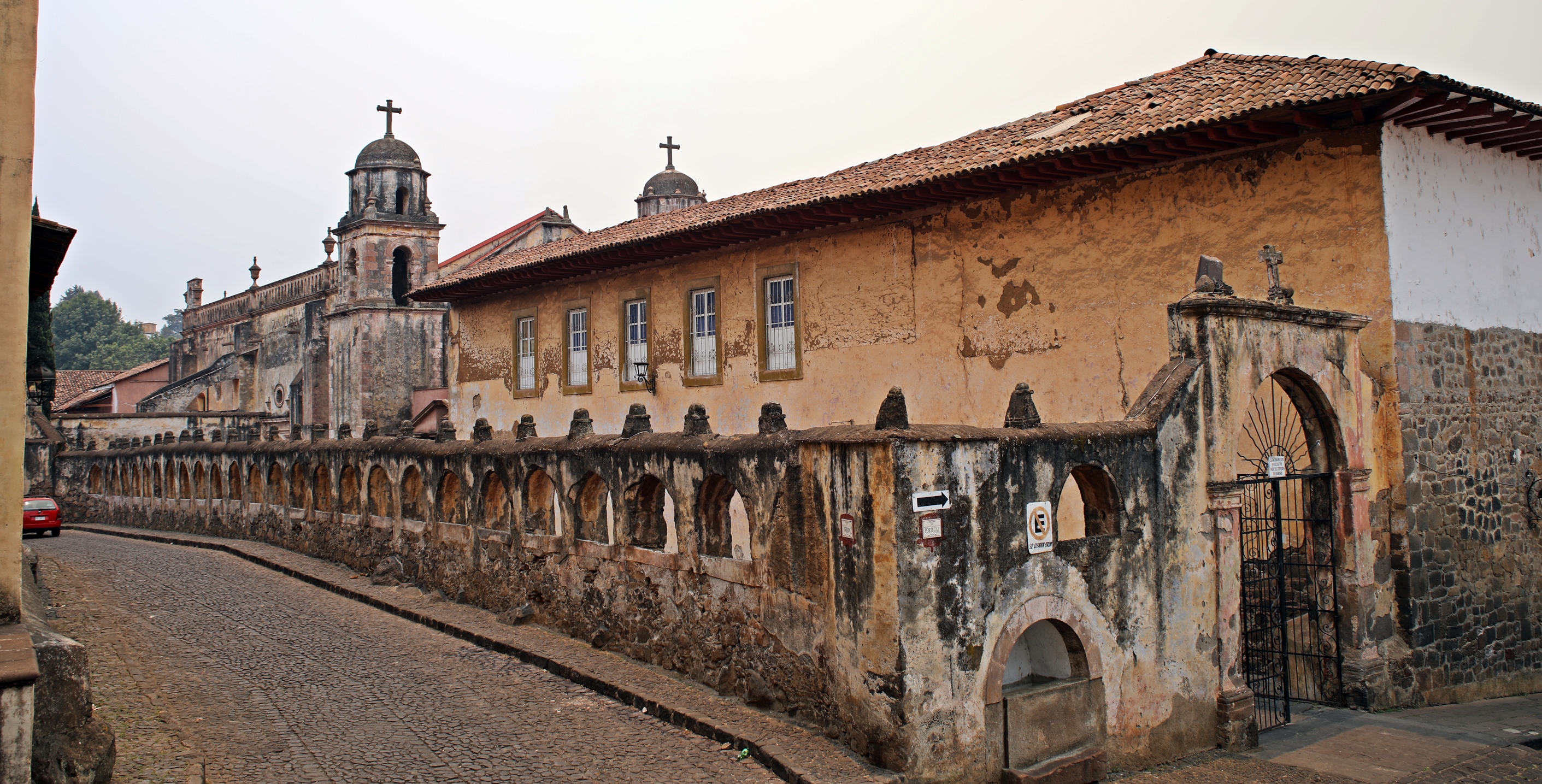
The two colonial cities, Morelia and Patzcuaro, were once rivals for the distinction of being capital of Michoacán. Today you can see the results of being selected capital or not. Morelia shows off its stature with grand buildings and plazas. Patzcuaro has a more modest feel with its single story white-washed homes and colonial churches in ruins. Even though the cities are very different, they are extremely charming in their own way, and both are worth a visit.
Morelia
The city of Morelia was established by the Spanish in 1541 and was chosen to be capital of Michoacán over Patzcuaro. It was originally named Valladolid but after Mexico achieved independence from Spain, it was renamed to honour Mexican Independence War hero, José María Morelos.

Morelia is located in Mexico’s Colonial Highlands, an area that was prominent in the 19th century fight for independence. We visited other cities along the Freedom Trail too. Click on the links to read our stories from San Miguel de Allende and Guanajuato.

The large historic centre in Morelia showcases many 16th and 17th century colonial buildings. Even though Morelia is a smaller city than Puebla, Morelia feels much larger due to the many grand buildings in the historic centre. You can read our post from Puebla here.
Plaza de Armas
Like most of these cities we began our exploration in the main plaza of this UNESCO World Heritage Site Old Town. Plaza de Armas is a large square, split in two by the massive Morelia Cathedral. Around the edge are elegant pink stone buildings that include former government buildings, a theatre and mansions.


Most of the buildings that border Plaza de Armas have covered colonnades at their base. It was in Morelia that we learned why there are so many of these colonnades in Spanish colonial cities. Apparently, in the 1500s King Phillip II said that all fours sides of plazas should have ‘portals because they are of much comfort to the dealers who usually concur there’. Wasn’t that thoughtful of him to be so concerned about the people of his conquered lands.
In Morelia, many restaurants make good use of these covered spaces by setting out tables and chairs.

Cathedral of Morelia is a magnificent baroque-style building with tiled domes and tall bell towers. Being positioned in the centre of the plaza means that you can walk all around it and see the beautiful building from many angles.
At night it is even more spectacular with well placed lighting that accentuates its many design features.


Old Town
Morelia’s grand colonial buildings continue for many blocks around the main plaza. Located at 1,920 m (6,300 ft), the air is a little cooler, making it more comfortable to explore the city on foot.


University Library is housed inside the 16th century Templo de la Compañía de Jesús. It’s a stunning building from the exterior, but unfortunately we weren’t allowed inside.

Aqueduct
On the edge of the historic centre is a 17th century aqueduct that is in remarkably good condition. We saw it in the late afternoon and its 253 arches glowed in the low sun. As we walked along its 1.8 km (1 mile) length, we noticed the arches getting shorter and shorter until the aqueduct ended in a well.


Near the beginning of the aqueduct is a very pretty scene. A curve in the aqueduct wraps around a small manicured park with Tarascas Fountain at its centre. The fountain has a statue of three Purepecha women holding a basket of fruit.

Not far away is the narrow lane called Callejón del Romance (Alley of Romance). It received its name because stanzas from the poem Romance a Morelia written by Lucas Ortiz are posted on the stone walls.


Here’s the translation of the stanza pictured above.
St. Augustine Rises
and St. Francis gets off,
They both hide their gluttony
in the sleeves of his skirt.
by Lucas Ortiz
Patzcuaro
Fifty kilometers from Morelia is an adorable colonial town. Patzcuaro is located at 2,140 m, and was the capital of the indigenous Purépecha Empire for generations. After successfully winning repeated battles against the strong Mexica warriors, the indigenous Purépecha were not able to defend themselves against the Spanish.
In the 16th century Nuño de Guzman and his army massacred a large percentage of the population and almost completely destroyed the village. This carnage outraged Bishop Vasco de Quiroga who then worked tirelessly to assist the Purépecha people. He helped them establish communities and build schools so they could learn to be self-sufficient under their new colonial rulers. As a result, the bishop is held in very high esteem in the area.
Today the colonial town is one of the cutest we’ve seen in a while. It really deserves its Pueblo Magico designation. Cobblestone streets are fringed by red and white heritage houses. Their clay tiled roofs can be seen climbing up and down the streets in this hilly town.


Plaza Vasco de Quiroga
This pretty square in the centre of town has large shade trees, manicured hedges and is framed by heritage buildings. At the centre is a statue for the beloved bishop.


Colonial Churches
Unlike most Spanish colonial towns, there is no church at the plaza. Don’t be concerned though, there are a lot of colonial churches and monasteries spread throughout the rest of the town. Some are in excellent condition and are still being used today. Others are a little worse for wear, but that makes them a little more interesting.
Our favourite building was Templo del Sagrario (Temple of the Tabernacle). With weathered walls and peeling paint, it has a lot of character. Its old wooden floor boards creaked as we stepped inside the old church.


In addition to this treasure we saw many other colonial churches spread around the hilly town. One of them is now a library. Gertrudis Bocanegra Public Library has retained the ethereal feel of the old church.


Not far away is Lake Patzcuaro. We had intended to visit one of the viewpoints of the lake, but it was very smoky when we were there and visibility was poor. The smoke came from surrounding farms that were burning crop stubble.
Tip – There are hundreds of Pueblo Magicos in Mexico. It’s a marketing term to generate tourism in the towns. Some of them, like Patzcuaro, earn this name, others fall quite short. Don’t assume because it’s a Pueblo Magico that you will find it magical.
Getting to Patzcuaro
On the southwest end of Morelia is the bus stop called ‘Parade de Autobuses Patzcuaro’ on Google Maps. From there you can take a share-taxi or bus $60 MXN ($3.10 USD).per person. As well there are buses that leave from Morelia’s bus station $70 MXN ($3.60 USD).
Getting to Morelia
You can fly into they city’s Aeropuerto Francisco J. Mújica. Since Morelia is not far from Mexico City though, most people will drive or take a bus. A well maintained toll highway travels between Mexico City and Guadalajara passing by Morelia. If you don’t have a car, there are quite a few buses that travel between CDMX’s Terminal del Norte and Morelia’s Terminal de Autobuses. Buses also travel between Morelia and; Guanajuato, but not direct; San Miguel de Allende; and Guadalajara.
Where to stay and eat in Morelia
Even though there aren’t many international tourists in Morelia, there are still quite a few hotels in the historic downtown. Try to stay in one within walking distance to Plaza de Armas as this is where the majority of restaurants are located.
Safety in Michoacan State
Although Morelia and Patzcuaro are safe for travellers, the same can’t be said for the rest of Michoacán. A different kind of cartel violence is common in the state. Michoacán is the main grower of avocados in Mexico; most of which are exported to the USA. Avocados bring in a lot of money to the state and this has attracted the attention of the county’s drug cartels. Apparently avocado growers are frequently extorted by the cartels who demand money for protection of the crops and transportation routes.
In May 2024, just after we left the state, there were two incidents of highway robberies of avocados. In one, thieves stole 40 tons of avocados. In addition, Michoacán has one of the highest rates of murders in the country, many of the killed are police officers. As we drove through the state we often saw barricades made of tires or metal barrels along the sides of roads. They are built to protect armed police officers, who we often saw standing behind them. It was quite unsettling to see in person and we saw many of these barricades in Michoacán as well as the surrounding states.

Click on the link to see our Travel Tips For Mexico.
To read more of our adventures in Mexico, click here.
Coming Next – The Sites of San Miguel de Allende & Atotonilco
For pictures from other blogs go to Gallery at monkeystale.ca
To read about more of our adventures go to Destinations.
If you like what you read, please comment or share (with credit) using the links below.




We’d love to hear from you, please leave a comment.