

The weather-worn cliffs and dinosaur remains in Tampalaya National Park and Ischigualasto Provincial Park are the main draw for visitors to La Rioja. Visiting them was our intention too, but things changed when we got to the city of La Rioja. Instead, we modified our plans and visited Los Colorados Provincial Reserve. Even though it wasn’t our first choice, the variety of cacti and red cliffs in the small park makes it a great alternative.
Upon arrival in the city of La Rioja, we discovered that visiting their two famous parks is quite costly, especially if you don’t already have a car. Tour agency prices and extremely high park fees make them prohibitively expensive for most people. A visit to both on a one-day tour would be in excess of $450 USD per person. Even if you rent a car in La Rioja, the combined costs of car rental, insurance, gas, park entry fees and required guide services would not be much lower.
Don’t worry, we found an alternative. Instead of these parks, we visited the smaller Los Colorados Provincial Reserve for $150 USD. That price still seemed high, but we felt we had to visit one of them since we had come this far. In the end, we’re happy with the choice we made because the cliffs in Los Colorados are rugged and the plant life is unique and we don’t think the other parks were $300 nicer.
Here’s what you can see in this colourful, desert park.
Los Colorados Provincial Reserve
As you would expect from the name, Los Colorados (The Red Ones) is a colourful ridge that contrasts the brown and grey mountains on either side and the blue sky above. When we first saw the red cliffs from the road, we knew we had made a good decision to visit this lesser-known park.


Making the views even better is the backdrop of the Famatina Range in the Andes.

To reach the park gates, we drove through the indigenous village of Los Colorados. This rustic community with its modest homes and broken-down cars feels even more remote than it actually is. Our indigenous guide grew up in the village and spent most of his life exploring this land, so has a wealth of knowledge of the area. He proudly told us that his mom is 105 years old and still lives in the village.

There are three different walking trails in the park, and you must choose which you will take before entering the park. Most visitors will combine two of the walks, which is what we did to make it a half-day visit that included seeing the rock features, desert vegetation and historical sites.
Rock Features
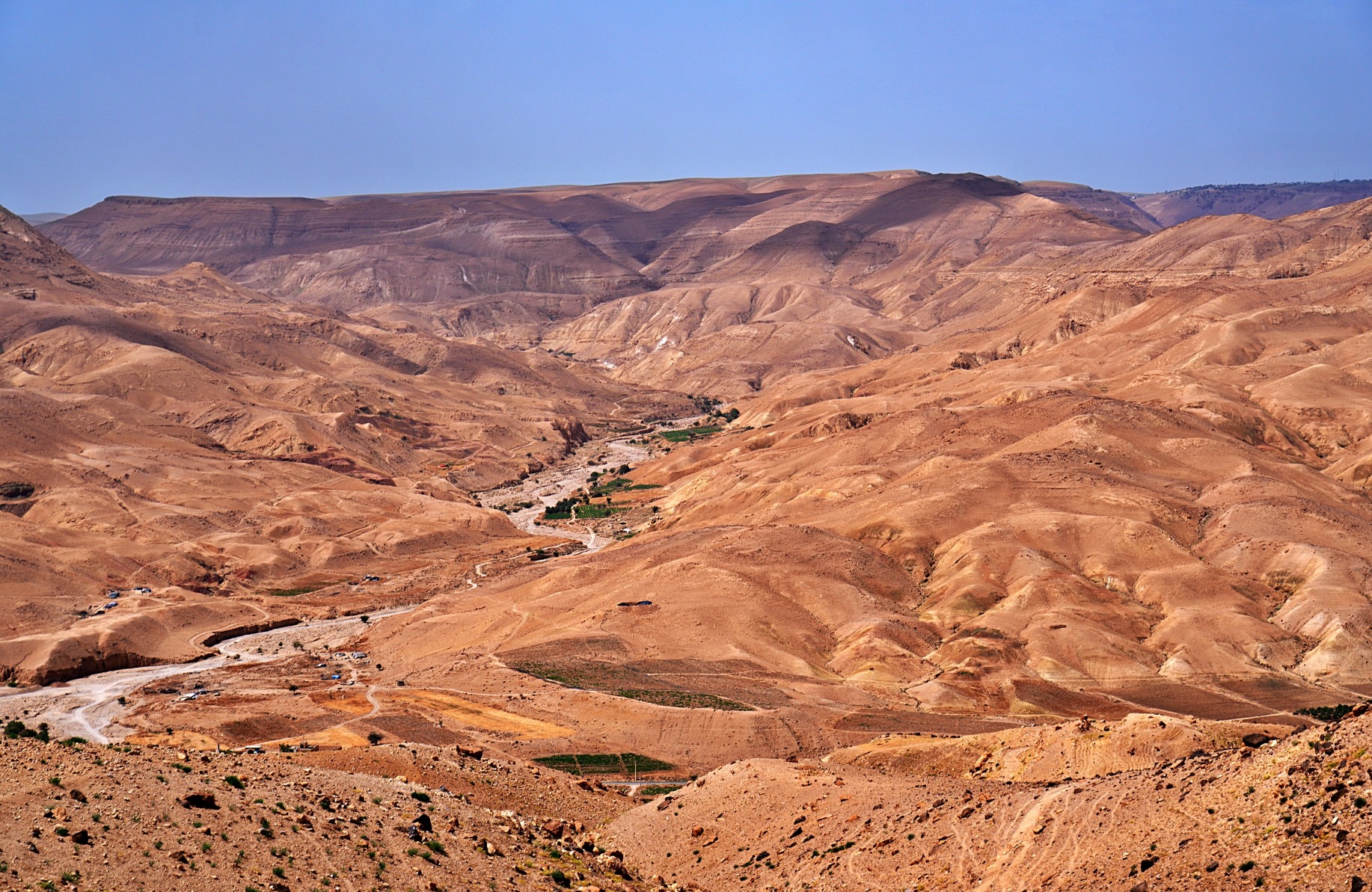
Shaped during the Triassic Period, 250 million years ago, eons of wind and rain eroded the park’s sedimentary sandstone cliffs into a variety of shapes. In addition to the erosion, they have a high iron content, making them burst with many shades of red. For this reason, they are also called Los Mogotes Colorados (The Red Hills). The walking trails allow you to get up close to the red cliffs, where you can admire the details in their weathered appearance.


Over the years, a few had eroded to form recognizable features such as a tornado, a gorilla, and a cobra.


Desert Plants
At 900m elevation, the arid park has a surprisingly wide variety of vegetation. As we walked between the tall cliffs, our guide introduced us to many of the plants and their wide range of medical uses. Seeing these plants ended up being the most interesting part of the walk.
One of the most unusual is an airplant that grows on the ground in the shape of a large circle. A natural trough forms inside the circle, which collects rainwater, allowing the plant to make the best of its desert situation.


Cardon cacti are the most picturesque and look like the dictionary definition of a cactus. They only grow 1 cm per year, and we saw one believed to be 400 years old. We had no idea cacti could live that long, and this one still looks very healthy.


Another interesting plant we saw on the walk was the Puco Cacti. They are very unusual and look like tubes. Other cacti in the park had colourful flowers that looked too delicate for this gruff landscape.


In addition to cacti, there were a few unique trees. The bare, green brea trees are well adapted to the desert. In spring, when there is water, they bloom with yellow flowers. If they are overwatered, though, they grow quickly, their trunks become brittle, and they usually collapse. White quebracho trees were among the only ones we saw with full foliage. Its bark has been used for medicinal purposes by the indigenous population for generations.


Puente Natural
At the end of a long cliff, we reached the iconic image of the park, Puente Natural. The geological formation spans across a large opening in the wall. Tours used to let people walk across the bridge, but to protect it from further damage, this is no longer allowd. In addition to the natural bridge, it was fun to spot a few rock windows, spread throughout the park.


Chacho Cave
In another part of the park, you can visit a cave once used by a local hero. La Rioja-born Ángel Vicente Peñaloza was a general in La Rioja’s resistance army during the 19th century civil war. His uncle nicknamed him Chacho (little guy) as a child, and it stuck throughout his adulthood. The state declared Chacho an outlaw so he went into hiding. While on the run, he spent time hiding out in this shallow cave in Los Colorados. Federalists eventually captured Chacho, killed him and hung his head in the town square.

Petroglyphs
Not far away from Chacho’s Cave, you can see 1,200 year old petroglyphs. The soft sandstone is easy to sculpt, but that means it is also easily damaged. Unfortunately, many of the drawings have been destroyed by wind and rain over centuries. We could see a few geometric shapes, but most were so worn away that they were almost indiscernible.
Also in the park are artifacts from the Capayán people that date back to 600AD. One that we saw was a hole in the stone that was used as a mortar to grind herbs for medicine.


How to visit Los Colorados Provincial Reserve
Unless you have your own car, you will need to join a tour to visit Los Colorados. You can find many tour operators in La Rioja. Once you get to the park, you choose between three different walks, which can be combined and include a compulsory guide. Our total costs were approximately $150 USD per person, which is much less than the more famous parks near La Rioja.
Why is it so expensive to visit Tampalaya National Park and Ischigualasto Provincial Park? We’re not completely sure, but most likely it is because the area does not receive many tourists; therefore, most tours end up being private tours. If you have time, you could spend a night in either San Agustín de Valle Fértil or Villa Unión, and take a tour offered by the park. This would cut out the local tour agencies and bring the costs down. If you don’t have that extra time, either plan for an expensive venture, visit Los Colorados instead of the famous two parks, rent a car in a larger city, or skip La Rioja altogether.
If you’re in Northern Argentina, another desert scene to visit is near Salta. Check out our post, Day Trip From Salta – Quebrada de las Conchas and Cafayate.
La Rioja
The nearest city to these desert parks is La Rioja. It doesn’t have a lot to offer visitors, but it is a pleasant city with clean and safe streets.
Plaza 25 de Mayo
In the city’s downtown, you’ll find the main square, Plaza 25 de Mayo. As in many Argentine cities, a statue of San Martín on horseback is proudly displayed in the centre. It rained most days when we were there so the park wasn’t very busy. When the sun came out though, locals came to enjoy its park-like setting.

The Rioja Cathedral (Catedral y Santuario de San Nicolás de Bari) is the focal point on the square, and is joined by a couple of other nice, colonial buildings.


On one corner of May 25th Square are the remains of the mission church, San Ignacio Sanctuary. Even though it is no longer a church, the building has retained its old charm and is used by a few local shops and a restaurant. The surrounding streets are also home to colonial buildings, but most are squeezed between newer, less attractive ones.


Santo Domingo Convent
A few blocks away, you can find the more interesting Santo Domingo Convent. Established in 1603 by the son of the founder of La Rioja, Pedro Ramirez de Velasco, it is the oldest monastery in Argentina. It was built for Dominican missionaries, with labour provided by local Diaguita people. Now a National Historic Monument, Santo Domingo Convent is a simple stone building, but its carved carob door adds a punch to its exterior.
As with many mission churches, the nave of this small building has exposed beams on the ceiling and stark white walls.


How to get to La Rioja
The only airline to fly into Capitán Vicente Almandos Almonacid Airport is Aerolineas Airlines. The common way to travel to the city is by bus from Catamarca, Salta or Cordoba. The bus terminal is located 3 km from the city centre.
Where to stay and eat in La Rioja
There are not a lot of hotel options, but there are several apartments for short-term rental. Try to stay within walking distance of Plaza 25 de Mayo.
You can also find a few restaurants near the main square. We had reall good coffee at San Ignacio Cafe, located in the old San Ignacio Sanctuary.

When to visit Los Colorados
The best times to visit is spring (October/November) and fall (April/ May) when there is less rain and temperatures are more moderate.
Note – Prices are listed in USD because the rate of inflation in Argentina is so high. As of 2026, any fees listed in pesos would be inaccurate within a few months. Becasue of this, many restaurants don’t list prices on their menus, or if they do, they have been written over many times as the value of the peso drops. Apart from hotels, most business will only accept payment in Argentine pesos.

Click on the link to read our Travel Tips For Argentina.
To read more of our adventures in Argentina, click here.
Coming Next – Salta – Argentina’s Prettiest City
For pictures from other blogs go to Gallery at monkeystale.ca.
To read about more of our adventures go to Destinations.
If you like what you read, please comment or share (with credit) using the links below.




We’d love to hear from you, please leave a comment.