
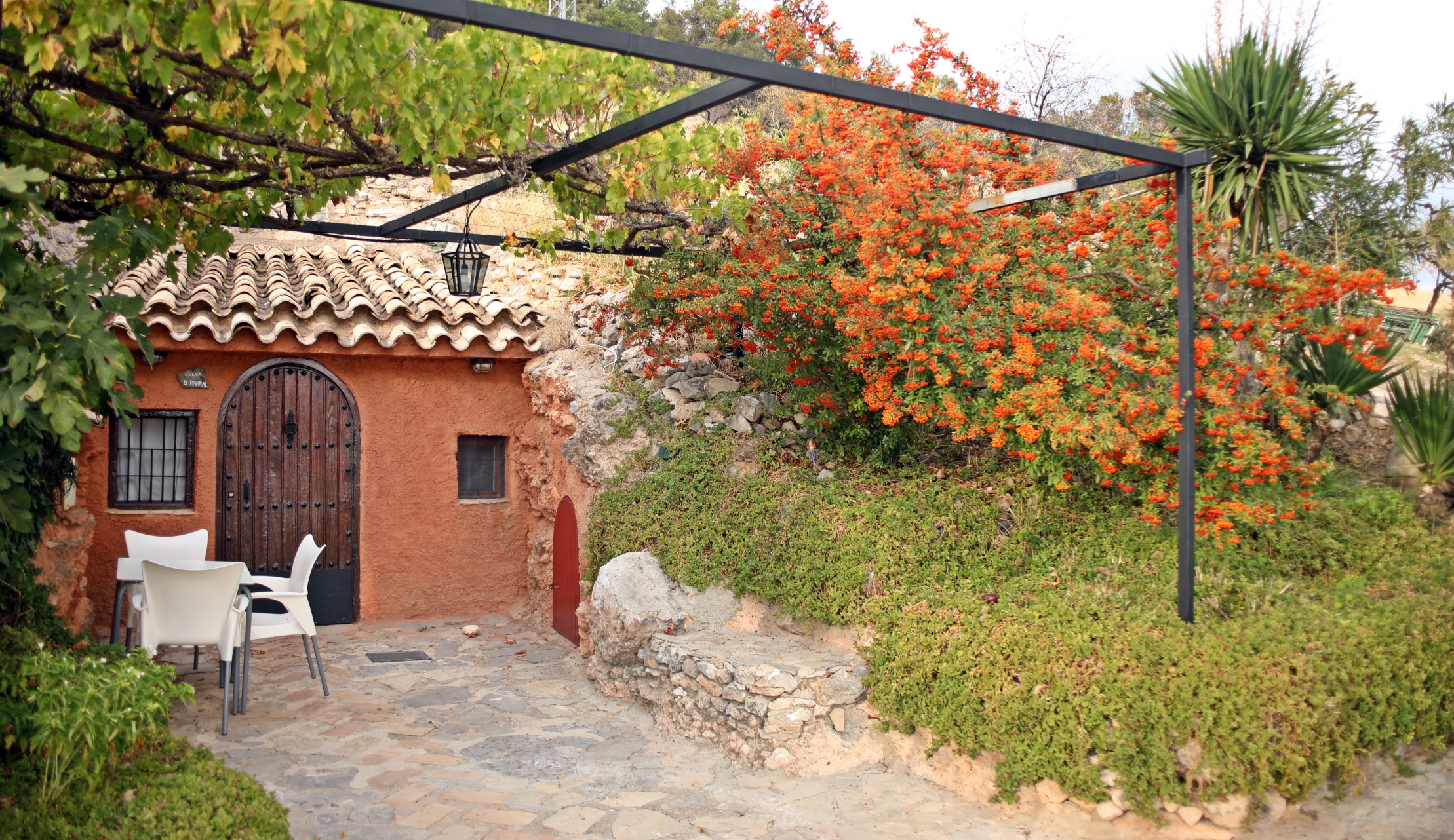
We have stayed in a few unusual places in our travels over the years, such as a yurt in Kyrgyzstan and a treehouse in Laos, but a cave house wasn’t even on our radar. That is, until we visited Andalucía in southern Spain. If you want a fun and unique experience in Spain, we highly recommend staying in a cave house.
People have been living in caves in Andalucía, Spain since at least the 15th century. These caves were first used by the Moors to store grains and livestock feed. When Spain was conquered by the Christians, many Moors and Moriscos fled the cities to live in these caves. Some were natural caves with man-made walls, others were built by digging into the mountain cliffs.
Today, they continue to be lived in for a wide variety of reasons. One of the main benefits is that they are naturally cool, even during the hot Spanish summers. Temperatures inside the caves are usually around 18 – 22° C (64 – 71° F). In addition to being energy efficient, they are also resistant to many natural disasters such as earthquakes. There are thought to be 20,000 cave houses in Andalucía. Most are in Granada, but we also saw them in the provinces of Jaén, and Cádiz.
To fully appreciate this atypical way of living, we decided to book a few nights in a Spanish cave house. We found a great one in the small town of Pegalajar, Jaén. When we saw the town from below, our excitement for this stay grew. Not only were we staying in a cave, but the town itself has a fantastic setting. Its homes are perched on top of a small hill, surrounded by olive groves.


As we walked up the steep lane to reach our cave house, we were bursting with excitement. When we saw its cute little entrance poking out from below the ground, we were beyond ecstatic.


Our cave house was adorable. The rough, chiseled walls were painted white, which softened their look. A tiny entrance led to an open living room with a fireplace. Branching out from it were rounded doorways leading to two bedrooms, a bathroom and a full eat-in kitchen.


The shelves and even seating were carved into the cave walls.

Another benefit of caves is that they are acoustically insulated. We were worried we would be awakened before dawn by the neighbour’s roosters, but we didn’t hear the roosters at all. We did hear someone walking over our roof a few times though, which felt a little strange.
Most of the cave houses are lived in by locals so it shouldn’t have been a surprise that they are adapted to modern times. We weren’t living like cave men, we had electricity, hot water and a fireplace. One drawback was that the thick walls meant our internet was very slow, especially in the back of the cave.
There were a few other cave homes in the neighbourhood, but other than their front doors, the rest of the houses remained hidden under the hills. The only indication that there were other houses was their chimneys poking out of the ground.

The other benefit of staying in a cave house are the unimpeded views of the surrounding landscape. There were no tall buildings to block our vista.


It was a truly unique experience.
Our daughter’s friend owns and lives in a cave in another part of Andalucía. It’s more spacious than the one we stayed in, and let us see the possibilities of cave living.


In addition to these cave houses, we saw many other cave settlements in Andalucía. Here are two.
Guadix
Guadix has one of the largest number of cave homes in Andalucía with approximately 2,000 inhabited underground caves. We knew were were in the right spot when saw the many chimneys.


Many of these cave houses in Guadix have modern-looking entrances with partial roofs, eaves and small gardens. Some even have underground garages and swimming pools in front.


On the other side of town we could see even more caves under the rocky outcrop.

Setenil de las Bodegas
A very popular place to visit in Spain is Setenil de las Bodegas. Here, the homes combine natural caves with man-made walls for a spectacular sight. In one area, the entire street is protected under a massive rocky shelf.


You can read more about Setenil de las Bodgeas in our post Day Trips From Ronda – Setentil de las Bodegas & Olvera
To read about other cave towns, check out our posts from Vardzia, Georgia; Uplistsikhe, Georgia; Cappadocia, Turkey; Ajanta and Ellora, India; and Goris, Armenia.
Tips for staying in a cave house
- These are actual cave homes, not artificial rooms that you’ll find in places such as Cappadocia.
- If it’s cold outside, then it may be chilly inside the cave. Our cave had a fireplace, but if you visit in the fall or winter, make sure your accommodation has heating.
- Remember to duck. Most of the doorways and parts of the ceiling may be quite low. They are solid rock, so are very hard if you hit your head.
- There won’t be much natural light making the caves very dark at night. Have a flashlight handy, or leave a light on at night in case you have to get up in the middle of the night.
- They may not be located in easy to access locations such as up a steep hill or at the top of a set of stairs, making them difficult for people with disabilities or even bad knees.
- Many of these cave homes are listed with online reservation apps. We stayed in Cueva el Parral in Pegalajar, Jaén. You can find it on Booking.com.
- Since many are rented privately, they may require a 2 or 3 night stay.
- To visit these communities, you do need a car. Public transit would be very cumbersome and require a lot of walking.
Pegalajar can be found in the middle of the map below. Guadix is just east of Granada. Setenil de las Bodegas is further west.


To read more of our adventures in Spain, click here.
Coming Next – Discover Jaén Cathedral
For pictures from other blogs go to Gallery at monkeystale.ca
To read about more of our adventures go to Destinations.
If you like what you read, please comment or share (with credit) using the links below.




We'd love to hear from you, please leave a comment.