
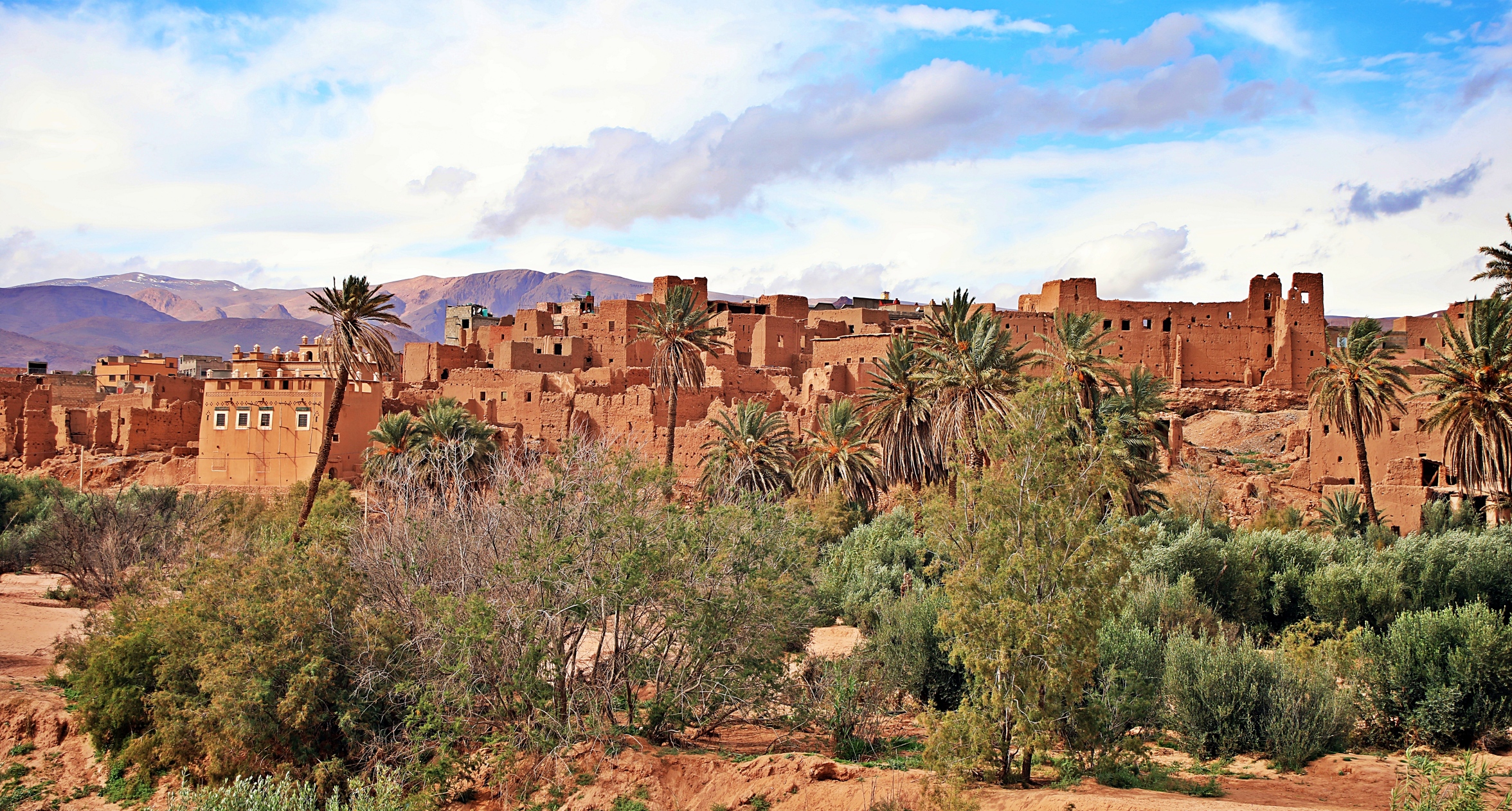
The Todra River has created many fascinating scenes. One of the most popular is the spectacular, narrow Todra Gorge. Others can be found just outside the city of Tinghir, where several green oases add colour to the desert scenery. What makes them unique are the ecru-coloured mud homes on their edges. Inside the city, more desert homes can be found by exploring the old, tight lanes. There are many fantastic scenes to discover when you visit Tinghir, Morocco.
Tinghir
Its location in the Todra River Valley between the High and Low Atlas Mountain Ranges has given Tinghir an extraordinary landscape. Verdant palm oases surround apartment building-sized earthen clay homes for a uniquely Moroccan setting. Adding depth to the view are the tall, arid mountains that provide the perfect background. It was images of these scenes that attracted us to Tinghir.


Most of these mud houses are dilapidated and no longer lived in. However, laundry hanging on lines on a few balconies indicates that some are still occupied. They look like a harsh place to live.

Tinghir is located in the Valley of 1000 Kasbahs. The main one in the city is entirely in ruins. Kasbah of El Glaoui sits on top of a hill above the river. Even though there’s not much left to the building, its position gave us lovely views of the oases as well as the rest of the city and the mountains in the distance.
Kasbahs in this part of Morocco were family homes rather than fortresses. We will show you another kasbah built by the Galoui family in Ouarzazate in a few days.


Another unique neighbourhood in the city is Aït el Haj Ali, the old Jewish Quarter, also called Mellah. It is a labyrinth of dirt lanes tucked away on the city’s edge. Crumbling earthen clay homes crowd together on the narrow streets. We were surprised that some of these old homes are 3 or 4 stories tall. It is one of the most authentic districts we’ve seen in Morocco.


Moroccan earthen construction requires continual maintenance. Many of these were no longer being lived in, so were also not looked after. Others have either been rebuilt or are well taken care of and have decorated features on their exterior. At 1,430m elevation though, even in these new buildings, it must get pretty chilly overnight.


The city itself is pretty scruffy. Don’t come here expecting a lot of tourist infrastructure, but it is worth a visit.

Getting to Tinghir
CTM buses travel between Tinghir and Ouarzazate (170 km) and continue on to Agadir (500 km). You can connect to Marrakesh through Ouarzazate. If you’re in the desert, Supratours travels between Tinghir and Merzouga (200 km). Most tours from Marrakesh make a quick stop in Todra Gorge, but not Tinghir, on their way to the desert.
Where to stay and eat in Tinghir
There are not a lot of tourist accommodations in the city, but you can find a few hotels on the main street, within walking distance of the CTM bus station. There are a few restaurants in this region too. If you have a car, there are also a few guesthouses are on the road between Tinghir and the gorge.
Todra Gorge
Fourteen kilometres upriver from Tinghir is Todra Gorge, a fantastic natural scene. For thousands of years, the seasonal Todra River (Oued Todra) raced down from the Atlas Mountains cutting out an impressive narrow gorge in the limestone walls. Today it is one of Mother Nature’s wonders.
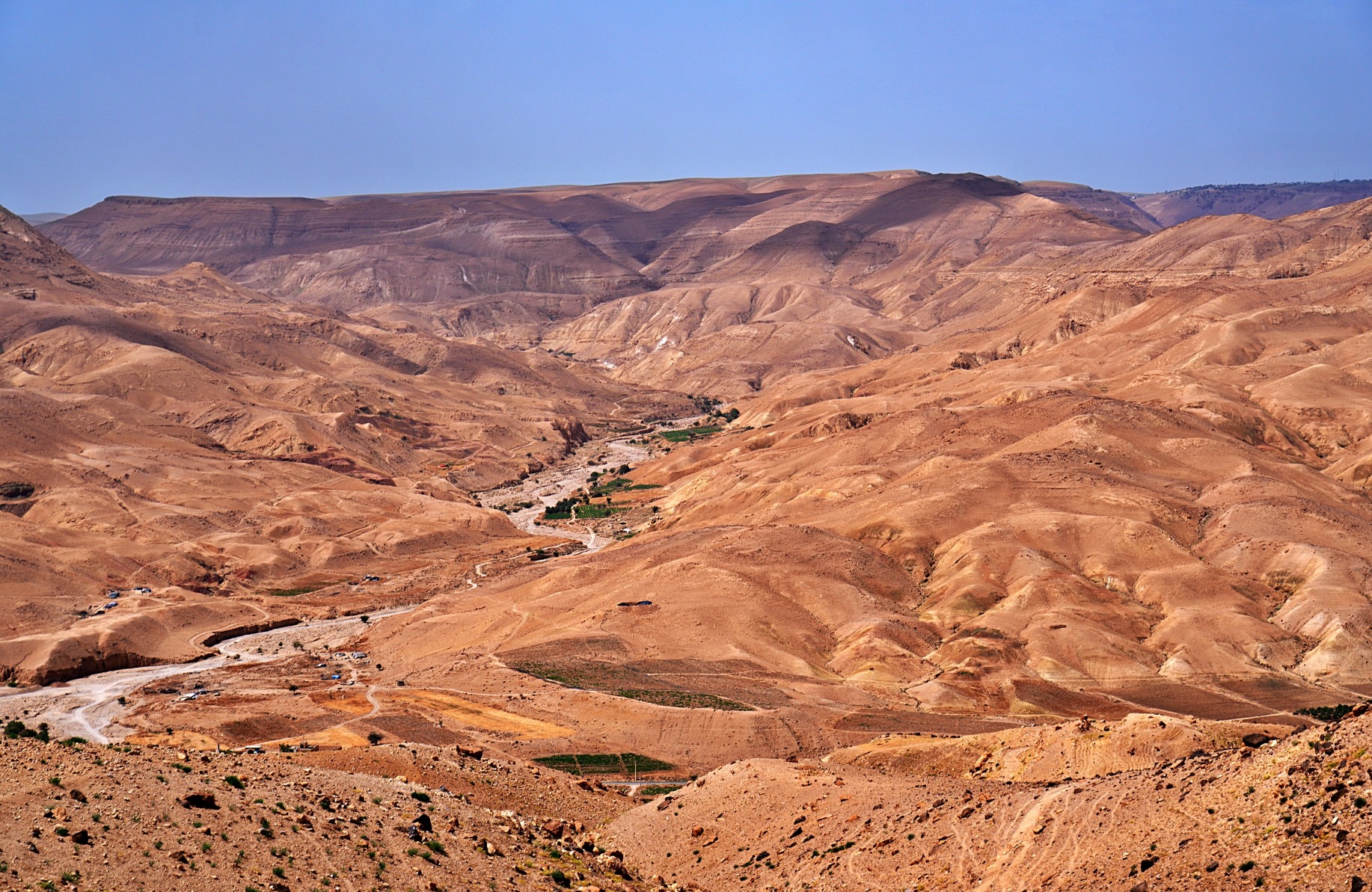
The scenery on the way to the gorge is stunning, so don’t forget to stop at one of the viewpoints overlooking the Todra Valley.

We got excited when we arrived at the entrance to the tight gorge and saw the three hundred metre tall walls that rise straight up from the ground. Todra River is a seasonal waterway, so when we visited it wasn’t much more than a trickle. During the rainy season, between November and March, it is a much faster moving river.
Note – It is also spelled Todgha or Toudgha.


For the next half a kilometre, the gorge feels a little claustrophobic. In places, these limestone walls are only 10 metres apart. We felt so small walking between these giant walls. Although you can drive through the canyon, the best way to experience it is on foot.


There are a few kiosks along the way selling scarves, t-shirts and rugs. Cafes usually fill in the larger spaces, but only one of them was open in November. Most are probably only open for business in the busy seasons, early fall and late spring. For those who want a unique stay, there’s even a hotel in the middle of the gorge.


At the end of the tight gorge it opens up into a cirque so that we could step back to see its tall, limestone walls. There were a lot of climbers on these cliffs, even on a chilly November morning. We watched them for a while, reliving our climbing days.


If you don’t climb, you can hike up one of the trails between the rocky slopes to get a different view of this rugged landscape.
After exploring the gorge, instead of taking a taxi, we decided to walk the 14 km back to Tinghir. The walk provided a fascinating mix of nature and human development and became one of our favourite experiences in this area. In addition to seeing the tall, red peaks, we enjoyed walking through the villages that are built at their bases. In the distance we could see a few kasbah ruins that were once prevalent in Todra Valley.


People were carrying with on their usual chores as we walked by. Women were doing laundry in the river, others were walking home with supplies loaded on their donkeys.


The riverbeds are filled with date palm orchards that look like small oases in the desert. The bright green from the palms provides a beautiful contrast to the red earth. We had expected to see one or two of these picturesque scenes, but as we walked back to town, we were inundated with them. Morocco is one of the top date palm producers in the world.
The oases are irrigated by a network of pipes called Tirgouine (plural of Targa). Where there aren’t palm trees in the riverbed, villagers have planted vegetable gardens.


Similar scenes can be seen in Dades Valley, closer to Ouarzazate
Getting to Todra Gorge
If you don’t have you own car you can reach the beginning of the gorge by taxi or share-taxi (grand taxi). We had intended to take a share-taxi, but the fee was only 50 MAD (€2.50) for the taxi so we didn’t bother to wait for others to arrive. You can hire a taxi for a couple of hours and have them wait for you to return to the city, or hope for a waiting taxis at the drop-off point. What we did was take a taxi to the gorge and walk back. There were a few tour groups who stopped here for a few minutes on their drive to the desert.
If you take a taxi, get dropped off before the gorge so you can take you time and enjoy the walk through this magnificent natural wonder.
You can find Tinghir in the lower half of the map below. Click on the image to be directed to an interactive map.

Where to stay and eat
There’s a hotel in the middle of the gorge and a couple at the beginning. There are also a few cafes at either end and several more along the way. It’s very close to Tinghir so most visit on a day trip.

Click on the link to read our Travel Tips For Morocco.
To read more of our adventures in Morocco, click here.
Coming Next – Ait Ben Haddou & Ouarzazate – Movie Sets In Morocco
For pictures from other blogs go to Gallery at monkeystale.ca
To read about more of our adventures go to Destinations.
If you like what you read, please comment or share (with credit) using the links below.




We’d love to hear from you, please leave a comment.