

Morocco is a vibrant country with a myriad of attractions. You can enjoy a camel ride across the Sahara or explore the tight lanes in its medinas. Maybe you prefer to be awed by the country’s stunning historic kasbahs and palaces. Whatever your preference, you’re sure to find something you love in Morocco.
With so many choices and limited time, how do you narrow down which places to visit? To help you decide, we’ve come up with our top places to visit in the country. These are in order of our preferences, but if you have different interests, you may have a different order.
Click on the link to go directly to Travel Tips For Morocco.
You can find these cites and sites on the map below. Click on the image to be redirected to an interactive map.

1. Erg Chebbi
Exploring the golden dunes of Erg Chebbi was our favourite activity in Morocco. Here, row after row of majestic, sandy mountains stand radiant under the Moroccan sun. We think this is an experience you won’t want to miss either, and there are many activities to choose from. You can cross the desert on a camel or an ATV; go for a walk to the tallest peaks; or stay overnight in a desert camp. No matter which you select, you will not be disappointed.
You can read more about Erg Chebbi in our post Explore The Dunes Of Erg Chebbi.

2. Chefchaouen
The Blue City of Chefchaouen is a magical town. Buildings painted in every shade of blue decorate the lanes that wind up and down the mountainside. Visiting Chefchaouen is like stepping into your favourite storybook. Just when you think you’ve found the cutest scene, you’ll turn a corner and find another. These enchanting scenes are why Chefchaouen is one of our top spots in Morocco.
To find out more about The Blue Peal, visit our post Visit Chefchaouen – Morocco’s Blue City.

3. Fez
The medina in Fez has a multitude of winding passageways that seem to be set in an unsolvable maze. Packed with shops, mosques and riads, this vibrant part of the city will soon excite your senses and make you fall in love with this historic Moroccan city. In addition to aimlessly exploring the narrow lanes of the medina, don’t forget to visit the beautiful madrasas, inns and the fascinating tannery. There’s a lot to see in this Moroccan city which is why it’s near the top of our list of places to visit in Morocco.
For more information on what to do in Fez, visit our post A Guide To Explore Fez Medina.

4. Volubilis
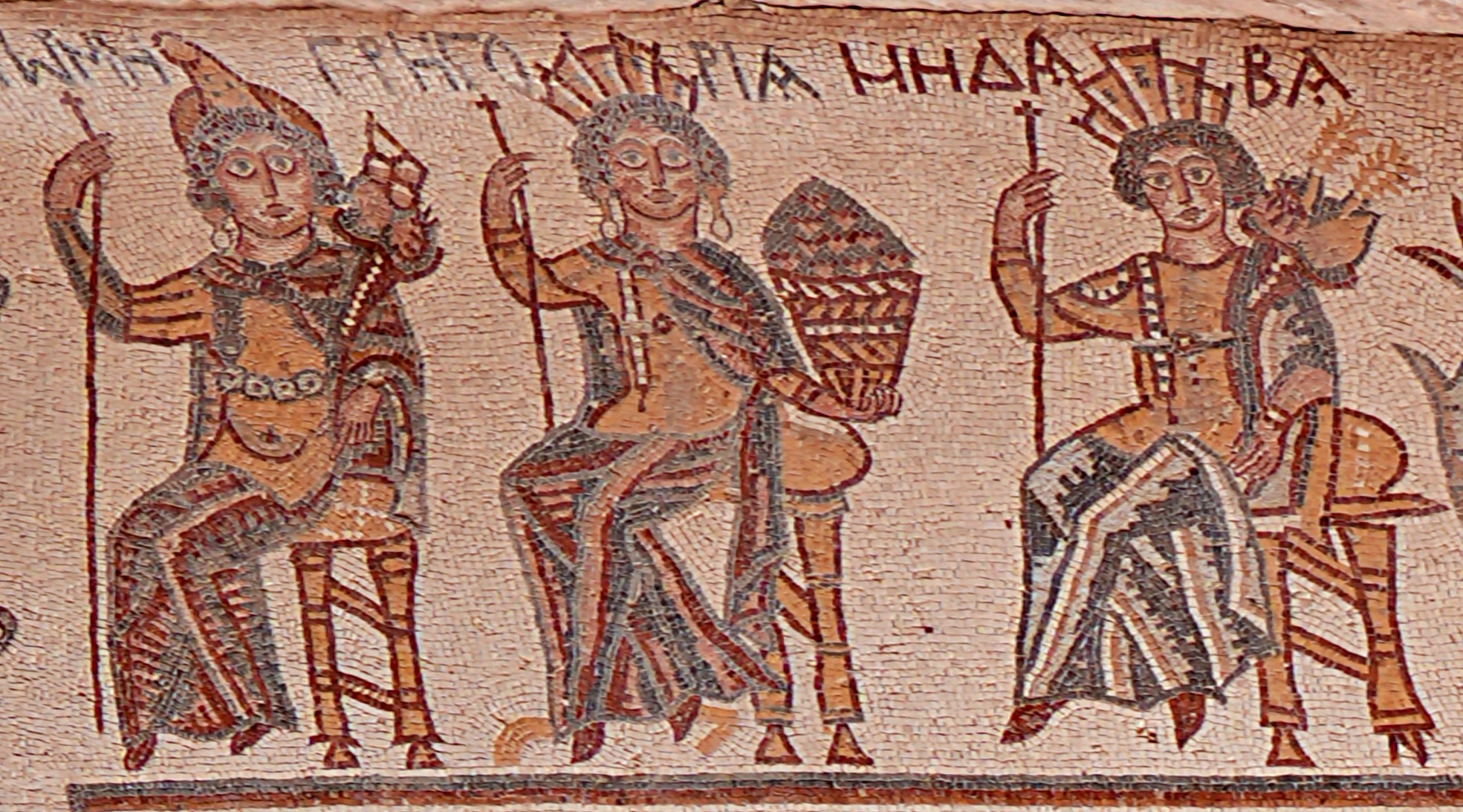
If you visit Fez or Meknes, you won’t want to miss the ancient ruins of Volubilis. It is an open-air museum that showcases stunning Roman mosaics dating back to the 1st century. Although left to the elements for centuries, many floors are still in excellent condition and you’ll feel as though you’ve entered an ancient Roman home. Visiting these mosaics, along with the town of Moulay Idriss, makes a great day trip from Fez or Meknes.
You can find out how to visit the Roman mosaics in our post Best Day Trips From Meknes or Fez – Volubilis, Moulay Idriss and Ifrane.

5. Essaouira
There is much to love about Essaouira. The tall ramparts of its fortress butt up against the Atlantic Ocean and lead you to the colourful port. At the end of the day, fishing boats bob in the water while fishmongers sell their day’s catch on the pier. From there, explore the vibrant streets of the medina where you can shop for crafts or dine at a local restaurant. It won’t take long before you are charmed by Essaouira.
Find out more about visiting Essaouira in our post Exploring The Fortress And Port of Essaouira.

6. El Jadida
The tall ramparts of the El Jadida’s fortress may have been constructed for protection, but today, the walls look as if they were purpose-built to pose for your camera. The old port city isn’t high on most traveller’s lists, but with its picture-perfect fortress and ruggedly handsome old town, we think it should be. If you like discovering relatively unknown cities, then you’ll love El Jadida.
To find out more about this interesting city visit our post Discover The Portuguese Fortress in El Jadida.

7. Tangier
Narrow lanes wind their way through Tangier’s medina without any sense of planning. A vibrant atmosphere emanates from these well-trodden streets and entices you to continue to explore. Being only a short ferry ride from Spain, Tangier’s medina has become a popular location for a weekend getaway. There’s a lot to see when you visit Tangier.
To read more about this fascinating city, read our post A Weekend in Tangier.

8. Tetouan
Tetouan is not on Morocco’s typical tourist trail, and that is exactly why we liked it. The narrow, covered passageways that travel through the medina were unlike anything we had seen before. They revealed a life that is very foreign to us and utterly fascinating to witness. If you want to have an authentic Moroccan experience, we think you’ll love exploring the intriguing medina of Tetouan.
You can find out more about visiting Tetouan in our post Tetouan Medina – An Authentic Moroccan Experience.

9. Marrakesh
The large city of Marrakesh is one of Morocco’s most popular tourist destinations. Its large medina is filled with shops selling every tourist knickknack you didn’t know you wanted. Its best monuments though, are the immaculate Ben Youssef Madrasa, Bahia Palace and Saadian Tombs. Seeing these beautiful buildings will make you glad you visited Marrakesh.
You can read more about this bustling city in our post Beautiful Buildings In Marrakesh.

10. Rabat
Images of the picturesque oceanfront Kasbah Oudayas is what drew us to Morocco’s capital city. In addition to this lovely spot, we found Roman ruins and historic tombs in Chellah as well as other impressive monuments in the city. It’s not as flashy as some Moroccan cities, but this capital still has a lot of sites that are worth exploring.
To find out how to visit Rabat, visit our post Exploring The Sites In Rabat – Morocco’s Capital.

Travel Tips For Morocco
ATM – Not all ATMs in Morocco accept international debit cards. We found Al Barid Bank and Morocco Post Office to give the best rates, although the Post Office didn’t always accept our bank cards.
Bus – CTM is the best bus company with clean, reliable buses. When you buy a ticket, you must pay extra for luggage. This fee is paid at the bus station, and you’ll get a bag tag as a receipt. If you’re travelling to the desert, the best bus company is Supratours. Always wear your seat belt when in taxis, buses and minivans. We saw a few accidents and were involved in one when our minibus driver hit a pedestrian with his sideview mirror.
Train – There are 2 types of trains in Morocco. In our experience they were on-time, clean and relatively comfortable. Al Boraq High Speed runs between Tangier – Rabat – Casablanca; Al Atlas Classic goes between Tangier – Meknes – Fes and connects on to Rabat – Casablanca – Marrakesh. There are also overnight trains between Tangier and Marrakesh. Trains have 1st and 2nd class, the cost is minimal and we always bought 1st class. You can buy tickets on-line directly from ONCF here, or at the train station.
Taxis – There are no true rideshare apps in Morocco. Technically Careem is available, but it’s just another way of hailing a taxi and it doesn’t always work. Plus, it’s only available in a couple of cities.
- Note – Throughout Morocco, there are Grand and Petit Taxis. Grand Taxis only travel inter-city routes and are often shared. Petit Taxis only travel within a city. There are usually separate stands with signs indicating a Grand or Petit Taxi.
Accommodation – You will mostly likely stay in a riad. They are similar to a guesthouse. Riads are usually two or three stories with an open courtyard in the centre. Guest rooms open to the courtyard. Because of this open design, lack of insulation and poor doors, they tend to be fairly noisy. Some cities have decent hotels within walking distance of the medina if noise is a concern for you. Otherwise, read the on-line reviews for noise before booking. Some encourage a quiet environment, while others promote social gatherings in the courtyards. Dar is the Arabic word for house. Some accommodations are called dar, but we couldn’t see a difference between these and riads.
The most difficult part of staying in a medina is not knowing where to be dropped off when you first arrive in the city. Taxis can not drive into most medinas and will leave you at one of the entrance gates. So, either ask your riad host before arriving, or figure out on Google Maps which is the closest gate (Bab) to your accommodation. We also recommend staying near one of the main gates if you are leery of wandering around the medina with your luggage.
Medinas – Online maps don’t know the small lanes and alleys in Morocco’s medinas, but if you use Google Maps in Satellite View, you can see them. Because of the building density, the GPS locator may not be accurate so you can’t rely on that. Pay attention to where you begin and the general direction of travel. That will make it is easier to figure out where you are on the map at any time. This is true for most medinas in Morocco. Don’t constantly stare at your phone though, because this may draw the attention of touts wanting to ‘help’.
Shopping – Unless you shop at a chain store or grocery store, prepare to haggle. We thought prices would be inflated by 50% so assumed that’s where we should start our bids. At one shop, the price quickly went from 600MAD to 500 to 400 and finally, he stopped at 100 MAD. So clearly, some are marked up over 50%.
What to wear – Women need to cover their legs and shoulders. Some reports suggest covering as far as the elbows. The exceptions are beach areas such as Agadir. The streets and sidewalks are not in great condition and are often dirty with mud so a good walking shoe is better than open sandals.
Language – Arabic and Tamazight (Berber), are the primary languages spoken. Almost everyone speaks French and most signs are in all three languages. In tourist areas English is also spoken. If you’re travelling beyond the usual tourist haunts, it would help to know a little French as well as a few words in Arabic and Berber. Hello, in Arabic is Salaam Alykum, in Berber it is Azul; Thank You is Shukran.
Flights – When flying out of Morocco, some airports require printed boarding passes. Not all airlines will print your boarding pass at the airport, so after checking in on-line, you may need to print your boarding pass yourself. In Marrakesh we saw several businesses that offered this service. Check with your airline to see if they will print it. Air Canada in Casablanca gave us printed boarding passes at the airport.
SIM Cards – Moroc Telecom is very affordable and has good coverage throughout the country. It is very easy to purchase SIM cards and prepaid plans at Maroc Telecom stores. There are many locations throughout the country. A 30 days prepaid plan includes 15 GB of data for100 MAD (9€) plus the SIM card for 20 (1.90€).
Safety – We felt completely safe during our travels in Morocco. There are definitely people that try to overcharge you, but in general, Moroccans are very honest. We walked through every city, in all types of neighbourhoods and never had any concerns for our personal safety.
Food – Tagine is the most common dish in the country. It is a slow cooked dish in a clay pot that is similar to stew and is often served with couscous. They are usually made with goat, lamb or chicken and vegetables. You can also get vegetarian tagines. Berber omelets are also common. They cook tomatoes, eggs and herbs in a tagine clay pot. Kebabs are also very common as is Harira, a delicious lentil soup. We didn’t find the meals to be as flavourful as expected, some were rather bland.

To read more of our adventures in Morocco, click here.
Coming Next – The Historic Quarter in Baku, Azerbaijan
For pictures from other blogs go to Gallery at monkeystale.ca
To read about more of our adventures go to Destinations.
If you like what you read, please comment or share (with credit) using the links below.




We’d love to hear from you, please leave a comment.