

The large city of Marrakesh is one of Morocco’s most popular tourist destinations. Its large medina is filled with shops selling every tourist knickknack you didn’t know you wanted. Its best monuments though, are the immaculate Ben Youssef Madrasa, Bahia Palace and Saadian Tombs. Seeing these beautiful buildings will make you glad you visited Marrakesh.
If you read articles about Marrakesh, it’s described as a chaotic city with aggressive touts that hassle tourists on every corner. They say, if it’s not a tout forcing their guiding services on you, it’s a shop owner that won’t leave you alone. In fact, Marrakesh is busy. It is hectic. Touts do pester you as you walk by. But, if you keep walking and say ‘no thank you’, they will leave you alone. It’s not nearly as bad as the internet would make you believe.
In reality, Marrakesh is very tourist-friendly. Restaurants serve Western food, items in shops are neatly and decoratively displayed and it is relatively clean. However, it feels more third-world touristy than exotic, which is a large part of the reason that we didn’t fall in love with it.
palaces, madrasa and mausoleums
What we did love in Marrakesh are its buildings. It is one of Morocco’s Imperial Cities, having been the capital of the country many times since it was founded in the 11th century. The result is that several dynasties added their touches to the city over the centuries, and left their mark with some of the most fabulous buildings in the country. Here are some you should make sure you see while in Marrakesh.
Ben Youssef Madrasa
The most spectacular building in Marrakesh is Ben Youssef Madrasa (Ibn Yusef). In the late Middle Ages, madrasas were scholastic centres where students studied the Quran as well as secular subjects. Ben Youssef Madrasa was built with a central riad surrounded by 13 smaller riads. Traditional riads have a central open courtyard that extends the entire height of the two or three-story building. Rooms open to the courtyard. Some rooms in a riad will have windows opening to the outside, but the ones in this madrasa didn’t.
Your visit to this magical 16th century buildings begins in the large central courtyard. Walls are garnished with panels of expertly sculpted lace-like designs, highlighted in muted earth tones. Carved cedar cornices decorate the tops of the walls. Their bases are adorned with zellige (tiles) in a pattern from the 16th century Saadian Dynasty called attarssie. It is an extraordinary room.


The elegance of this madrassa can be seen in the prayer room’s sculpted marble doorway. The designs continue with delicately carved accents in the room’s mihrab and qibla wall. It is a stunning place of worship.


Around the edge of the courtyard are several small riads that together, have 134 rooms. Most of these rooms were used as student residences. They are compact, but each has a window to the courtyard to let in enough light to read the Quran.


Tip – Conservative dress is recommended, although not a requirement. It’s best to visit in the morning before the complex is swarmed by Instagrammers dressed in short skirts and spaghetti straps. Their attire is inappropriate and their presence took away from our visit.
When you visit the madrasa, don’t forget to stop to see the former mosque that has a unique dome. It is called Almoravid Dome (Qubb) because it was built by the Almovarid Dynasty and is located across from the madrasa.

Bahia Palace
The elaborate Bahia Palace was owned by the Grand Vizier (Chief Minister to the Sultan) at the end of the 19th century. The best craftsmen in Morocco were hired to make it one of the grandest in the land. With the amount of decorative elements, we think they achieved that status.

The palace was expanded a few times over the years, resulting in different design styles. As you walk through the complex, you’ll travel between a series of courtyards surrounded by riads. Even though there are a lot of similarities in these areas, you can see the different preferences of the time. Each courtyard has an elaborate colonnade on its perimeter and gardens or fountains in the centre, but the design details vary.


The courtyards lead to various rooms that were used as meeting halls, apartments and even quarters for ladies in the harem. The rooms are adorned with colourful tiles, raised relief plasterwork and painted accents. Doors are beautifully decorated in colourful frescoes of flowers and geometric patterns.


Almost every room has a beautiful wooden ceiling painted with different motifs and colours.


The palace was lived in by a variety of influential families until the mid 20th century when it became a museum. Parts of the palace are still being restored and are closed to the public. The sections that are open though, are well worth a visit.
Saadian Tombs
Built for the rulers and family members of the 16th century Saadian Dynasty, these tombs are among the grandest we’ve seen. You are not allowed inside the mausoleums, but what you see from the doorways are fabulous. The main mausoleum is ornamented with marble columns, muqarnas tiles, delicate sculpted plaster panels and a golden ceiling. Called the Chamber of Twelve Columns, it contains the graves of Sultan Ahmed al Mansour ed-Dahbi and his family.


On the same grounds is an older, less ornate tomb with wooden muqarnas. It holds the bodies of the founder of the Saadian Dynasty and his wife. The tombs are surrounded by a garden with unmarked graves decorated in colourful zelliges. They were for the Sultan’s advisors.
In the 18th century, Sultan Moulay Ismail, an enemy of Saadians, ordered the tombs sealed. They were only rediscovered in the 20th century when Morocco was under the French protectorate.


Tip – It’s a popular site and since only two or three people can fit in the doorway at once, there may be a line-up. When we were there, each group only had 2 minutes to look around, so make good use of your time.
Other Sites in Marrakesh
If you have time after visiting these top three sites, there are a few other things left to see in the city.
Jemaa El Fna Square
The main square in Marrakesh is a buzz of activity with snake charmers, monkey handlers, acrobats, musicians and all sorts of stalls selling everything from sunglasses to orange juice. One thing you’ll always find in a Moroccan market is mint. They drink so much mint tea, it is jokingly called Moroccan Whiskey.


Jemaa El Fna may be where Marrakesh got its reputation for hassling tourists. During the day, it’s quiet, but by late afternoon touts and vendors take their preferred places on the square. If you stop to watch the street performers or take pictures of monkeys and snake charmers, be prepared to be hassled. Feign interest, watch from afar or avoid them all together is the best option to avoid the annoyance. The animals are not treated ethically, so it’s best to not reward or encourage this behaviour anyway.


Marrakesh Medina
Marrakesh’s markets including Souk Semmarine, are very touristy and don’t feel like Morocco at all. Organized shops line the well-lit lanes, spices are piled neatly in perfect pyramids and displayed in pretty bins. Colourful potpourri adds more colour to the shops. It is a bit too made-up and lacks the grittiness of other Moroccan medinas and souks.


If you walk further away though, you can find a more typical atmosphere with narrow lanes and fewer tourists. This is the part of the medina that we preferred to explore.


Motorcycles, bicycles and carts race around these twisted dirt roads. We were told that the alleys in medinas were built to be wide enough for two donkeys to pass. Finally, in Marrakesh, we saw it happen.

Kasbah and Mellah
In addition to the main medina, the Kasbah neighbourhood has its own maze of narrow lanes, tourist stores and restaurants. Although much smaller, it is also a lot more quiet. The nearby Mellah, Jewish quarter, is now the spice market and has a more authentic feel.


As we wandered around the old city, we saw quite a few buildings with cracked walls. Some have braces holding them up. We were told that the September 2023 earthquake damaged quite a few buildings in Marrakesh. The 6.9 magnitude earthquake’s epicentre was only 73 km away. We would see more of its effects when we travelled to the High Atlas Mountains (Coming Soon).


Walls and Gates
Marrakesh is sometimes called ‘The Red City’ for the red sandstone used to build its long fortification walls. Not all of the 12th-century wall is still standing, but there are a few places where you can still see the red ramparts and their gates.
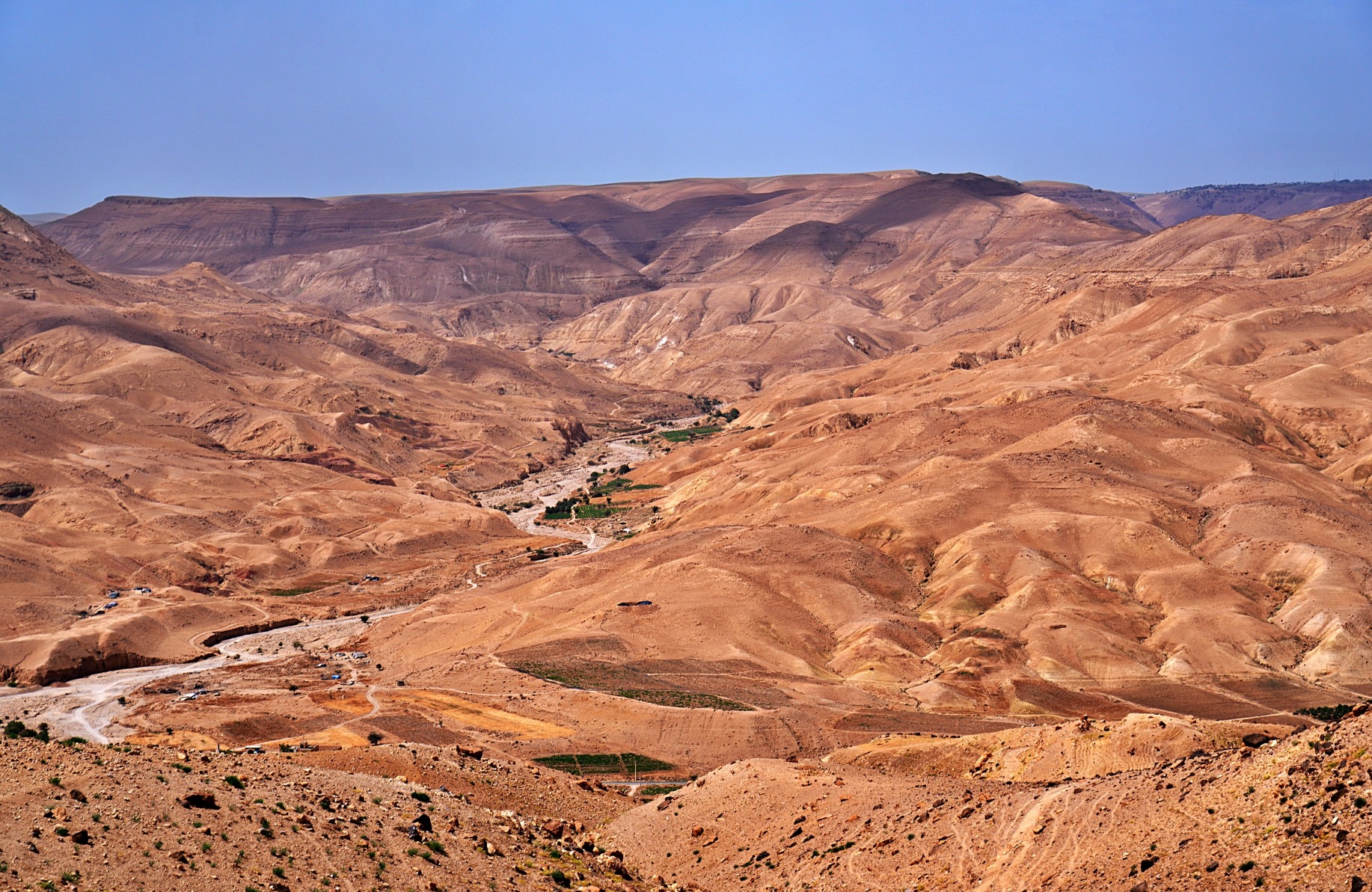
We saw where the red sandstone comes from when we drove from the desert gateway of Ouarzazate to Marrakech. After climbing over a pass in the High Atlas Mountains we went from a barren land to one with bright red rocks and soil.


Koutoubia Minaret
At 77 m (250 ft) high, the 12th century Minaret de la Koutoubia can be seen from many parts of the medina. It is the 14th tallest minaret in the world. Made in Amazigh-style (Berber), the minaret served as a model for the construction of La Giralda in Seville, now the main bell tower in the Cathedral of Seville. Its design was also used for Hassan Tower in Rabat, Morocco.

The tall building is decorated with panels of intricate arches in different variations and a band of crowns. Inside there are no stairs but a ramp that leads up to the top. The ramp allowed the muezzin to ride a donkey to the top 5 times a day for the call to prayer. The original mosque was considered one of the 5 great mosques of the Almohad Dynasty including Giralda Mosque in Seville. Unfortunately, it is now in ruins beside the minaret. A new replica mosque was built only a few years later and stands on the other side of the minaret.
The name comes from the Arabic word Kutubiyyin that translates in English to booksellers. The square around the mosque and minaret was once used as a booksellers’ market. There’s not much to see in the square today, but we found the charming Zahra El Kouch Mausoleum on its edge.


Marrakesh Tanneries
There are a few small tanneries in Marrakesh. None are as large as Chouwara in Fez, but their nauseating smells were much worse. We found a store with a viewpoint over one of the tanneries, and went inside of the doorway of two others. These tanneries were much more disorganized and messy than those we saw in Fez and Tetouan. Piles of hides and garbage were everywhere and the stench was abhorrent.

The tanneries use the same ancient techniques that are used throughout Morocco. These methods have been passed down from generation to generation. The first step is to strip the hairs from the hides in large stone vats filled with a white liquid composed of pigeon droppings, cow urine, quicklime, salt and water. This solution strips hairs from the hides and is one of the causes of the revolting smells.
After the hairs have been stripped, the hides are placed in vats filled with coloured dyes. The pigments come from natural sources such as indigo, saffron and henna. Most of the pits were covered with hides, so it wasn’t as colourful as other tanneries we’ve seen. In the ones that were exposed, men, with their pant legs rolled up past their knees, stood in the coloured liquid and continuously dunked the hides in and out of the dye.


Marrakesh was one of our least favourite Moroccan cities. We don’t have a specific reason. We didn’t get pickpocketed and weren’t overly hassled by touts. To us, it doesn’t have a personality that makes it stand out from the other cities. We’re glad we visited because the palace, madrasa and tombs are beautiful, but we didn’t fall in love with the city.
Other sites near Marrakesh
If you’re in Marrakesh and are interested in getting out of the city for a few days or even just a day, we have a few suggestions. There are quite a few hikes to choose from in the High Atlas. Another option is a day trip to Ouzoud Waterfall or Agadir Beach. If you don’t have much time, you can take a one-day tour to visit the coastal city of Essaouira, or the desert town of Ait Ben Haddou. Stay tuned for posts from those sites.
Getting to Marrakesh
As one of the country’s major cities, Marrakesh is very easy to reach. Marrakesh Menara Airport receives flights from all over the world and is often the first city people visit when coming to the country. You can reach Marrakesh by train if you’re on the west side of the mountains. From the east side of the High Atlas Mountains, such as Erg Chebbi or Ouarzazate, you can take a Supratours or CTM bus. If you have your own car, the highways leading to the city are all in quite good condition.
You can find Marrakesh in the lower right section of the map below. Click on the image to be directed to an interactive map.

Getting around Marrakesh
Kareem is the only ride-share company available, but it doesn’t have very good service. We found it easier to flag down a taxi. Once you’re in the medina or kasbah, everything you will be within walking distance.
Where to stay in Marrakesh
Most of the tourist riads, hotels and restaurants are near the medina or kasbah. The medinas is often noisy and hectic. We stayed in the kasbah and enjoyed the quiet streets. Everything is walking distance, so which ever you stay, you won’t be far away.

Click on the link to read our Travel Tips For Morocco.
To read more of our adventures in Morocco, click here.
Coming Next – Best Day Trips From Marrakesh – Ouzoud Waterfall, Agadir, Imlil
For pictures from other blogs go to Gallery at monkeystale.ca
To read about more of our adventures go to Destinations.
If you like what you read, please comment or share (with credit) using the links below.




We’d love to hear from you, please leave a comment.