

Located in one of the oldest wine-producing regions in Armenia, and in fact, the world, we knew a visit to Areni was in order. From exploring a picturesque canyon with both an ancient cave winery and a remote monastery, to wine tasting in the village, there’s a lot to see and do when you visit Areni in Armenia’s wine country.
Areni was built on the banks of the Arpa River, and is believed by some to be the former home of Noah. It is even said that Noah and his sons planted the first grape vines in this valley. Even if this isn’t true and Noah wasn’t there, the region has a very long history dating back to ancient times. Urartian inscriptions mention Areni wines in the 8th century BCE, and in the 1st century, Areni was under the rule of wine-loving Romans. By the Middle Ages, Areni wine was being traded with European merchants. As you can see, their tradition of wine-making is extensive.

In addition to wine, the area offers several other important historical sites. Some are related to wine, but not all. We’ll take you to these sites first, and sample wine at the end.
Areni-1 Cave
The first place to explore is the oldest winery in the world, located in Areni-1 Cave. The natural cave is found high in the cliff walls of Gnishik Canyon, at the confluence of the Arpa and Amaghu Rivers. These waters created an oasis, allowing humans and wild animals, such as goats and even leopards, to inhabit the valley. Used for thousands of years, the karst caves have had many uses, but winemaking is their most famous.

There are six archaeological dig sites in the cave, referred to as Trenches. As with many ancient sites, researchers uncovered artifacts stacked in layers in the ground, the deepest being from the oldest settlements. The low humidity and minimal temperature variations in the cave made it ideal for preserving these remains, including organic materials. These conditions allowed them to find woollen clothing, woven baskets, and underground food storage casks.
Remarkably, inside Trench 3, they discovered the world’s oldest leather shoe, dated from 3600 to 3500 BCE. The shoe is a European size 37, in case you lost yours. We saw it on display at the History Museum of Armenia. You can read more about it here.


Trench 1 is the deepest cavern in the cave, and is also the most interesting. Buried in the ground were dozens of earthenware wine karases (similar to qvevri in Georgia), dating between 4000 BCE and 3800 BCE. Samples in the clay karases were confirmed to be wine. At 6,000 years old, Areni-1 is considered the oldest winery in the world. An 8,000-year-old qvevri with wine residue was discovered in Georgia, though, so there has been a friendly competition between the two countries as to who was the first to produce wine.


In this same trench, researchers discovered human skulls in clay pots. They believe, therefore, that there was a connection between wine making and human sacrifices. One of the skulls even had 5,000 year old brain tissue, making it the oldest brain tissue on record.
This is part of the reason that researchers believe the caves were not permanent homes for prehistoric humans. Instead, they considered the chambers sacred, and groups would travel to them to take part in rituals and ceremonies.

In addition to people, bats use this cave. It is called a maternity cave because colonies of female bats with newborn pups spend their summer huddling together in the safety of the tall caves. In the fall, these maternity colonies leave to join the male bats. We didn’t see any bats, but did see many swallows darting about the cave entrance.

Entrance fee – there are many different fees based on the services you want. The basic cave entrance fee is 1,000 AMD (€2.25); Summer Hours – 9- 7pm.
Magellan Bat Cave
A little further down the Gnishik Canyon, is another cave called Magellan Bat Cave. You must take a tour to enter, but we didn’t have enough time.
Entrance fee including guide – 3000AMD (€6.75).

Between the caves and Noravank Monastery is the rugged Gnishik Canyon. Tall walls dotted with caves make the road feel a bit claustrophobic. Since the gorge passes the monastery, it is often also referred to as Noravank Canyon.

Noravank Monastery
Perched on a mountain ridge 400 m above the Amaghu River, Noravank Monastery occupies a dramatic location. On the approach to the canyon, you are treated to lovely views of the red volcanic cliff walls across the river.


The monastery was founded in the 13th century. Not only did the population include monks, but the princes of the Orbelian Dynasty also resided there. This was a 12th and 13th century dynasty from the neighbouring Syunik province. The princes were partly responsible for expanding the complex into a prestigious centre of learning. At its height, Noravank Monastery included several churches, a centre for education and culture and even a hotel. It boasted a reputation for its skillfully copied manuscripts.

St. Stepanos Church is the main church in the complex today. A bishop and one of the Orbelian Princes ordered the church’s construction in the 13th century. That same prince later became a bishop himself. The church’s walls are mostly plain, but above the front door is an elaborately sculpted tympanum.


Inside, you first enter the wonderful old gavit or foyer. Its stone walls are adorned with carvings, including a frieze of stories from Armenia’s history. The small domed ceiling is also beautiful, with decorations similar to Islamic muqarnas. As you ogle at these details overhead, be sure to watch your step. The floor is an uneven assortment of tombstones for royals, bishops and prominent citizens.


At the side of the church is St Gregory’s Chapel, which holds the burial tomb of one of the Orbelian Princes. There’s not much inside, but you can see the remains of old frescoes on its walls.

At the centre of the compound is a church considered more than just a building, but rather, a work of art. St. Astvatsatsin Church is a three-story church where the top floor is an open rotunda. A unique skinny staircase on the building’s facade allowed monks to reach the second-story door. Adding to the design, the church has not one, but two carved tympana above the doors. Unfortunately, the church is no longer open to visitors.
It was built in the 14th century and funded by a different Orbelian Prince. At that time in Armenia, the sculptor and architect Momik was gaining attention for his skill at crafting beautiful khachkars. Momik was in love with the prince’s daughter and was told that he could have her hand in marriage if he built the most beautiful church in the land. Once it was built, everyone agreed they had never seen a more magnificent building. In fact, it is considered Momik’s crowning achievement. It ends in tragedy, however. Legend says that Momik was standing on the roof, putting on the finishing touches, when, on the king’s orders, a servant pushed him from the roof. Momik fell to his death. The king apparently didn’t want Momik to marry his daughter after all.


The surrounding yard has a collection of old khachkars, some carved by Momik. His finest, though, are kept at the Armenian Apostolic headquarters in Etchmiadzin.

In 1840, the monastery was destroyed in an earthquake. Restoration began in the 80s and wasn’t complete until 2001, when it was consecrated.
Getting to Noravank Monastery
Most people arrive on a day tour from Yerevan, but we decided to stay in the town of Areni so we could visit the monastery as well as other sites in the area. If you don’t have a car, you can reach it by taxi from Areni, but have them wait for you, as there will likely be none waiting at the monastery. We walked from Areni-1 Cave up the Gnishik Gorge to the monastery. It was a hot 7 km hike with no protection from the sun, but it allowed us to see the gorge at a slower pace.
Areni-Noravank Hike
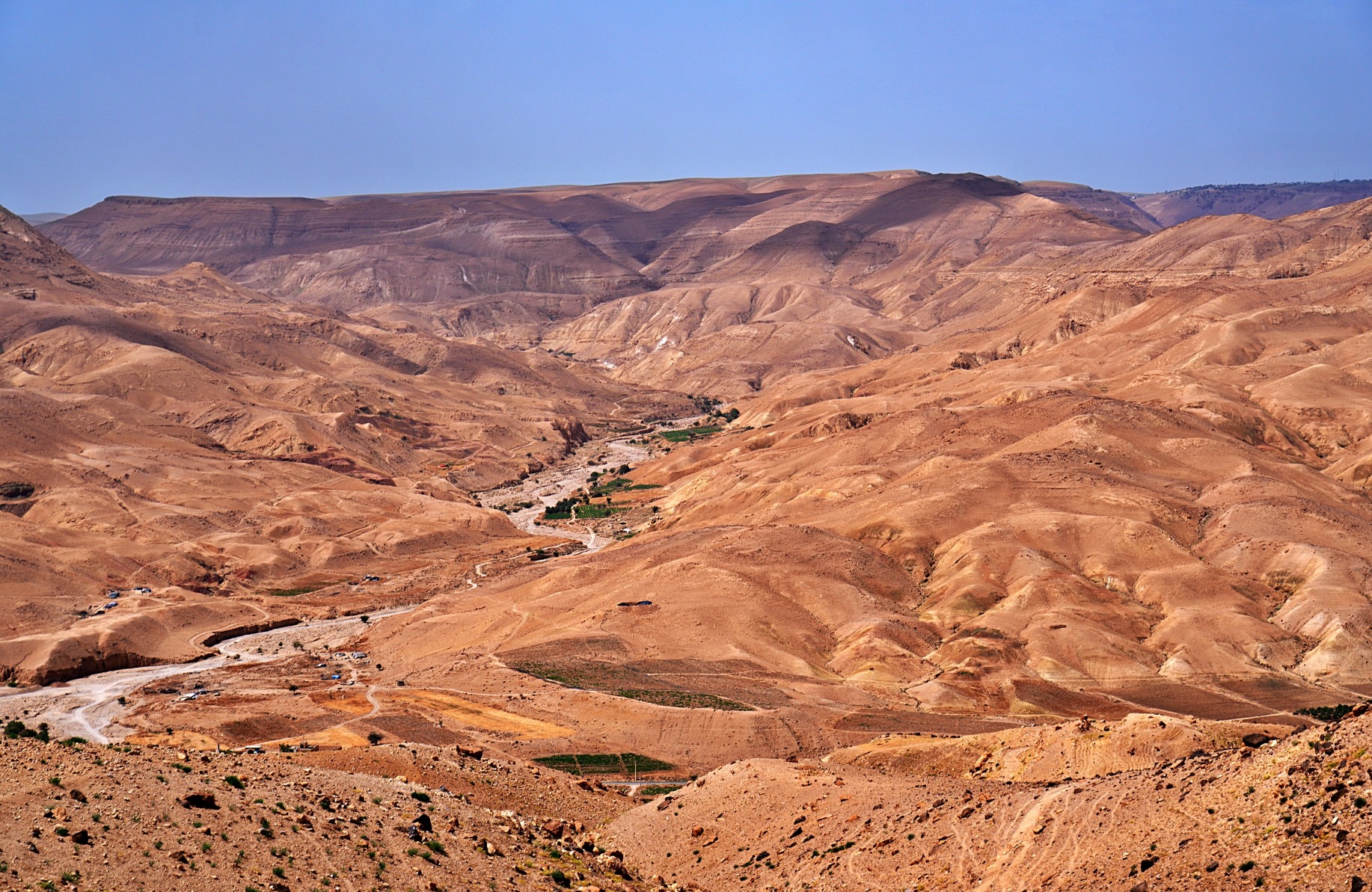
Another option is to hike to the monastery from Areni in a loop that travels through the village of Amaghu and returns down the Gnishik Gorge. It makes a long day, though, with 23.4 km (14 ½ mi) and 1,000 m (3,300 ft) of elevation gain. We hiked part of this route and found the landscape covered in lovely rugged canyons and arid hills.


There are quite a few other hikes in the dry hills around Areni, but none have protection from the sun. Areni is one of the hottest places in Armenia, and when we were there, temperatures reached the mid 40s°C. If you do hike, be prepared by taking a lot of water and wearing a hat.
Areni Village
Areni is located in an oasis created by the Arpa River. Every house in the village has a large yard filled with grape vines, peach, pear, fig, apple trees and some fruits we didn’t know, such as the Cornelian Cherry.


They are very welcoming in this small community. When we stopped beside one of the yards to take pictures of their grapes, the lady was so proud that we liked her garden that she tore off a clump of grapes for us to eat.


There were many stork nests around the village, but we only saw one lone stork who hung around despite the scorching temperatures.

We had hoped that the town of Areni (995m/3,360ft) would be a bit cuter and more developed than it is. Even though there are a few guesthouses, it is more prepared for day trippers than for independent travellers. You can find a few small shops and restaurants on the highway, but there is no true tourism infrastructure and no taxis.


Wine tasting
What Arneni does have plenty of though, are wineries. You’ll begin to see them from the highway, where they range from established businesses to small kiosks selling their home-made wine.


We did two wine tastings in Areni. The first was at our lodging, Stapanyans’ Guesthouse. In addition to the garden on their property, they have a small vineyard on a terrace above Areni. Before the tasting, they described their wine-making process and showed us their small winery. Traditionally, earthenware karases were used for storage and fermentation, but today, most use more modern methods. Karases are primarily used for special batches. In front of the ones shown below, you can see the film that forms on their beeswax lids.
We tasted four wines, but found Armenian wines quite sweet. They are not as sweet as Georgian, but still not the full bodied reds that we prefer. Most of their wines are made with Areni Noir grapes, except white wines, which are made with Voskehat grapes.

We also did wine tasting at a more traditional location. Areni Winery, located on the highway, was the first winery to open after communism ended. It is also a family business, but a much larger production than our guesthouse. After a quick tour of their winery, it was time for wine.
They are very generous with their tasting, and we had 13 wines, plus a brandy. The samples were small, but it was a good thing that we could walk back to our guesthouse after drinking so much wine. Similar to our guesthouse wines, they were nice, but they didn’t rank high on our preferred wine lists.


Also similar to Georgia, the wines are categorized as sweet, semi-sweet, semi-dry and dry and not typically by the grape. We found that even the dry wine was sweet.
If you enjoyed this, you may be interested in our wine tasting posts from Mendoza and Salta in Argentina, Colchagua and Elqui Valleys in Chile, Georgia, Bolivia, Uruguay, Portugal, Bulgaria, and India.
St. Astvatsatsin Church
Placed on a hill above Areni is St. Astvatsatsin Church (Holy Mother of God). It was built by the famous sculptor Momik in the early 14th century. The carvings found on the tympanum of the western entrance are faded now, but they showcase his artwork.


Carved gravestones and khachkars are spread throughout the yard.


Getting to Areni
From Yerevan, catch a Marshrutka destined for Yeghegnazdor. Ask the driver to let you off in Areni. Marshrutkas in Yerevan leave from Labour Square, near the roundabout at Arshakunitas and Bagratunyats Avenues. Getting between Areni and other villages is difficult. You can try to flag down the marshrutkas travelling between Yerevan and either Yeghegnazdor or Goris, but they are often full and may not stop.
Areni is located in the lower right section of the map below. It is an interactive map, so you can zoom-in or click on any of the markers.
Where to stay and eat in Areni
While we did have a lovely guesthouse with excellent meals, if you are an independent traveller, it may be easier to stay in the larger city of Yeghegnadzor. The city has more options for dining, as well as taxis to take you to the caves and monastery.
If you stay overnight in Areni, you will most likely eat at your accommodation. Otherwise, there are a few restaurants on the highway. Our guesthouse has a unique underground oven where they cooked delicious dinners for us.


Click on the link to read our Travel Tips For Armenia.
To read more of our adventures in Armenia, click here.
Coming Next – Discover Goris and Khndzoresk – Armenia’s Cave Cities
For pictures from other blogs go to Gallery at monkeystale.ca.
To read about more of our adventures go to Destinations.
If you like what you read, please comment or share (with credit) using the links below.



We'd love to hear from you, please leave a comment.