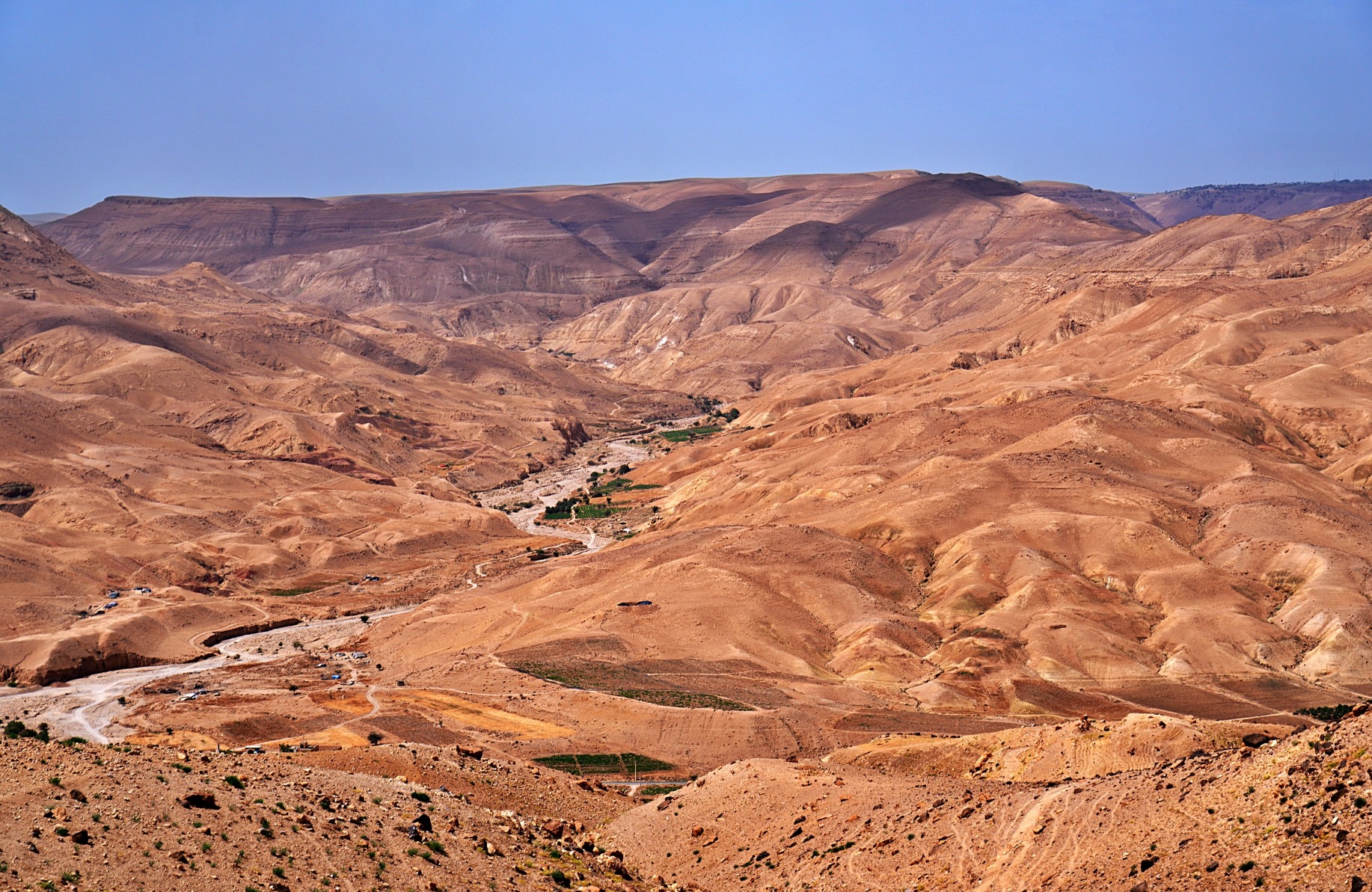
As the train drove toward Fergana Valley in eastern Uzbekistan we crossed through the arid Qurama Mountains. At Kamchik Pass the train had climbed to an elevation of 1,800 m and the interior of the once steamy train, finally began to cool down. The mountains were glowing in the evening sun and we were excited to explore Uzbekistan’s Fergana Valley on the other side of this range.

Fergana Valley has been known as a fertile garden in arid Central Asia since the days of the Silk Road. The name is a bit misleading as it is not a valley at all, but rather a depression between the tall Tian Shan Mountains in the north and the Alay Mountains in the south. Historically it was ruled by as many different Khans as the rest of Central Asia. During Soviet occupation, haphazard borders were created dividing the valley between Uzbekistan, Kyrgyzstan and Tajikistan. At that time the borders didn’t really affect the people because they could come and go as they pleased. When the countries gained independence however, the borders and the wealth that was contained in the land mattered a lot more. Looking at the map below, you can see how willy-nilly the borders are. The cities we visited in the three countries, Kokand in Uzbekistan, Khujand in Tajikistan and Osh in Kyrgyzstan, used to be one region but now are separated by an arbitrary border.

A large part of the problem is that the people’s ethnicities do not follow these lines. Families found themselves living on opposite sides of the borders from each other. Jealousy and hatred developed between people who were once family and neighbours because of the feeling of inequity in the distribution of land. Many say that this was done to ensure that there were minorities in each Soviet state. This unequal division would create internal fighting and keep the heat off the Soviet rulers.

In Uzbekistan today the area appears to be settled and safe, but the borders between Tajikistan and Kyrgyzstan are more problematic and have recently been closed due to tensions.

Our first introduction to Fergana Valley was the section that is in Uzbekistan where a big smile of golden teeth greeted us, welcoming us to Fergana. The people in the Uzbekistan are incredibly friendly, kind and helpful. but in Fergana Valley they took it up a notch. Walking down the street, minding our own business, locals would always smile and say hello, often asking where we’re from, and if they could take our picture. One man came over to ask Richard if I was his wife. He then pinched my cheek so hard I could feel his fingers for the next half an hour. The kids were the best though. At one of the family-run restaurants we went to, each one of their 10 or so kids kept walking by our table to say hi, or ask where we were from, or if we wanted anything. I think we were the highlight of their week.

Kokand

The large centre of Kokand was once an important stop on the northern section of Great Silk Road. Caravans travelling on the route stopped to trade in Kokand on their way through Uzbekistan. Like much of Central Asia, the city was destroyed by the Genghis Khan in the 1200s. Because of its location in the fertile Fergana Valley, the city bounced back and by the 18th century it gained prominence again as the capital of the Kokand Khan Dynasty.

Today there aren’t many historical buildings or monuments left from this Dynasty, but we were able to find a couple. Khudayar Khan Palace is set in the middle of a large treed park. The palace is now a museum and it stands out for its colourfully tiled façade. The tilework is quite different from buildings we saw in Samarkand, Bukhara and Khiva because of its many different colours and patterns.

Inside the museum there are a couple of bedrooms and a crown room on display. They have gorgeous three dimensional, wooden ceilings painted in floral motifs. In addition, the colourful walls are decorated with raised ceramic flowers.

Jome Mosque

The old mosque and its attached madrasah haven’t been restored and don’t have much to see inside. Beside it, however is a more interesting site. There is an old cemetery with two blue domed mausoleums. Surrounding each mausoleum were hundreds of above ground monuments. It may not be a typical tourist site, but we found it a very interesting part of the culture.

Not far from the mosque is Kamol-Kazi Madrasah. It is a humble-looking building, except for the colourful tiles on the entrance.

Somsas (samosas) are a popular snack in Uzbekistan. We were finally able to see how they are cooked when we were walking along the sidewalk in Kokand. The temperature was at least 35° C and the baker was sticking his had deep inside a hot tandoori oven to stick the uncooked samosas on the side. Thirty minutes later we happened to walk by when he was taking them out of the oven. His long basket stripped the somsas off the oven wall, and his wife scraped off the charred bits. It looked like a hot job to have in this hot climate.

There are a lot of parks in Kokand, many had tapchans set in the shade of large trees. Some people would sit on them and talk, others would have picnics and many would take an afternoon nap on them. We saw these daybeds throughout Central Asia.

Margilan

Further east on the train line is the city of Margilan. Between Kokand and Margilan our train passed by hundreds of small and large vegetable gardens and fruit orchards. It seemed so far away from the deserts around Khiva.

Margilan has an interesting connection to India. Babur who became the founder of the Mughul Empire in India, was born in Margilan. Babur was the grandson of Uzbekistan hero Amir Temur. (Read our post about India’s Mughal architecture here.)

Yodgorlik Silk Factory

Margilan is another spot that was prominent during the Great Silk Road. As caravans stopped here they likely would have traded their spices or tea for fine Margilan silk. Historians aren’t sure where they learned the ancient silk producing methods in Margilan, but it was likely brought by skilled silk masters from China.

Margilan is well known for its high quality silk and skill in making fabrics. To see how its done we visited the Yodgorlik Silk Factory. Though it has only been producing silk fabrics since the 1970s, staff use techniques that were passed down over many generations.

At the front of the factory is a small store that sells scarves, clothing and carpets that are made in the factory. It is in what used to be a mosque and to commemorate that, they have left the original ceiling.

The silk process begins by using silkworm cocoons that are picked before the worm has transformed to a butterfly. Workers are able to extract a whopping 2 km of thread from one cocoon. To make one spool of silk thread, 25-30 cocoons are boiled. The thread is then slowly unraveled and spun together to form thread. This thread is quite course so it is boiled again with different natural substrates to create the soft fine thread we think of as silk.

From there, the threads are dyed using mostly natural dyes such as pomegranate, walnut, indigo and sulpher.

The process of making fabric is the most unique part of the ancient techniques used in Margilan. Ikat is the technique where the threads are dyed first and then woven into clothing or rugs. The opposite technique is batik or tie-dye where dyes are applied to a white fabric. Only products that use the Ikat technique can carry the name ‘Khan-Atlas’ (King’s Silk). The patterns used in Margilan are said to be favoured all over the world for their uniqueness and quality.

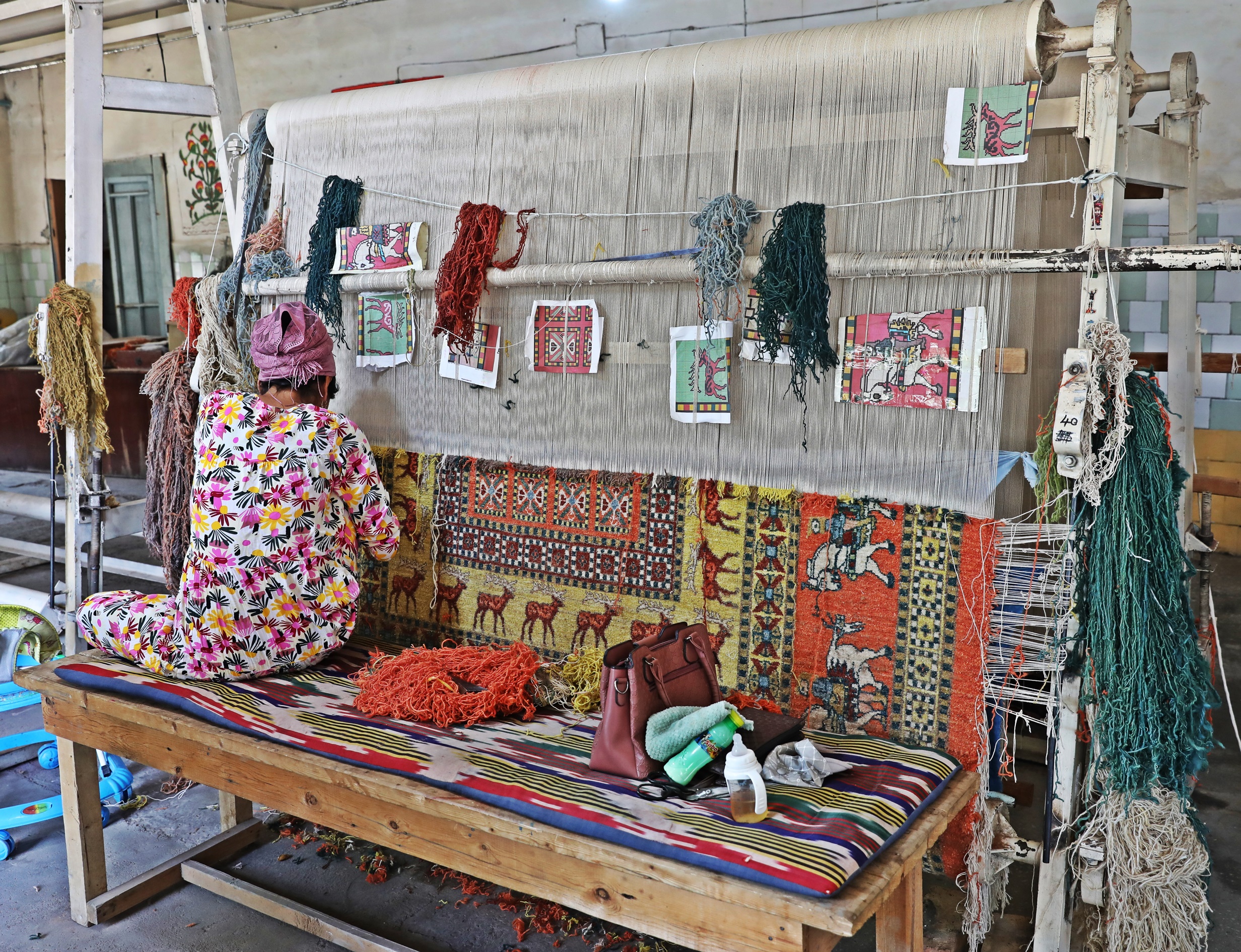
Fabrics that are not 100% silk are often woven using Soviet built weaving machines. They are easier on the weavers’ bodies than doing it by hand, but they are still a far cry from assembly lines production.

As well as fabric they make carpet made from 100% silk and a mix of cotton and silk. We were surprised at the amount of silk that goes into a carpet. When making silk carpets they tie 100 threads of silk in just one centimeter. The amazing patterns that these women can create by tying on one thread at at time is incredible.

English tours run Monday to Saturday from 10am -5pm for the small fee of 10,000 UZS (80 cents USD).

We had hoped to visit Kumtepa Bazaar to see what other silk products were for sale, but unfortunately the market is only open Thursdays and Sundays.

Khanakokh Mosque

Not far from the factory is the 16th century  Khanakokh Mosque. We didn’t plan it, but we arrived as the call to prayer was being announced. We turned to leave but a local man brought us up to a balcony where we could witness the event without interrupting. He even gave us a bottle of water while we waited. After prayers were over we entered the mosque. It’s not an elaborate room, as most prayer rooms are not, but the wooden details on the ceiling were quite interesting.

Uzbek people eat a lot of bread. At every meal we were supplied a large piece of round bread, called non. Sometimes it was an entire round loaf, other times it was cut into smaller pieces. They are so popular we saw many stalls selling it on the sides of busy streets. People would stop to buy several round loaves at once.

For Travel Tips in Uzbekistan read our post from Tashkent.

Please visit the link for our Travel Tips in Uzbekistan.

To read our other posts from Uzbekistan click here.

Coming Next – A Taxi Ride With A Kyrgyz Man

For pictures from other blogs go to Gallery at monkeystale.ca

To read about more of our adventures go to Destinations.

If you like what you read, please comment or share (with credit) using the links below.

Fediverse reactions

111 responses to “Uzbekistan’s Fergana Valley”

  1. The synergy between traditional silk weaving and Soviet machinery is something I’d never expect. I love the patterns and colors of the fabrics on display.

  2. Exquisite tile work. I really enjoyed learning more about the region. You are really traveling of the beaten paths.

    1. Thanks, it’s true we didn’t see many tourists in Fergana Valley but it’s another interesting part of the country. Thanks for reading!! Maggie

      1. Really enjoyed a country, I’ll probably never visit in person.

  3. Wonderful post and images!! Thank you for sharing these fascinating travels!! I envy you both! 😉

  4. more impressive architecture!

    💫🌿✨🦎☀️💖☮️⚛️♾️🦀🐉🙏🏻😌🙋‍♂️

  5. The making of Somsas in Kokand and the making of silk in the Yodgorlik Silk Factory are very interesting processes. I, too, am amazed by the intricate patterns these phenomenal artists weave. The mosque’s, etc, are incredibly beautiful. Thanks for introducing your followers to this part of the world.

  6. ThingsHelenLoves Avatar
    ThingsHelenLoves

    The Khudayar Khan Palace is just jaw dropping, as is the silk factory in its own way. You really inspire me to want to take a closer look at this part of the world, a much enjoyed post.

    1. Thank you Helen, there are so many fabulous places to explore! Maggie

  7. Fantastic writing. I enjoyed your descriptions with just enough detail. What an amazing journey!

    1. Thanks Kel! How are you??

  8. Such an interesting and historical place. I love the idea of daybeds in the park so people can nap outside. Also, since I studied fabrics in my youth, I found the silk process quite fascinating.

    1. Oh you would really enjoy the Silk factory. The designs that these ladies were creating were remarkable and the Silk carpets were so soft! 😊

  9. An excellent post. It is always nice to get out of the major centers to where the people live and work. So many insights into local life. Thanks for sharing Maggie. Allan

    1. Thanks Allan, it was great to get into the ‘real world’ in Uzbekistan. 😊

  10. Thanks a lot for sharing another outstanding post on a fabulous country 🙇‍♀️

    1. Thank you Luisa! We love to share places that have enjoyed. 😊

      1. That’s really great!!!

  11. Occupiers often leave but the trouble they created lingers on for decades. These land boundaries have been a big trouble in the recent past and will continue to create trouble in the times to come. I found the silk story to be the most exciting in your post.

    1. So true, Central Asia is still suffering from the destruction left behind. We were so impressed with the quality of the silk and the products that they made. I was only able to buy one silk scarf because we’re still travelling for a while, but I would have loved to buy more. Thanks for adding to the story Arv, Maggie

      1. Isn’t it nice to see authentic products manufactured in traditional style? I can understand why you couldn’t pick more, Maggie.

  12. Another great post! This area of the world is so fascinating and beautiful. I love samosas, can’t get much more authentic than those!

    1. Thanks Lyssy! I know! It’s quite the hot process! Maggie

  13. How fabulous! This is a region of Uzbekistan we didn’t visit so you’ve shown me a very different side to the country, much greener 🙂 The buildings though seem just as beautiful. Did you buy any silk? I would find that very hard to resist!

    1. I did, I bought a silk scarf. It was so cheap I should have bought more. I really wanted to buy a silk rug, they are so soft.

      1. I bought a beautiful silk scarf in an artisans’ workshop in Tashkent, and wished I’d bought more too!

  14. Seeing these cities through your lenses and words is a thrill! I loved seeing the highlights of the cities, but I was totally captivated by the silk factory. It’s amazing how much work goes into making the silk. I would’ve wanted to buy one of everything in the store.

    1. It is a long slow process, but I guess that’s why it’s so expensive.There were so many nice things in the store though, I only bought one scarf but I could have bought a lot more. 😊

  15. This post took me to an exotic world that I long to visit. Those silks and that bread! The palace was magnificent. I imagine that there is a distinctive scent to this place.

    1. The scents are not of spices, but there were a lot of flowers blooming which was beautiful to smell. And of course the smell of bread 😊

      1. Flowers and bread – it gets even more tantalizing!

  16. Fantastic writing. So interesting and detailed. Thsnks Maggie!

  17. WOW Maggie! These photos of the Uzbekistan region are breathtaking, so I can only imagine your experience being right there in the midst of the fabulous architecture in the palace, mosques, the silk factory and even with the bread so artistically displayed. What an amazing experience. Thanks for sharing! 😊💖🤗

    1. It really was amazing! Thanks Kym, Maggie

      1. 😍💖🥰🙏🏼😊 You are so very welcome Maggie!

  18. Such a shame about the border issues. I wouldn’t have a clue if asked to draw exactly where these countries are and they have so much in common with each other. No shortage of beauty, Maggie. The tiles and wooden ceilings are jaw dropping, and I can never get my head round silkworms. Isn’t it a weird world? Thanks for bringing it to us.

    1. I wonder how that first person saw a silk worm cocoon and said ‘hey, that would make a great shawl’!! I knew the borders were haphazardly drawn, but until I saw it on a map, I didn’t really realize how crazy it was. Thanks for reading Jo! Maggie

  19. That’s a sad truth about ethnicities and families not always falling on the geographical diving lines. How hard that must have been to be on separate sides of the line. The silk factory really gives a look at the labor and toil that goes into every piece they create. It is easy to forget sometimes that for every beautiful item, there was a person behind it putting in their time and skill. And oh those ceilings- I could just stare in wonder at that incredible artistry all day long.

    1. We continued to hear stories about brothers and cousins living on the other side of a closed border in Central Asia. It’s heartbreaking. The work that these ladies do all day long is so tedious too, but boy they make beautiful clothing and rugs. Thanks Meg! Maggie

  20. I don’t understand why they boil the cocoon. A lot of countries have this practice. As a child, my sister and I kept silk worms and when we heard the cocoon rattle, we unravelled the silk without killing the worm that could then go through the life cycle all over again without being boiled.

    1. I think you should go over there and teach them your methods! I actually didn’t ask why they had to do it before it hatches. I assumed it was the only way. Were you able to make anything with your Silk?

      1. We just used it as bookmarks and because we had a mulberry tree in the backyard there was plenty of food for the worms

  21. More exquisite wall tiles in the mosques and the traditional silk weaving was interesting to read about too Maggie.

    1. Thank you, glad you enjoyed it 😊 Maggie

  22. Another interesting post for me to ponder! I don’t think I would be able to make the Fergana region on my trip due to time constraints, but I do wish I could!

    1. It was nice, but not a must-see.

      1. Good to know! Thanks x

  23. Your blog is truly fascinating. Bravo!

  24. I watched some YouTube videos about Uzbekistan with my husband last week, and we both wanted to visit this country at some point. It looks so beautiful, clean, and affordable. I would love to see its majestic nature and taste delicious Uzbek cuisine!

    1. The architecture is incredible, scenery is differently across the country from mountains to desert to lush gardens. But for me the cuisine was not the best. Hope you get there! Maggie

  25. Because of the things I’ve read in the past about Fergana Valley, my notion of it is a region where racial conflict can erupt at any time. It’s crazy to think of how the Soviet created those arbitrary lines whose impact last longer than the time it took to draw them. The same thing goes for the British and the French in the Middle East. I really appreciate you going to this part of Uzbekistan and share with us glimpses of the things most visitors to the country don’t see.

    1. I think there still is quite a bit of conflict between Kyrgyzstan and Tajikistan but we didn’t notice anything, and certainly nothing in Uzbekistan with either country. I knew that the borders were drawn irrationally but didn’t really appreciate how bad they were until we looked at maps. They really don’t make sense and were built to cause conflict bothe between the countries and within. We saw even more examples of this last week between Tajikistan and Afganistan (that post won’t be out for a while).

  26. Very interesting history, but it’s tragic that families were separated. It seems to be a common story in many parts of the globe. The three dimensional ceiling is phenomenal! Thanks for sharing your experiences in Uzbekistan. I hope your cheek recovered!

    1. Haha, the pain is gone but the memory remains 😊

  27. More breathtaking scenes from across Uzbekistan, Maggie. What a magical scene that must have been on the train with those sweeping views across the Qurama Mountains. The silk factory looked really interesting and lord I would love to try those samosas. I find myself curious how they would compare to Indian samosas.

    1. They’re not as flavourful as Indian samosas. They don’t tend to like to use spices, including salt and pepper! So you can stop your cravings 🙂

  28. Fabulous! I really liked the detail about the silk production.

    1. Thanks! It is such a time consuming, labour intensive process, but I guess that’s why it’s more expensive.

      1. That’s a good point. I won’t complain over handmade silk items again.

  29. This is such an interesting post. I could never sit cross-legged to weave like that. My knees would be howling after 90 seconds. And that Soviet weaving machine looks so… Soviet. Two km of thread from one cocoon? That’s amazing.
    Even their non-impressive buildings are impressive.
    Love to hear how kind the Uzbek people are. The cheek-pinching story is precious.
    Public sleeping on daybeds in the park: fascinating!

    1. In Tajikistan most of the dining tables are like the day beds that you’re supposed to sit at cross legged. Neither of us last very long! Aren’t those poor little dead caterpillars incredible! I know, 2 km!! My cheek still hurts 😊

  30. Kuriacose Joseph Avatar
    Kuriacose Joseph

    Samosas are deep-fried in India. I appreciate learning about how the culture of these parts are connected to some of those in India because of the Moghul connection.

    1. Yes there is a large historical connection especially with Fergana and India. The samosas in Uzbekistan are not at all like Indias. Unfortunately. ☹

  31. Very interesting. We have this whole region on our list of country to visit and we will need to get on the planning board soon as it is wonderful. How long are you spending on this trip? (Suzanne)

  32. What a lovely post and great writing and photos.

  33. This really is a trip well off the tourist trail, isn’t it! Fantastic locations that are the stuff of real hardy travellers, we envy your ideas and inspiration to find such places. A really enthralling part of the Great Silk Road.

    1. Thanks, there weren’t many other travellers but it’s strange because it’s not difficult to get to and has a few good things to see.

  34. Island of Uzbekistan inside of Kyrgyzstan. That’s just weird. Uzbekistanis must be good at geometry, considering their designs, although I understand some of that is a Muslim ban of figures of people in their religious buildings. I’m having a hard time wrapping my head around the idea of an entire carpet made of silk. What was the texture like?

    1. Silk carpets are incredibly soft. I’m not sure I’d want to put one on the floor even though my feet would love it! The big difference was the details in the designs. The hybrid carpets were like a picture taken from a Polaroid but the silk were like one taken with the highest quality lens. The details and colours are unbelievable.

  35. Khudayar Khan Palace (Museum) is beautifully tiled in mosaics. I can’t begin to fathoms how much work that it took to accomplish.
    Fascinating details in making silk and the dyes involved.
    I enjoyed the linkages you highlighted with India and its history.

  36. The tiling may look different, but Khudayar Khan Palace still looks beautiful. I find it amazing how the samosas stick to the side of the oven. Producing silk fabrics the traditional way sounds like hard work, but the end result is lovely. Sounds like you’re having a really great trip Maggie.

    1. We are , so many different and amazing things to see. The somsa dough was quite wet which I think is why they stick. Seeing how these ladies work makes you realize why it’s so expensive! Thanks for sharing your thoughts Corna! Maggie

  37. This journey is so interesting as never has it crossed my mind to go anywhere that ends in stan

    1. 😊Nor had most of our friends, but we’ve enjoyed every minute of it! Maggie

  38. It’s interesting to hear more about the silk process and what’s all involved. I can’t get enough of the colourful architecture.

  39. I still can’t get over the beauty of the tiles and the architecture. And those samosas and bread look absolutely delicious. It feels like you really explored Uzbekistan in depth and learnt a lot about its culture, history and art. I’m loving following along.

    1. We tried to see as much of the country as we could. Fergana Valley was the least touristy area. There’s not as much to do, but we really enjoyed exploring the towns here too. Thanks Hannah! Maggie

  40. Thank you for this interesting visit. Everything looks clean and in good condition, which is nice to see.

    1. Thanks, yes, we were impressed at how clean Central Asia is.

  41. Thank you for these wonderful photos and the travel report! It’s a fascinating area that I’ve wanted to visit since I was young, but unfortunately I never got around to it. As a replacement, I bought a wonderful local rug a few years ago 🙂

    1. Well the rug is a start 😊 We really enjoyed visiting all of Uzbekistan. Each area has its own character and interesting sites. Thanks for sharing your thoughts. Maggie

  42. The tile work is amazing, all so very different. Nice that the people are so friendly, makes all the difference when travelling and so much more relaxing. Food looks delicious.

  43. What a FEAST! For the eyes as well as the stomach. The tile work is exquisite and the carved wooden ceiling (or however they accomplished it) And then the gorgeous silk fabrics! And the food – somosas and bread – yum!

  44. These are some spectacular monuments and ah, the somsas and the Uzbek breads are so tempting.

    1. The bread was really good when it was fresh, but the somsas weren’t as good Indian samosas 😊

  45. Love the vibrant colours and gorgeous patterns of the mosaic tiles.
    The silk weaving machines are similar to ones in SE Asia.

    1. Yes they are, and we were told their technique likely came from China so it probably did for the rest of Asia too.

  46. Another fascinating Uzbekistan post. That palace is extraordinary, and so beautiful. And those silk rugs! It must take months to make one; also beautiful. Also those samosas look really enticing, but what an awful job in such heat. Thanks for another great slice of Uzbek life. So looking forward to when I can get there myself one day.
    Alison

    1. Thanks Alison! I hope you get there, it is a fascinating country. Maggie

  47. I look forward to visiting there one day. Must have been an interesting place! Glad you were safe relative to other borders

    1. I hope you get there Beth, Uzbekistan is a photographer’s dream. Maggie

  48. Wow, the silk making process and the designs they create is just amazing! I can’t imagine having the patience or skill to do such a task.

    1. I wouldn’t have the patience, or the posture 😊

  49. What a gorgeous architecture! Thanks for sharing!

    1. It really is incredible. Tha s for your comments. Maggie

  50. […] visiting the Fergana Valley in Uzbekistan, we wanted to see Kyrgyzstan’s version of this divided land. We had expected them to be quite […]

  51. The mosaics look incredible, and the samosas and bread make my mouth water, even if I wouldn’t want to be the one having to bake them on a hot summer’s day.

    1. The mosaic tiles in the palace were so colourful and different than the rest of Uzbekistan which was very nice. I felt bad for the samosa baker, it was so hot!

  52. Amazing adventure. Great cultural details.

    1. Thanks Rebecca! Maggie

  53. The Khudayar Khan Palace is eye candy! That and the silk factory are fascinating. Great post!

  54. The palace is dazzling! Nice that you could tour the silk factory. Did you buy a scarf or dress to take home? I would have loved those carpets. They must not have many western visitors (the pinch!).

    1. There aren’t many western visitors in this part of Uzbekistan. The carpets were so beautiful, especially the silk ones – they looked like a painting not a carpet. I did buy a silk scarf, my only purchase on this trip!

  55. […] visiting the Fergana Valley in Uzbekistan, and Kyrgyzstan we were interested to see Tajikistan’s version of this divided land. Like […]

  56. […] visiting the Fergana Valley in Uzbekistan, we wanted to see Kyrgyzstan’s version of this divided land. We had expected them to be quite […]

We'd love to hear from you, please leave a comment.

Destinations

Discover more from Monkey's Tale

Subscribe now to keep reading and get access to the full archive.

Continue reading