

Narrow lanes wind their way through Tangier’s medina without any sense of planning. A vibrant atmosphere emanates from these well-trodden streets and entices you to continue to explore. Being only a short ferry ride from Spain, Tangier’s medina has become a popular location for a weekend getaway. Here’s what you can see when you visit Tangier.
The Moroccan city lies on the Strait of Gibraltar, only 11 kilometres from Tarifa, Spain. This location led its many occupants, from the Phoenicians, Carthaginians and Romans in ancient times to the Arabs in the 7th century followed by the Amazighs (Berbers). It was in fact, from Tangier, that Tarik ibn Ziyad set sail for Gibraltar, and led the takeover of what we call Spain today.
You can find Tangier in the top of the map below. Click on the image for an interactive map.

Beginning in the late Middle Ages, Tangier was occupied by the Portuguese, Spanish and then the British. Their battles over this land continued for hundreds of years. In 1912, Morocco was divided between France and Spain, but Tangier was kept independent as an international trading port. Tangier joined Morocco when the country achieved independence in 1956.
This long history resulted in Morocco having three official languages: Arabic, Berber (Tamazight) and French. In Tangier’s tourist areas, a lot of English is spoken, but in addition to learning a few Arabic words, a basic knowledge of French will help.

Medina
Today, the city’s Old Town mixes those Arabic and European roots to create a fascinating and unique city. Begin your exploration by wandering through the medina. In Morocco, a medina is usually the oldest part of the city and includes outdoor markets and homes. It is often within a protective wall.


Finding your way through the maze of streets is part of the fun. Some of the streets lead to markets, others take you to old city gates which open into squares. You may find one that ends abruptly or another that suddenly turns, taking you far away from your intended direction. Many times, locals called out to us to say that the way was closed. We didn’t know what they meant until we walked a few more blocks to find a dead end.


It was in Tangier’s medina that we first saw men in typical Moroccan attire. Men of all ages wear long cloak-like hooded djellabas and leather slippers called baboush. We would see variations of these same outfits throughout the country.

Petit Socco is a busy meeting place in the heart of the medina. It is filled with tourist restaurants and shops, but there were always a lot of locals in the area too. Even though it is the main tourist centre, we had excellent meals at very good prices near this square.
In Tangier, socco means market It is a combination of the Arabic word ‘souk’ and the Spanish version ‘zoco’.

Grand Socco is the largest public square and sits on the edge the medina. It is formally called Place du 9 Avril 1947 after King Mohamed V gave a powerful speech supporting Moroccan’s independence on that date. There are a few banks, and shops on the square, but not much for visitors. From it, streets head off in all directions into the labyrinth beyond.


The busiest area in Tangier’s medina is located on the lower slopes. As you walk up the hill away from this area, the streets become tighter, but the homes are more colourful. Without tourist shops, this upper section had more of a local feel. People were going about their day and kids were running around the streets playing games.


Kasbah Museum
At the top of the hill is Assa Gate (Bab el-Assa). It’s a part of the fortified wall that surrounds the Kasbah. Even though the wall was built for protection, there is a lovely tiled fountain just inside the gate.
In Morocco, a Kasbah is a fortified area similar to a citadel or alcazaba in Spain. It is usually where you find the former royal residence. The Kasbah may be within the medina but have a separate wall or be located on its own, apart from the medina.


The formal name of the Kasbah was Dar el Makhzen, which roughly translates to ‘The Sultan’s Palace’. The current building was built by Moroccan Sultan Moulay Ismail in the late 17th and early 18th centuries. It was constructed over top of an existing palace that had been the residence for Portuguese and then British governors between 1471 and 1684.
Once inside the palace, you are immersed in Moroccan designs. Their architecture blends its intertwined history with influences from Maghreb (North Africa), Berber, al-Andalus (Spain, Portugal) as well as Roman and Visigoth.
As with alcazabas in Spain, this palace has several open courtyards with Roman columns around their edge and a fountain, tiled floor or garden in the centre. Between the columns are horseshoe-shaped arches. This style of arch has its influences as far back as the Visigoth and is emblematic of Moorish and Moroccan architecture. We would see a lot of them in our travels in the country.


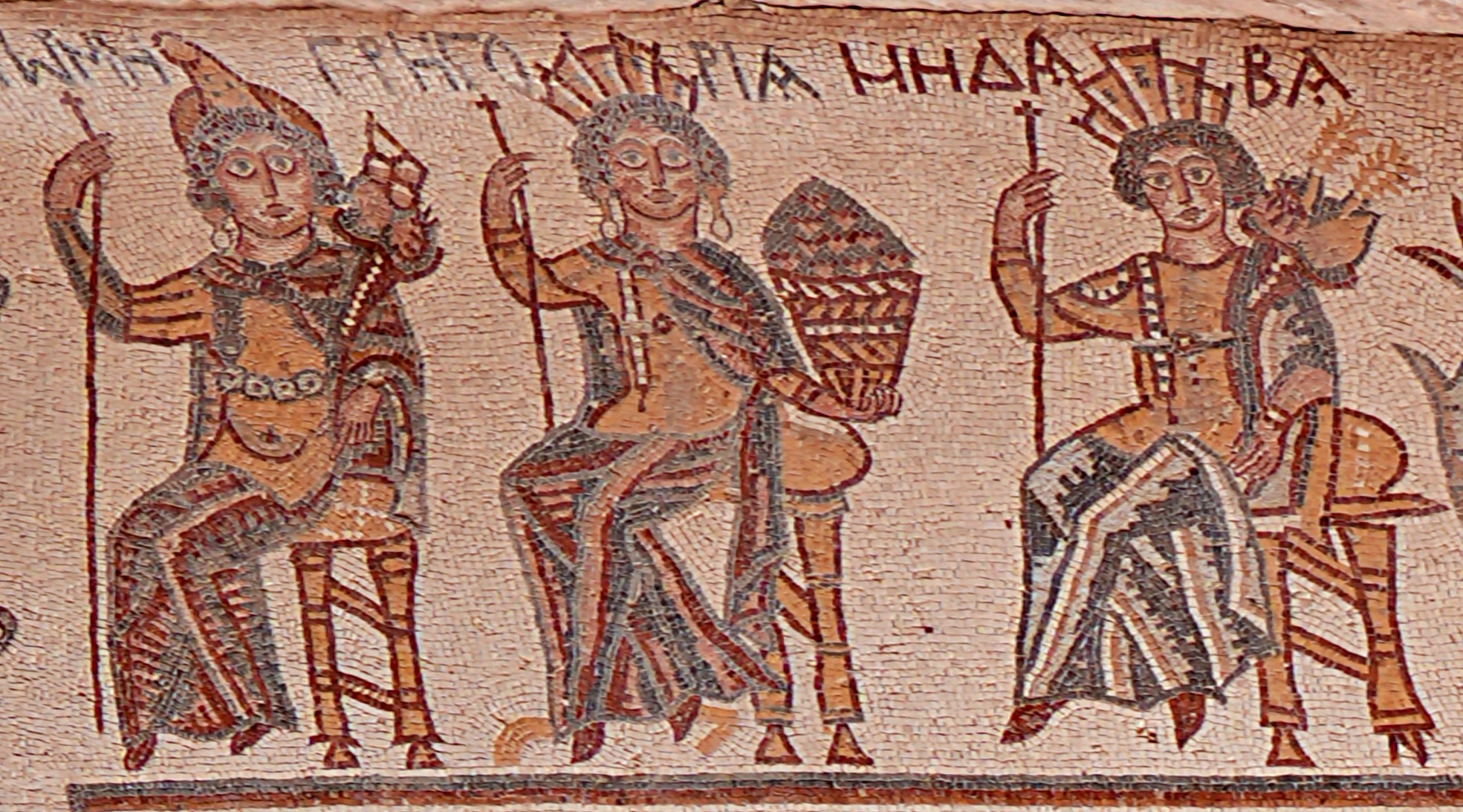
One courtyard has a special surprise. Its floor is adorned with a 1st century BCE Roman mosaic entitled Navigation of Venus. It is a spectacular floor taken from the Roman city of Volubilis, Morocco. The Volubilis archeological site is outside, so by being in the palace, the floor was saved from damage by the elements.
You can see other mosaics on display in Volubilis in our post Day Trips From Meknes or Fez.

Pass through the horseshoe shaped doorways in the courtyards into elaborately decorated rooms. Beautiful lace-like stucco designs grace the walls, intricate carvings adorn the ceilings and colourful tiles (called zellige or zellij in Morocco) are on the floors and walls. Many of the upper walls have carved, wooden muqarnas. We saw these icicle-looking decorations in Uzbekistan, but there they were made from tile not wood.


A ticket is required to visit the palace and it includes entry to the Kasbah Art Museum, located next door. The museum is inside a building that served as the old Kasbah jail. No pictures are allowed of the art, which was created by a Cuban artist, but we can show you the building’s interesting walls and arches.

Place de la Kasbah is in front of the palace and is surrounded by parts of the old rampart. At its edge is a lookout toward Tangier Port. On a clear day, you may be able to see Spain, but we weren’t so lucky.


Phoenician Tombs
Not far from the Kasbah, and still on the top of the hill, is an interesting ancient site. A 3,000 year old necropolis of rock-cut Phoenician tombs overlooks the water. Today they collect rainwater, so were nearly full on the rainy day when we saw them.
In addition to the tombs, from this vantage point, you can see the port, filled with cruise ships, cargo ships and fishing boats. A rainbow added some colour to our grey day.

Hafa Café
A little further on is the popular Hafa Café. We stopped by on a rainy day, but apparently when the skies are clear you can see across the Strait of Gibraltar to Spain. A month earlier, we were standing on Viewpoint of Africa in Tarifa, Spain and had better luck. The skies were clear and we could see the outline of Morocco. You can read about Tarifa here.

Hafa Garden
From the cafe, we saw a pathway along the edge of the water and decided to walk down to it. Beginning at the port, the walkway travels under the old ramparts and allows you to get a good look at them. In some places, the wall and towers are still standing, but in others, they have been replaced by apartments.
Between the walls and the sidewalk is Hafa Garden. Finding the large garden was a nice surprise. It’s a lovely spot with palm trees, cacti and flower beds surrounded by green lawns.


Borj Dar El Baroud
In front of the port is one of the best-kept remains of the old wall. Borj Dar El Baroud was part of an old defence battery that occupies a large space. Beside it, more of the wall is exposed with hotels and the white homes of the city teetering on its edge.
Across is the the Grand Mosque. It was this mosque we heard each morning for the call to prayer. The call is different in Morocco than other Muslim countries we’ve visited. It is over a minute long and sounds more like a song than the loud chanting we’ve heard before.


Beyond the old quarter, we were surprised to find a clean, modern city. Although we didn’t spend any time in this part of Tangier, it looks to be a nice place to live and work. From one of the city beaches we had nice views of the Old Town.

How to get to Tangier
From Spain, there are several ferries running between Tarifa and Tangier (1 hour), and a few between Algeciras to Tangier Med. Don’t confuse Tangier with Tangier Med. They are approximately 50 km apart. If you’re coming from further away, Tangier Ibn Battouta Airport accepts flights from many European destinations. If you’re already in Morocco, Tangier is connected by fast trains with Casablanca (330 km), Rabat (250 km); and by classic trains with Fez (300 km) and Meknes (260 km).
Where to stay in Tangier
If you want to be fully immersed in Old Tangier, you should stay in or near the Medina. That means staying somewhere between Gran Soccoc and Tangier Port. We stayed in Hotel Continental because we wanted a place that would make us feel like we arrived in Morocco. The décor in the lobby and breakfast rooms was exactly what we wanted for our first nights in the country. Colourful zellige adorn the walls while stained glass covers the windows. The guest rooms are plain and don’t look like they’ve been updated since the 1970s, but it didn’t bother us too much. You can find it online.
Zellige (also spelled zellij and azzelij) is the Arabic word for tile and translates to small polished stone. These pretty ceramic details proved useful not only in helping to keep the rooms cool but they also add a bit of colour.


Where to eat in Tangier
There are many restaurants in the medina, most are located in or near Petite Soccoc. We often avoid the most touristy areas to eat, but we found a few restaurants on the side streets with very good meals at a reasonable price.
Alcohol is not available in most parts of Morocco, but tea is. Moroccans are so fond of mint tea, they call it “Moroccan Whiskey”. It is very sweet, so ask for sugar on the side. Mint tea ia usually served at the end of the meal and if your lucky, your restaurant will include a display of their local custom. Tea is poured from a height which is said to re-aerate the water after boiling, resulting in a better tea.

We also had excellent coffee throughout Morocco. Our favourite in Tangier was Gran Café de Paris. Our only complaint is that the cups are very small.

If you have spare time on your weekend trip, we have recommendations for day-trips from Tangier. You can read about these in our post Best Day Trips From Tangier.

Click on the link to read our Travel Tips For Morocco.
To read more of our adventures in Morocco, click here.
Coming Next – Best Day Trips From Tangier
For pictures from other blogs go to Gallery at monkeystale.ca
To read about more of our adventures go to Destinations.
If you like what you read, please comment or share (with credit) using the links below.




We’d love to hear from you, please leave a comment.