
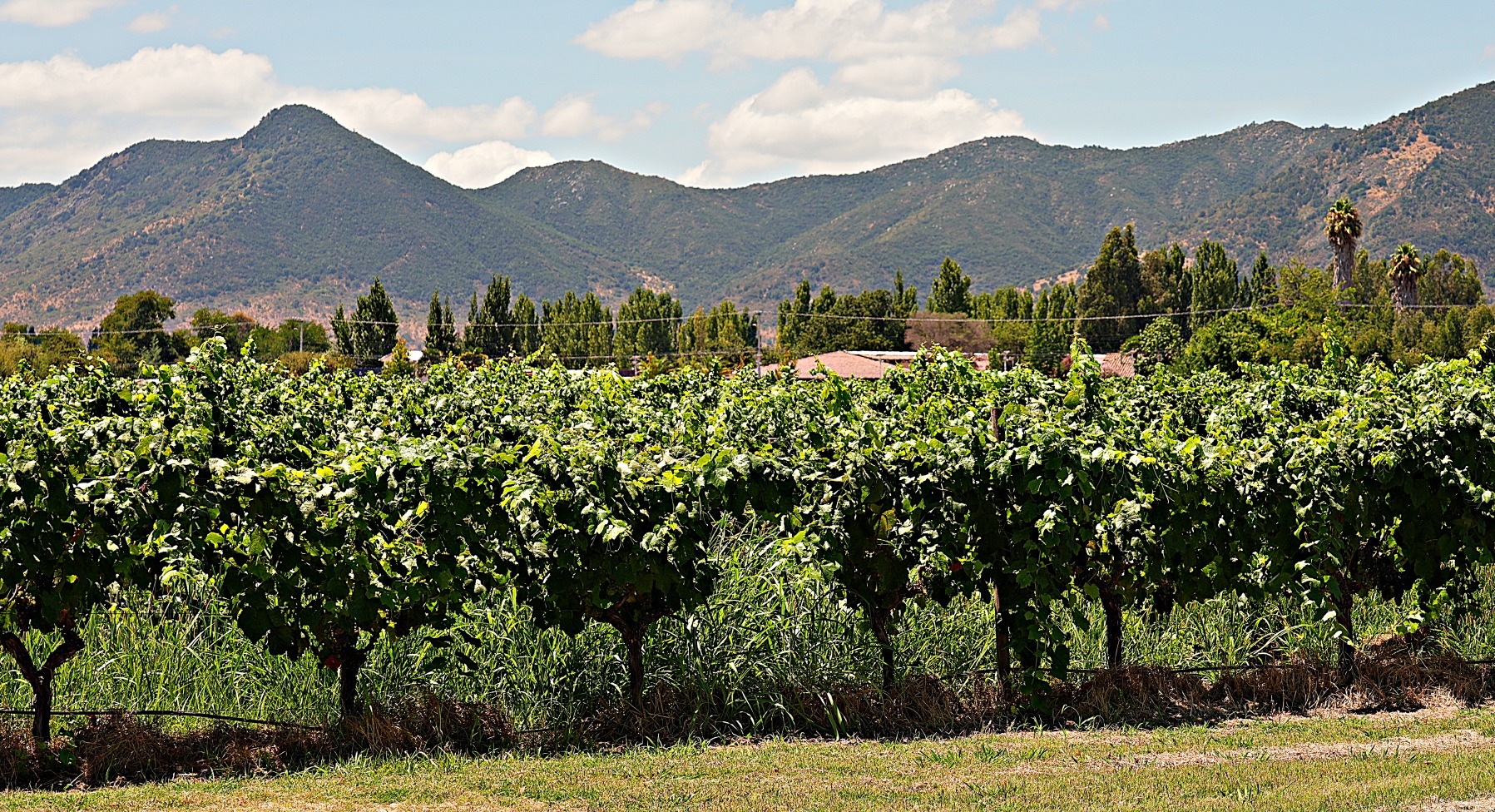
The fertile Colchagua Valley is one of Chile’s most prestigious wine regions. In addition to producing excellent wines, it also has a stunning setting in the shadows of the rugged Andes foothills. Both the wines and the views can be enjoyed on a visit to its main city, Santa Cruz. Further north, the Elqui Valley may be known for its pisco, but its wines are also starting to attract attention. Let’s visit these two valleys and sample their delicious Chilean wines.
Colchagua Valley
Located 110 km south of Santiago, some of the country’s most well-known brands come from the Colchagua Valley. They include labels such as Viña Laura Hartwig, Viña Lapostolle and Viña MonteGras, so we were excited to visit and sample their wines. Their specialties are Carmenère and Cabernet Sauvignon, but they also produce excellent Merlot, Syrah, Malbec, Chardonnay and Sauvignon Blanc.


Wine tasting at Viña Laura Hartwig
Since we have visited several wineries in the past, we weren’t interested in taking a tour. We did, however, want to sample the wines and Viña Laura Hartwig provided the best opportunity to do that.


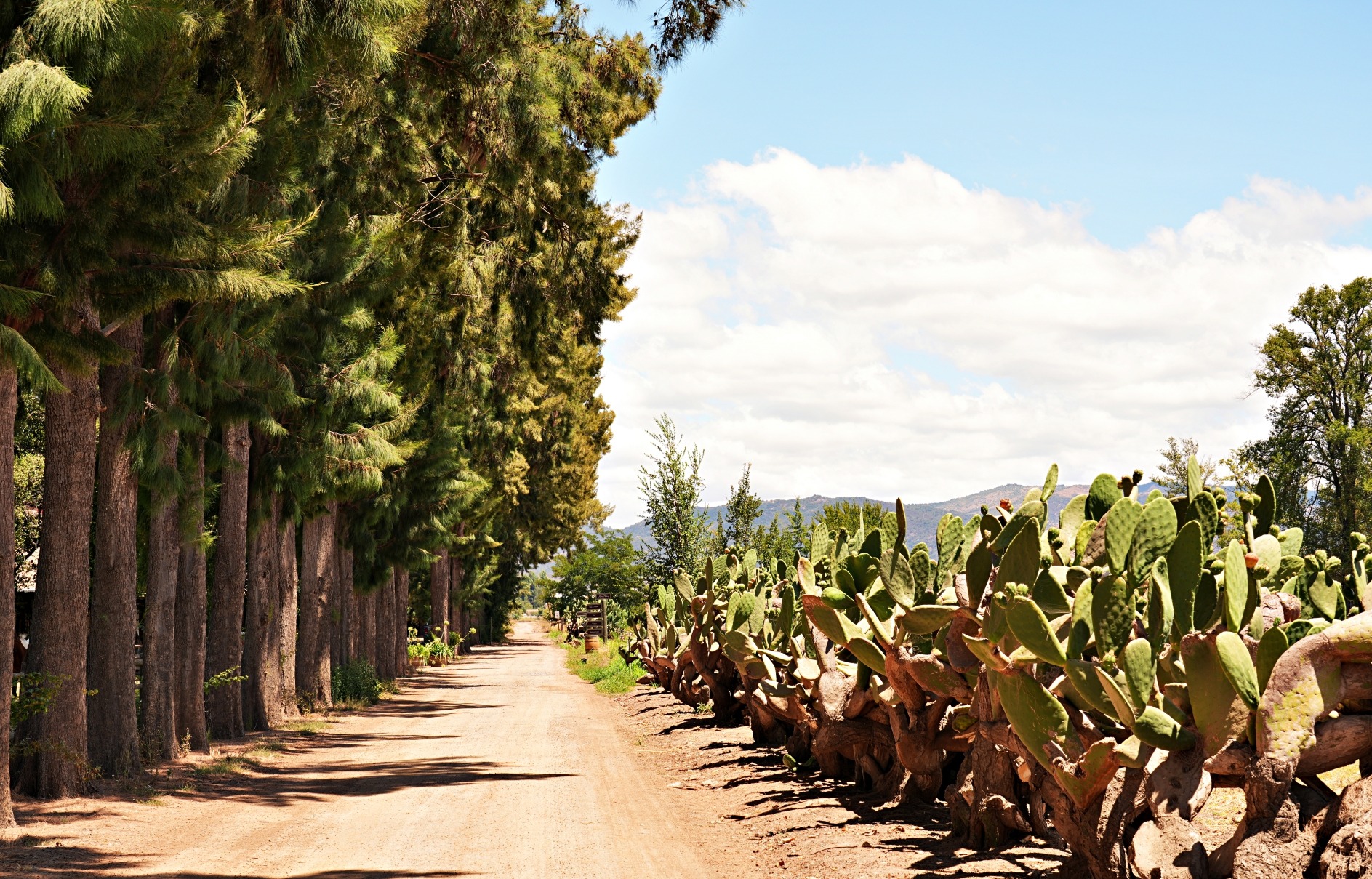
Located walking distance from downtown, we were surprised at how peaceful the vineyard was. From our seats on their veranda, we enjoyed the view of the rugged foothills while sampling their Carmenère and Cabernet Sauvignon. The Carmenère was exceptional, but just to be sure, we ordered a second glass, which was just as good as the first. We made a note to look for it once we got home.
While you can easily find several wine tasting tours in the city, it is also very easy to do what we did and sample wines at different wineries without going on a tour.


Santa Cruz
With several famous wineries around its edge, the city of Santa Cruz is considered the wine capital of Colchagua Valley. It may not be home to many attractions, but it is a pleasant city that projects a small-town feel. We found the people to be some of the friendliest we encountered in Chile. Many locals would holler ‘Buenas Dias’ to us as they rode by on their bikes or as we passed them on the street.
You can tell how important wine is to the city when you see its welcome sign. The cross is made from wine barrels.

Plaza de Armas
In the centre of town is a nice square with remarkably tall palm trees. Chilean Wine Palms can grow up to 20-25 m (65-85 ft), almost twice as high as the average palm tree. They reminded us of the wax palms in the Cocora Valley in Colombia, although those can reach up to 45-60 m (148-200 ft).
One of the cutest features in the square is a carillon clock tower that chimes every 15 minutes. You can see the clock’s mechanism at the base of the tower.


On the side of the park is the white Church of Santa Cruz (Parroquia de Santa Cruz). Built in 1816, it has a colonial look even though it was built after independence. On the other side of the square is another colonial-looking building. The low-roofed city hall was built in the 1940s in the colonial revival style.


There are a few nice buildings on the edge of Plaza de Armas, but most others on the surrounding streets are a bit run down.


Not only does the fertile ground support vineyards and orchards, we also saw interesting plants in Santa Cruz like the Brazilian Orchid Tree and Gazaneas. They were growing like weeds on the side of the street.


Getting to Santa Cruz
Located 180 km from Santiago, there are many buses travelling between Santiago and Santa Cruz. TranSantin buses travel from Pucon to Santa Cruz, making stops at the many towns along the way. You can find their schedule on their website. Reaching most other cities from the south, though, is a little more difficult because you will have to transfer through the city of San Fernando. The bus stop is on the outskirts of town, but taxis are waiting to take you to the bus station.
If you are in Santiago, but don’t want to drive as far as Colchaga Valley, an alternative is Maipo Valley. It is located even closer to Santiago, only 50 km away.
You can find Santa Cruz in the upper half of the map below. Elqui Valley is near La Serena in the upper half of the map. It is an interactive map, so you can zoom-in or click on a marker for a link to our post from that region.
Elqui Valley
Another wine region in Chile is the Elqui Valley near La Serena, 400 km north of Santiago. It has a unique setting in a high-altitude valley, bordered by arid mountains. With most vineyards located around 2,000 m (6,500 ft), it the highest elevation wine-producing region in Chile.
The elevation of Elqui Valley is well-suited to growing moscatel grapes because it has a strong sun, but cool evenings. Historically, most wineries in the Elqui Valley produced pisco, but recently a few have added wine to their offering. One of those is the family-run Cavas del Valle in the village of Pisco Elqui. This winery does something unique by making white wine with moscatel grapes rather than the typical pisco.

We sampled a selection of wines at Cavas del Valle. Although we’re not typically fans of sweet wines, we tasted their sparkling and rosé made from moscatel grapes, and they were very nice. We also sampled their more traditional wines: carmenère, malbec and shiraz. While not as good as those at Viña Laura Hartwig, they were also very nice.

Pisco Tasting
While in the Elqui Valley, we had to taste their most famous product, pisco. Since pisco ranges from 35-40% alcohol, it is not drunk as a shot but instead is served in a cocktail. The most common is pisco sour, a mixture of pisco, sugar and lime juice. In Peru, they put whipped egg white on top, but in Chile, that is not always done.
We stopped at an old family-run winery, ABA Pisquera. At this winery, we sampled several pisco cocktails, including lime, mango, pomello, and maqui (similar to blueberry). Mango was our favourite, followed by the traditional lime.


There’s a lot more to see in Elqui Valley, and we’ll show you more of it in our post Elqui Valley – Day Trip From La Serena.
If you enjoyed this, you may be interested in our wine tasting posts from Mendoza or Salta in Argentina, Georgia, Armenia, Bolivia, Uruguay, Portugal, Bulgaria, and India.

Click on the link to read our Travel Tips For Chile.
To read more of our adventures in Chile, click here.
Coming Next – Santiago’s Historic District
For pictures from other blogs go to Gallery at monkeystale.ca.
To read about more of our adventures go to Destinations.
If you like what you read, please comment or share (with credit) using the links below.




We'd love to hear from you, please leave a comment.